
In This Guide
- Free zone status is a default you can lose
- A QFZP forfeits the AED 375,000 allowance
- Eight conditions, and what breaks each one
- Who you sell to matters more than what you sell
- De minimis, and the five-period lockout
- Deadlines, audits and penalties
- Small business relief, freelancers and the 15 percent floor
- Frequently Asked Questions
- Sources Used in This Guide
- Related Articles
Free zone status is a default you can lose
There is no application for the 0% rate and no certificate confirming it. The Federal Tax Authority is explicit: a Free Zone Person "will be deemed to be a QFZP unless one of the conditions to be a QFZP is not met, or if the QFZP makes an election to be subject to tax" (FTA Guide CTGFZP1). You hold the status from incorporation and lose it the day you breach a condition.
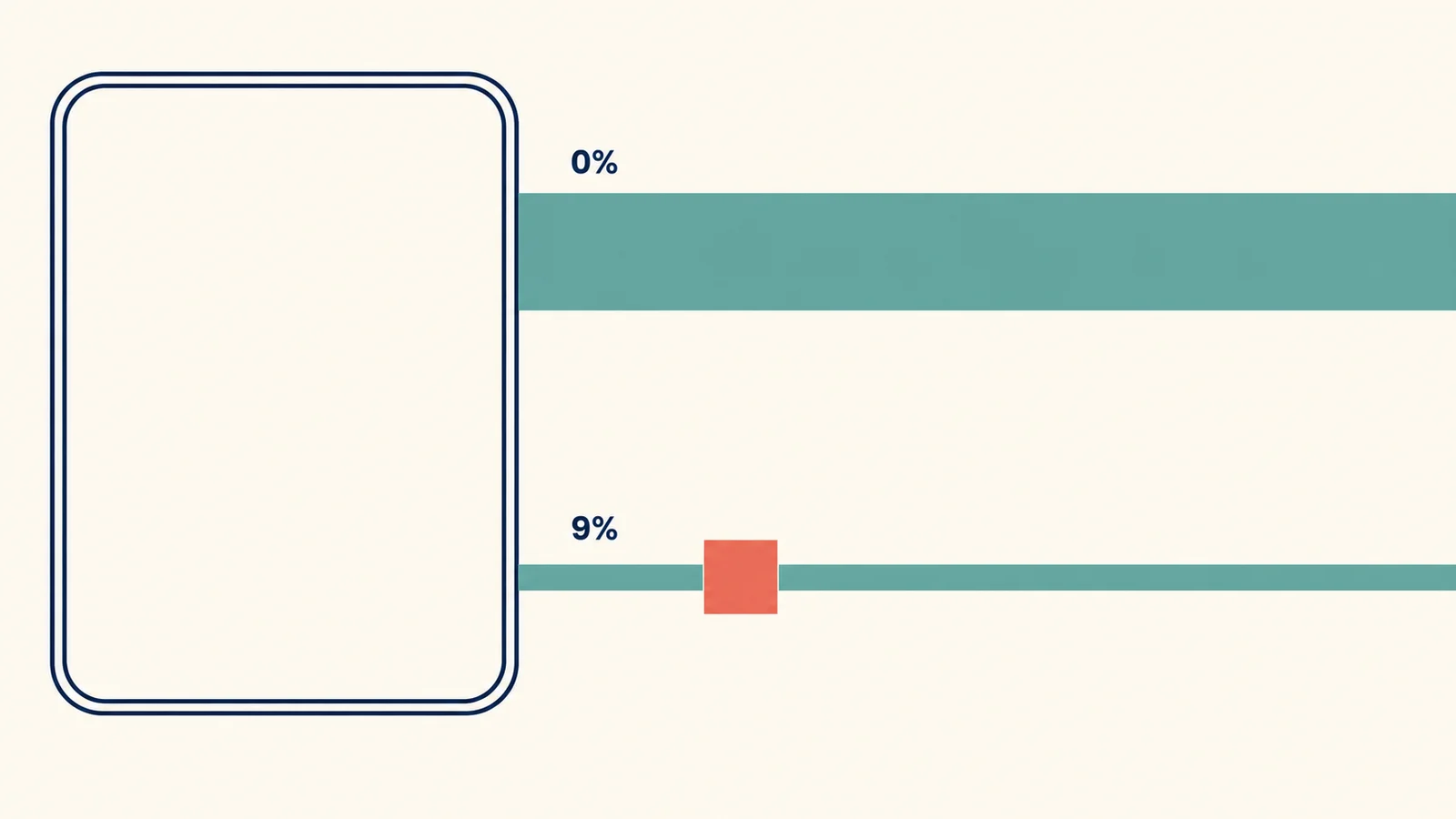
The rate is narrower than the brochures suggest. Article 3(2) gives 0% on Qualifying Income and 9% on Taxable Income that is not Qualifying Income (CT Law). Everything turns on that adjective.
One currency point first. Qualifying and Excluded Activities now sit in Ministerial Decision No. 229 of 2025, which repealed MD 265 of 2023 and applies retroactively from 1 June 2023. A memo citing MD 265 describes rules that no longer exist.
Accuracy and scope: Rules and figures were checked against primary sources available through August 3, 2026. This is general information, not tax, legal, or financial advice.
| Situation | Rate | Threshold or condition |
|---|---|---|
| Standard taxable person | 0%, then 9% | 0% up to AED 375,000 of Taxable Income |
| QFZP, Qualifying Income | 0% | All eight conditions met |
| QFZP, non-Qualifying Income | 9% | No AED 375,000 allowance |
| Free Zone Person failing a condition | Standard bands | Status lost for that period plus four |
| Small Business Relief | No taxable income | Revenue to AED 3,000,000; closed to a QFZP |
| Large multinational groups | 15% effective floor | EUR 750m revenue, years from 1 Jan 2025 |
| Natural persons | Standard bands | Only above AED 1,000,000 turnover a year |
Sources: Cabinet Decision No. 116 of 2022; EY for the 15% figure.
A QFZP forfeits the AED 375,000 allowance
The zero-rate band in Cabinet Decision No. 116 of 2022 is not available to a QFZP. The FTA is blunt: a QFZP "is not eligible to benefit from the 0% standard Corporate Tax rate applicable on Taxable Income up to the AED 375,000 threshold, and is subject to 9% on its Taxable Income that is not Qualifying Income" (FTA guide, section 3.3).
Read that arithmetic slowly. Tax starts at the first dirham, not the 375,001st. A free zone company whose mainland branch makes AED 300,000 of taxable profit pays AED 27,000. A mainland company with identical profit pays nothing.
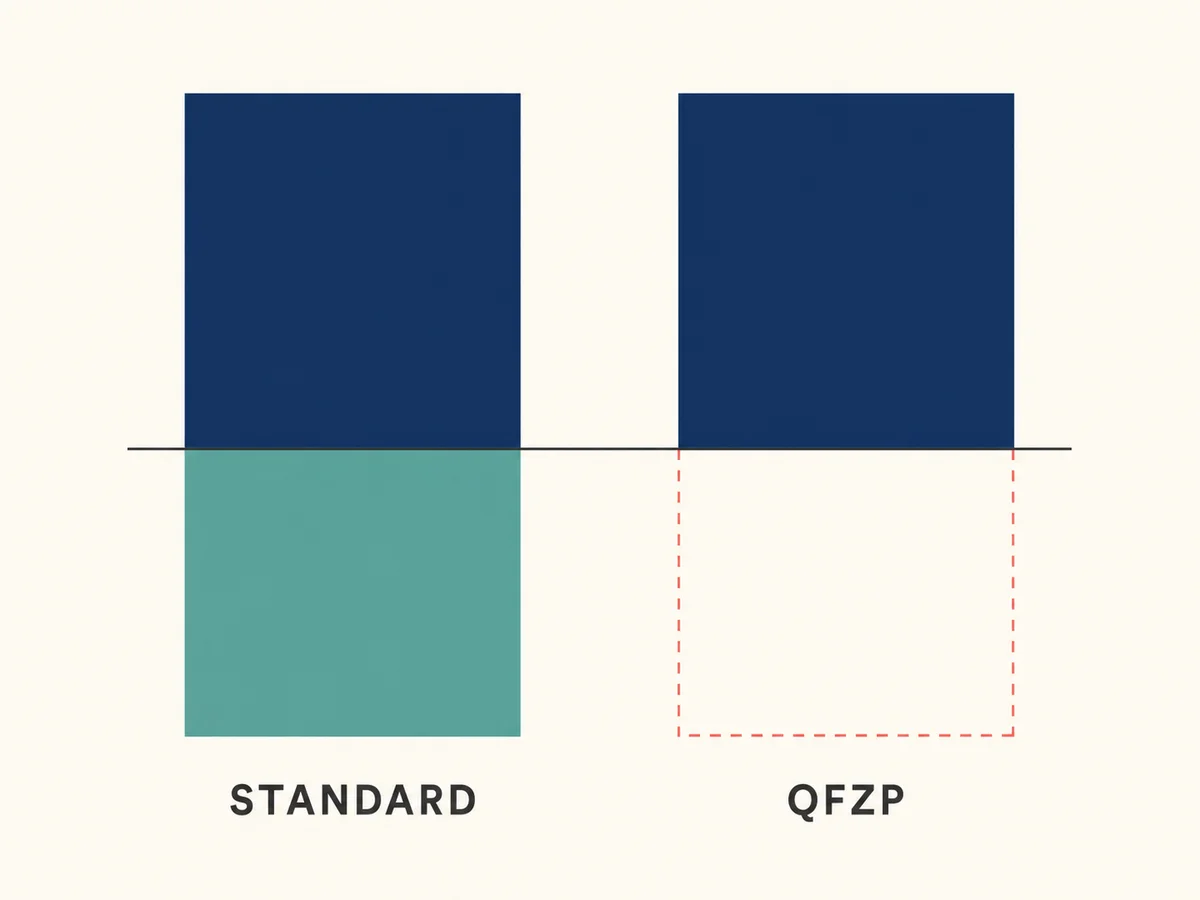
The forfeiture goes further. A QFZP computes tax on non-qualifying income without Small Business Relief, Qualifying Group Relief, Business Restructuring Relief, transfers of tax losses, or the Tax Group regime (FTA guide). For a small consultancy billing mainland clients that is usually the wrong trade, which is why Article 19 lets you elect out.
Eight conditions, and what breaks each one
Five conditions sit in Article 18(1) of the Corporate Tax Law: substance in the State, Qualifying Income, no Article 19 election, and compliance with Articles 34 and 55 on arm's length pricing and transfer pricing files. Article 5(1) of MD 229 adds two more. Being a Free Zone Person at all makes eight.
| # | Condition | What breaks it |
|---|---|---|
| 1 | Is a Free Zone Person registered in a Free Zone | Sole traders and natural persons cannot qualify |
| 2 | Maintains adequate substance in the Free Zone | No qualified full-time staff; core activities run abroad |
| 3 | Derives Qualifying Income | Non-qualifying services sold to mainland or foreign clients |
| 4 | Has not elected into the standard regime | The election itself triggers the five-period consequence |
| 5 | Complies with the arm's length principle | Underpriced related-party services |
| 6 | Maintains transfer pricing documentation | Master or local file missing where thresholds apply |
| 7 | Prepares audited financial statements | Applies to every QFZP, with no small-company exemption |
| 8 | Non-qualifying revenue within de minimis | Exceeding the lower of 5% of revenue or AED 5,000,000 |
Condition 2 is where paper structures fail. Cabinet Decision No. 100 of 2023 requires core income-generating activities in a Free Zone or Designated Zone, with adequate assets, adequate qualified full-time employees, and adequate operating expenditure, assessed against each activity. Not each company. Each activity.
One visa holder covering four business lines is a weak answer, and it is the same economic substance doctrine applied across most low-tax jurisdictions. Outsourcing is allowed, but only to another person in a Free Zone or Designated Zone under supervision. Wider outsourcing is permitted only for Qualifying Intellectual Property, so an offshore development team does not satisfy condition 2 except for IP income.
Condition 6 deserves a check. Master file and local file duties under Ministerial Decision No. 97 of 2023 bite above group and entity revenue thresholds, and the figures repeated in secondary commentary should be confirmed against the decision itself (DLA Piper).
Who you sell to matters more than what you sell
Article 3(1) of Cabinet Decision No. 100 of 2023 lists four categories of Qualifying Income, and the first is the one most articles get backwards. Income from transactions with another Free Zone Person qualifies unless it comes from an Excluded Activity. The Qualifying Activities list governs sales to Non-Free Zone Persons only.
The FTA's Example 1 settles it, using legal services, which appear nowhere on that list, and confirming they are Qualifying Income when supplied to free zone companies (FTA guide). The same firm billing a mainland client derives non-qualifying revenue.
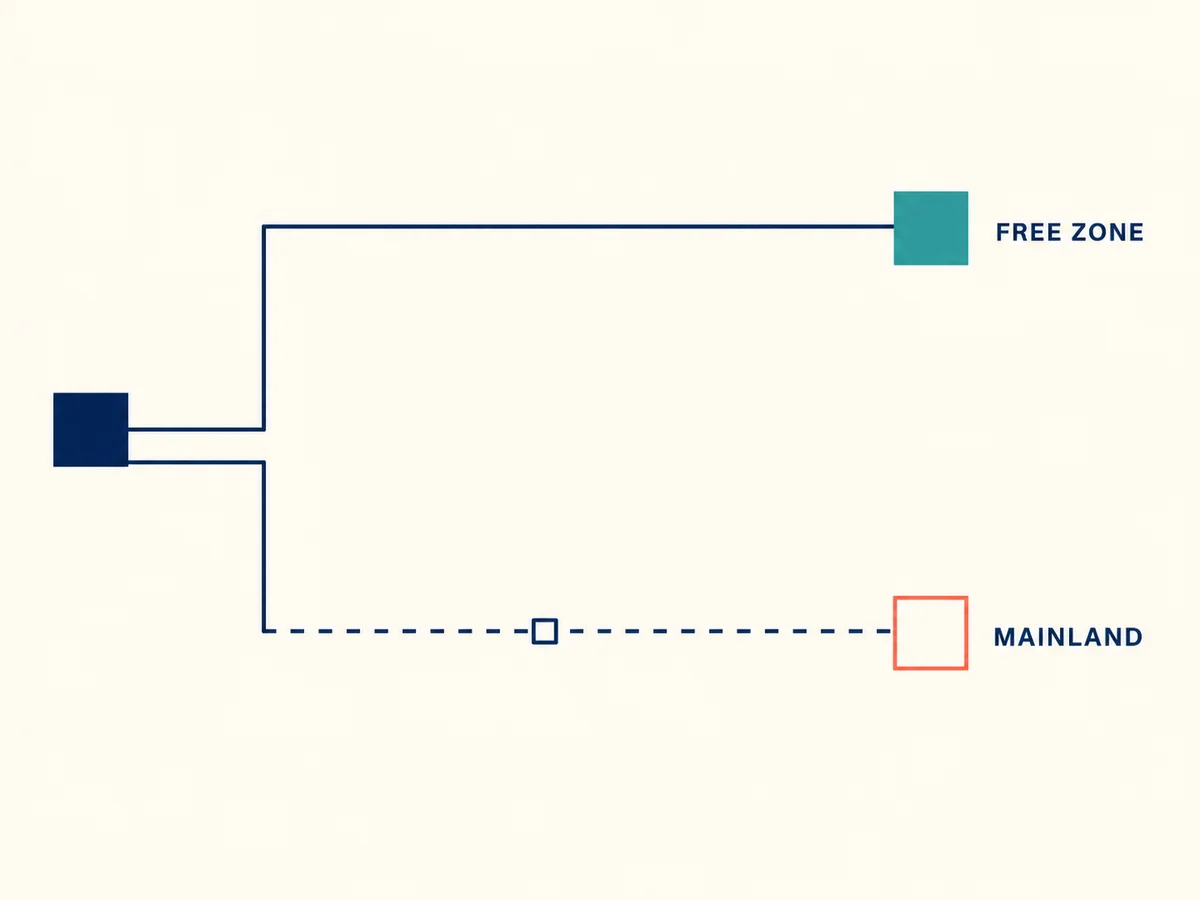
That route closes on the Beneficial Recipient test. The counterparty must have the right to use and enjoy the service or good, with no obligation to pass it on (CD 100, Article 3(3)). A friendly free zone entity re-invoicing a mainland customer is a conduit, not a recipient.
When the customer sits outside the zone system, only the Article 2(1) activities in MD 229 of 2025 qualify, and Article 2(2) overrides everything.
| Qualifying Activities, Art. 2(1) | Excluded Activities, Art. 2(2) |
|---|---|
| Manufacturing of goods or materials | Transactions with natural persons, except ships, fund management, wealth management, aircraft finance |
| Processing of goods or materials | Banking |
| Trading of Qualifying Commodities | Insurance, without prejudice to reinsurance and headquarter services |
| Holding shares and securities for investment | Finance and leasing, without prejudice to commodities, ships, treasury, aircraft |
| Ownership and operation of Ships | Immovable property, other than Commercial Property in a zone sold to a Free Zone Person |
| Reinsurance services | Any ancillary activity |
| Fund management services | |
| Wealth and investment management | |
| Headquarter services to Related Parties | |
| Treasury and financing, Related Parties or own account | |
| Financing and leasing of Aircraft | |
| Distribution in or from a Designated Zone | |
| Logistics services | |
| Ancillary activities |
Now read the left column for what is absent. Consultancy is not there. Neither is marketing, software development, e-commerce, agency work or professional services generally. A free zone consultancy billing mainland or overseas clients derives non-qualifying revenue on every invoice, and for most such firms that breaches de minimis inside the first quarter. This is the most common reason a founder discovers, years later, that the company was never a QFZP.
Three MD 229 changes matter if you trade goods. Qualifying Commodities now include industrial chemicals, associated by-products and environmental commodities such as carbon credits. The exchange-traded test gives way to a Quoted Price test accepting a recognized price reporting agency. And commodity trading loses qualifying status where distribution, warehousing, logistics or inventory management reaches 51% or more of revenue.
Two smaller shifts: treasury and financing now qualify for Related Parties or the company's own account, and shares count as held for investment only after an uninterrupted twelve months. IP income is apportioned by qualifying expenditures plus up-lift, over overall expenditures, times overall income, with up-lift capped at 30% (MD 229, Article 4). Marketing IP, trademarks included, is excluded outright.
De minimis, and the five-period lockout
Article 3 of MD 229 fixes the allowance at 5% of total revenue or AED 5,000,000, whichever is lower. "Lower" does the work. Below AED 100,000,000 of revenue the 5% figure always binds, so the AED 5 million headline is irrelevant to nearly every company that reads about it.
Revenue attributable to a Domestic or Foreign Permanent Establishment leaves both sides of the fraction, as does revenue from disqualifying immovable property. The FTA's worked example at section 3.2.8 shows the mechanics: a company with AED 10,000,000 of revenue, AED 2,000,000 of it from a Domestic Permanent Establishment, tests de minimis against AED 8,000,000, and that AED 2,000,000 is not non-qualifying revenue (FTA guide). Its allowance is AED 400,000, not AED 500,000.
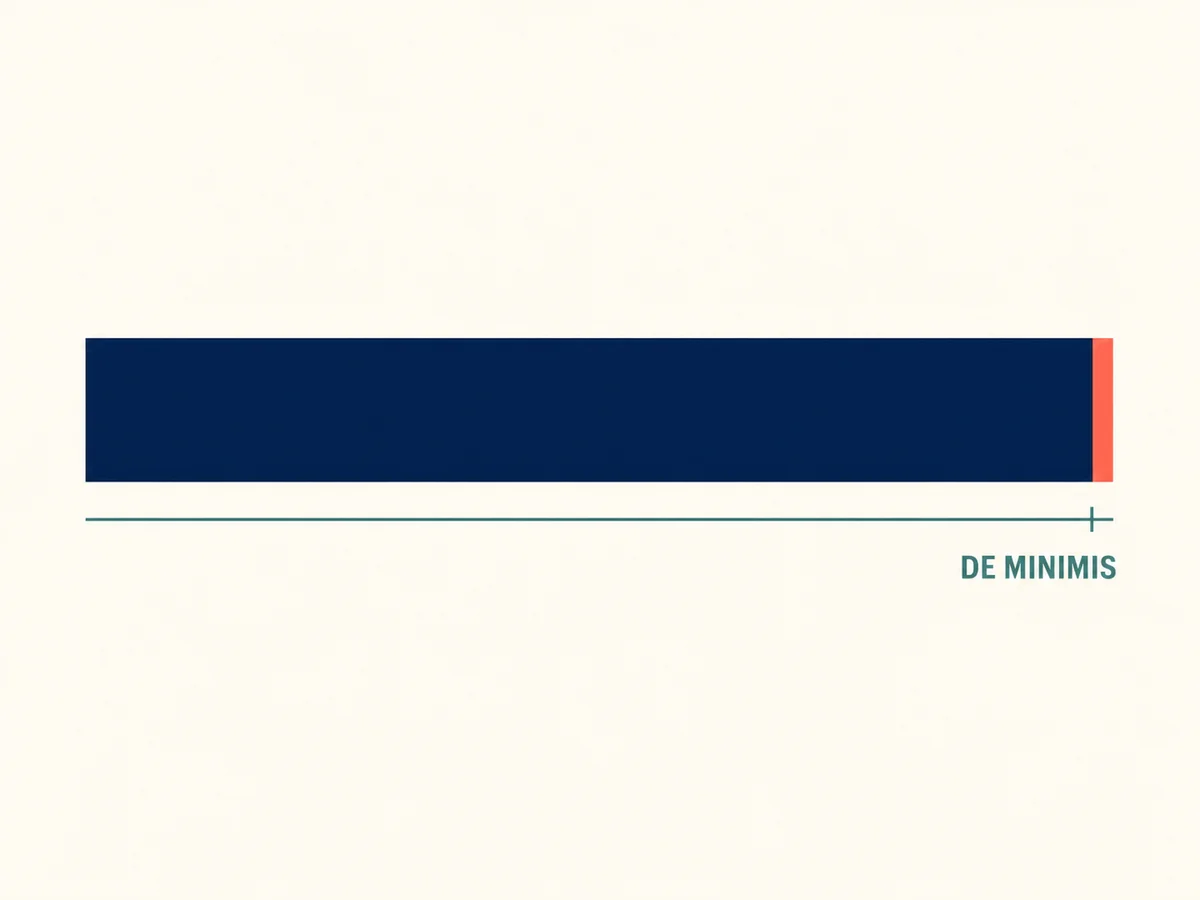
The relief is narrower than it looks, because the branch profit does not escape. It is taxed at 9% with no AED 375,000 band against it (CT Law), and immovable property outside the Commercial Property carve-out works the same way.
So a mainland office rising to a permanent establishment does not cost you QFZP status. It costs 9% on that branch from the first dirham while the free zone side continues at 0%. A real breach is different. Article 5(2) of MD 229 provides that a QFZP failing any condition ceases to be one from the beginning of that tax period and for the four subsequent periods.
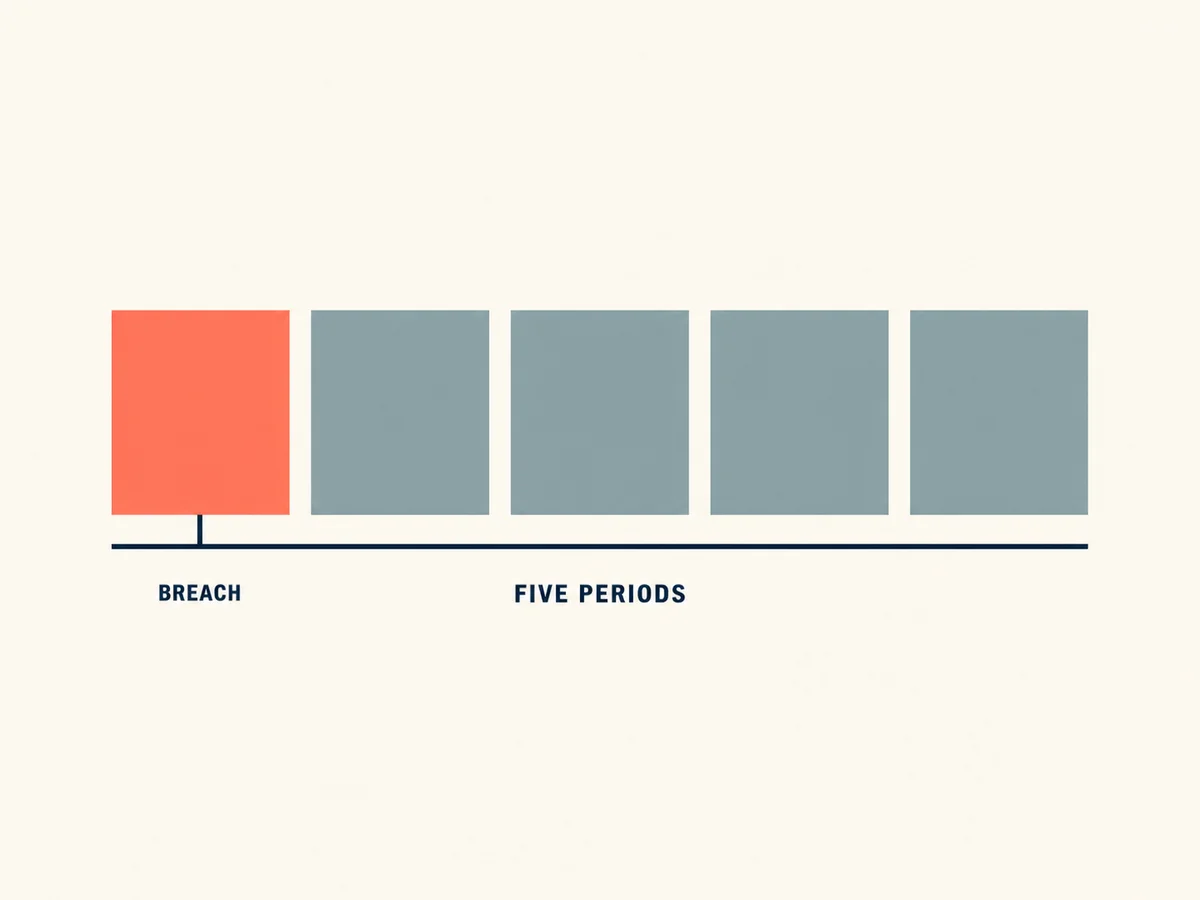
Five tax periods, and the first is retrospective. A breach found in November unwinds everything invoiced since January. The fall-back is the ordinary regime: 0% on the first AED 375,000, 9% above, plus the reliefs a QFZP had to surrender. The trigger may have been nothing more than an unprepared transfer pricing file, and the Article 19 election carries the identical consequence.
Deadlines, audits and penalties
Returns are due no later than nine months after the tax period ends, and the tax is payable in the same nine months (CT Law, Articles 48 and 53). Registration runs on its own clock under FTA Decision No. 3 of 2024.
| Obligation | Deadline | Cost of missing it |
|---|---|---|
| Registration, incorporated from 1 Mar 2024 | 3 months from incorporation | AED 10,000 |
| Registration, pre-existing companies | License-month schedule, 31 May to 31 Dec 2024 | AED 10,000, waiver available |
| Natural person registration | 31 March of the following year | AED 10,000 |
| Tax return filing | 9 months after period end | AED 500 a month, AED 1,000 from month 13 |
| Tax payment | 9 months after period end | 14% per annum, applied monthly |
| Filing to secure the late-registration waiver | 7 months after first period end | Loss of the waiver |
| Agreed-upon procedures report, zone distributors | 30 days after the filing deadline | Distribution condition treated as unmet |
| Transfer pricing file on FTA request | 30 days | Per the Tax Procedures Law |
Penalty amounts: Cabinet Decision No. 75 of 2023 and its amendments.
The AED 10,000 late-registration penalty can be removed. The FTA's waiver cancels it automatically where the person files its first return or annual declaration within seven months of the end of its first tax period rather than nine, with paid penalties credited through EmaraTax. The authority reported 68,600 beneficiaries and expects 91,000 (FTA, May 2026).
One date needs correcting. Advisory blogs describe 31 July 2026 as the waiver's cut-off. It is not a program deadline; it is what seven months after the first period end works out to for a company whose first period was calendar 2025, and whose ordinary filing date is 30 September 2026. Compute your own date.
Ministerial Decision No. 84 of 2025 requires audited financial statements from every QFZP regardless of revenue, for tax periods beginning on or after 1 January 2025, alongside the AED 50,000,000 revenue trigger for other taxable persons. No audit means a broken condition.
FTA Decision No. 6 of 2026 adds a second trap. A QFZP claiming the Designated Zone distribution activity must obtain an agreed-upon procedures report from an independent UAE-licensed auditor under ISRS 4400, verifying that customers are resellers and goods were imported through a Designated Zone. It is due 30 days after the filing deadline and applies to periods beginning on or after 1 January 2026 (Deloitte). Advisory firms report different issue dates for it.
Small business relief, freelancers and the 15 percent floor
Small Business Relief treats a business as having no taxable income where revenue does not exceed AED 3,000,000, and Ministerial Decision No. 73 of 2023 excludes Qualifying Free Zone Persons by name, along with constituent companies of multinational groups. As legislated it continues only for tax periods ending on or before 31 December 2026.
That sunset matters to any founder weighing an Article 19 election to claim the relief. Electing out costs QFZP status for five tax periods, to buy a relief scheduled to lapse after 2026.
Freelancers sit outside the regime entirely, since condition 1 requires a juridical person. Corporate tax reaches a natural person only where turnover from business activities exceeds AED 1,000,000 in a Gregorian calendar year, with wage, personal investment and real estate investment income excluded (Cabinet Decision No. 49 of 2023). Registration falls due by 31 March of the following year.
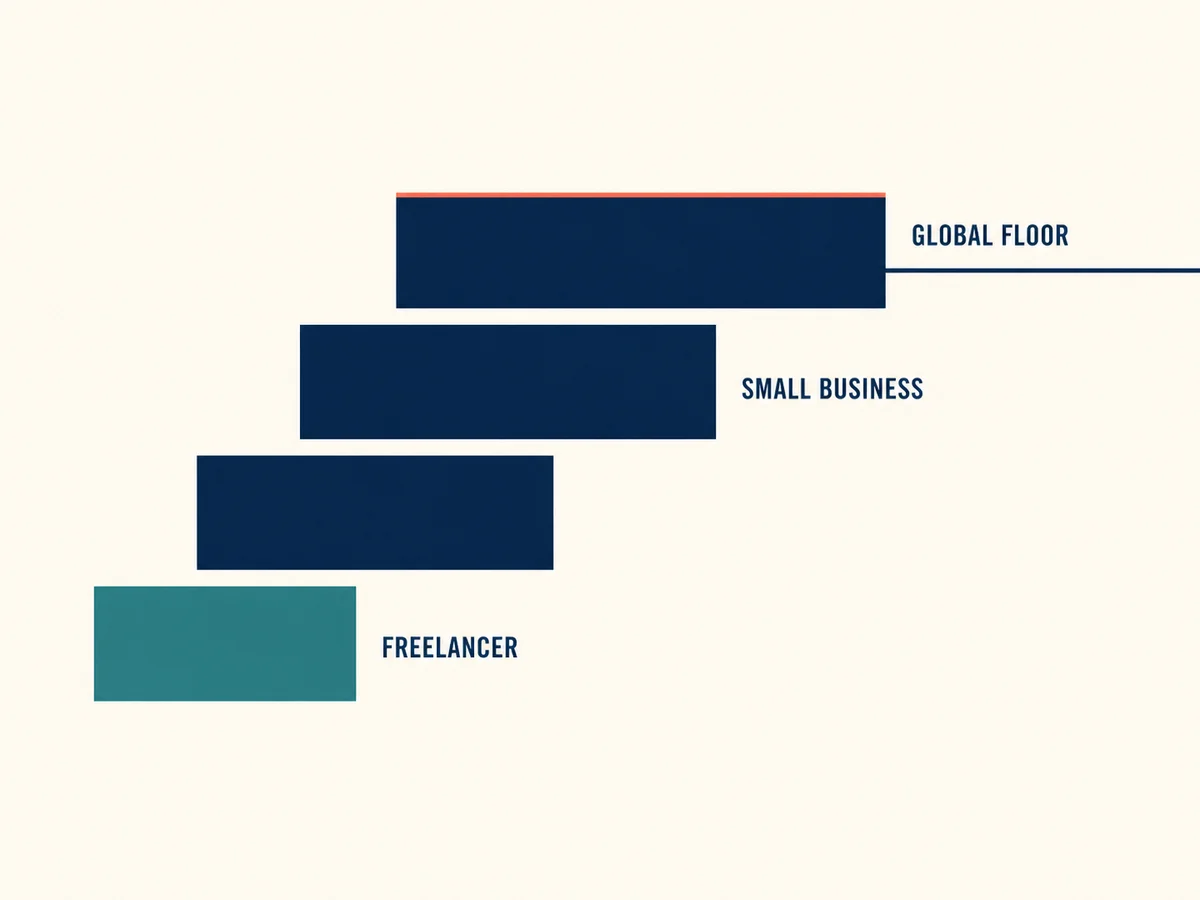
At the other end of the scale the 0% stops being the relevant number. Cabinet Decision No. 142 of 2024 applies a Domestic Minimum Top-up Tax to constituent entities of groups with consolidated revenue of EUR 750 million or more in two of the four preceding fiscal years, for fiscal years beginning on or after 1 January 2025. The minimum effective rate is 15% (EY).
A free zone subsidiary in such a group can hold perfect QFZP status and still be topped up to the floor, the UAE applying the same global minimum tax rules as everyone else. Two numbers for completeness: VAT is 5%, mandatory once taxable supplies and imports reach AED 375,000 (Ministry of Finance), and withholding tax on domestic and cross-border payments is 0% under Article 45(1) of the CT Law.
Frequently Asked Questions
Does a free zone license automatically give my company the 0% rate?
The license makes you a Free Zone Person, and you are then a Qualifying Free Zone Person by default, with no application or certificate involved. The status lasts only until you fail one of eight conditions, and the 0% covers Qualifying Income alone. Because nothing is issued, most companies that lose it find out during an audit.
My free zone company earned AED 300,000 from a mainland client. Is that under the AED 375,000 threshold?
No. A QFZP is expressly not eligible for the AED 375,000 band (FTA guide), so non-qualifying income is taxed at 9% from the first dirham. Separately, AED 300,000 of mainland revenue would breach the de minimis limit for most small free zone companies, costing QFZP status entirely.
What happens if I exceed the de minimis limit?
You cease to be a Qualifying Free Zone Person from the beginning of that tax period, retrospectively, and for the following four periods. That is five tax periods on standard rates. The fall-back is the ordinary regime, 0% on the first AED 375,000 and 9% above, plus the reliefs a QFZP cannot use.
Can a free zone company sell to mainland UAE and keep the 0% rate?
Only where the sale is a Qualifying Activity and not an Excluded Activity, or where it stays inside the de minimis allowance. Manufacturing, processing, logistics, Designated Zone distribution and several financial activities can be sold to the mainland at 0%. Consultancy, marketing and software cannot. Mainland activity also risks creating a permanent establishment, taxed at 9% regardless.
This guide is for general information only and is not tax advice. A qualified professional should review your specific facts before you act.
Sources Used in This Guide
- Federal Decree-Law No. 47 of 2022 on the Taxation of Corporations and Businesses
- Cabinet Decision No. 100 of 2023 on Qualifying Income
- Ministerial Decision No. 229 of 2025 on Qualifying and Excluded Activities
- FTA Corporate Tax Guide: Free Zone Persons (CTGFZP1)
- Ministerial Decision No. 84 of 2025 on audited financial statements
- Cabinet Decision No. 116 of 2022 on the Article 3 threshold
- Cabinet Decision No. 142 of 2024 on Top-up Tax for multinational enterprises
- Deloitte Middle East: FTA issues Decision No. 6 of 2026
Related Articles
- Dubai free zone vs Estonia e-residency — covering the free zone versus Estonia decision.
- Panama vs UAE tax residency — covering personal residency alongside the company.
- Economic substance requirements explained — covering the substance doctrine behind condition 2.
- Pillar Two global minimum tax explained — covering the 15% floor for large groups.