

In This Guide
- Zero federal tax, full California tax, same paycheck
- Domicile is the half that a plane ticket does not break
- California's 546-day safe harbor fails in four ways
- New York allows the tax motive but demands proof
- Three day counts that do not line up
- Virginia's six-month trap
- South Carolina wants permanent residence abroad
- What each state actually weighs
- The eight states with no income tax
- Frequently Asked Questions
- Sources Used in This Guide
- Related Articles
Zero federal tax, full California tax, same paycheck
Qualify for the Foreign Earned Income Exclusion and $132,900 of foreign salary drops out of federal taxable income in 2026, up from $130,000 (IRS). California allows none of it. Franchise Tax Board Publication 1031 settles the point in a sentence: "California does not allow a foreign tax credit or a foreign earned income exclusion" (FTB Publication 1031). It adds that treaties limited by their terms to federal income taxes do not apply to California. Zero federal, up to 13.3% state, one paycheck.
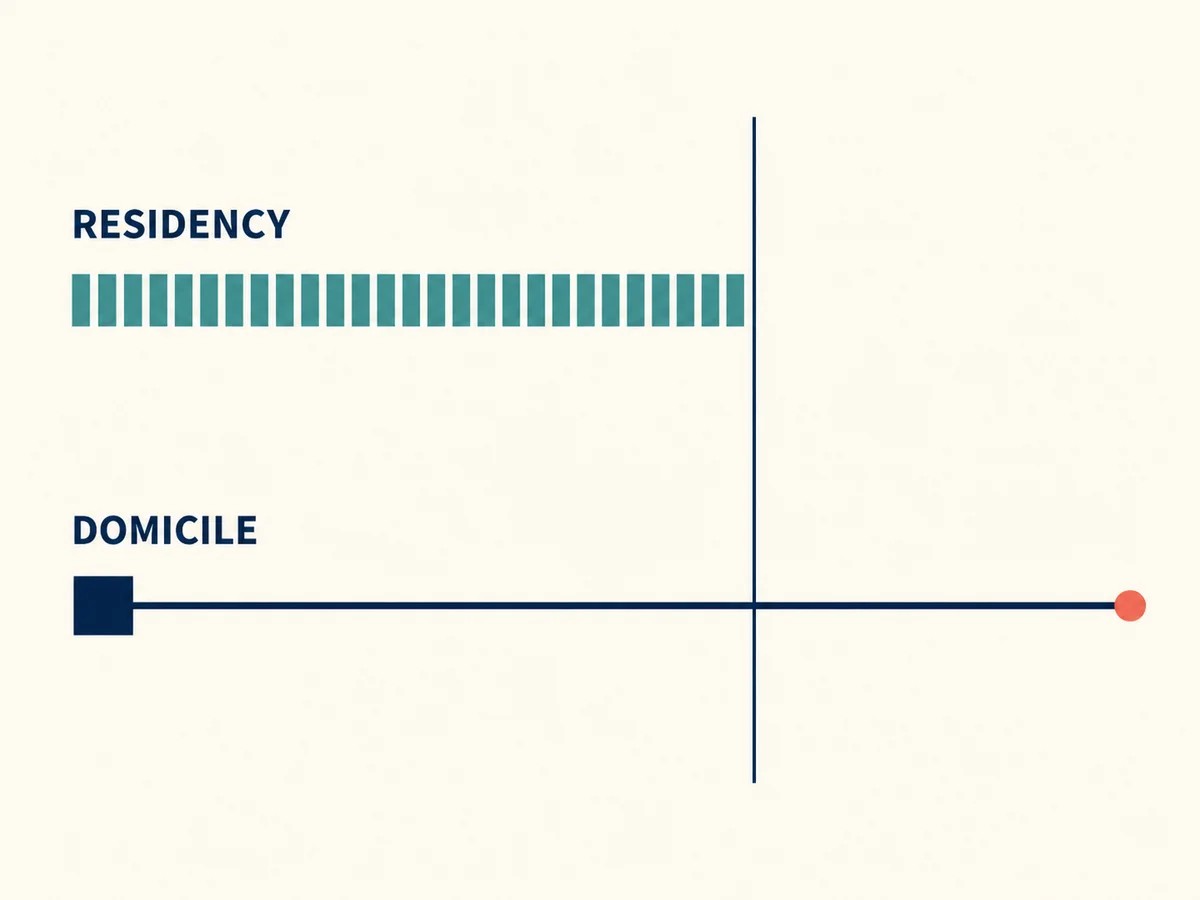
Part of why this blindsides people is that the IRS page explaining the exclusion says nothing about state tax (IRS: Foreign Earned Income Exclusion); the federal side is covered in our FEIE guide. The other part is domicile. You lose residency by being somewhere else. Domicile outlives the sold house and the one-way ticket, and you shed it only by acquiring a new one and proving you did.
Practitioners call the states below the "sticky states." No revenue department uses the phrase and it carries no legal weight. The substance holds for California, Virginia, and South Carolina, each for a different reason. New Mexico is the weakest leg.
| State | Residency basis | Escape route for people abroad | FEIE honored? | Top rate 2026 |
|---|---|---|---|---|
| California | Domicile, or presence for other than a "temporary or transitory purpose" | §17014(d): 546 days abroad under an employment contract, ≤45 return days a year, under $200k intangible income | No | 13.3% |
| New York | Domicile, or abode plus 183+ days | The 548-day rule (450 foreign days, ≤90 NY days) and the 30-day rule | Not addressed in sources reviewed | 10.9% |
| Virginia | Domicile at any time in the year, or abode plus 183+ days | None — you must establish domicile elsewhere | Not addressed | 5.75% |
| South Carolina | Domicile only; no minimum days | None — permanent foreign residence required | Not addressed | 6.0% (see note) |
| New Mexico | Domicile all year, or 185+ days | None | Not addressed | 5.9% |
| Florida, Texas, Nevada, five others | No income tax | Not applicable | Not applicable | 0% |
Rates from the Tax Foundation's 2026 table. It annotates South Carolina's 6.0% as "temporarily reduced from 6.2% through June 30, 2026," which is ambiguous for a full-year calculation. Confirm the operative rate with SCDOR.
Accuracy and scope: Rules and figures were checked against primary sources available through August 3, 2026. This is general information, not tax, legal, or financial advice.
Domicile is the half that a plane ticket does not break
Most states run two residency tests, and leaving the country defeats only one. New York's Tax Law §605(b) makes you a resident if you are domiciled there, subject to two exceptions, or if you keep a permanent place of abode and spend more than 183 days in state (NY Nonresident Audit Guidelines, p.5). New Mexico splits it just as plainly: domiciled "during all of the taxable year," or present 185 days or more "regardless of domicile" (NMAC 3.3.1.9).
The day-count half catches people who never claimed to have left. It does nothing for the person who did leave, because the domicile half runs on its own. California drafted that in: a resident includes "every individual domiciled in this state who is outside the state for a temporary or transitory purpose," and subdivision (c) confirms residency survives a temporary absence (R&TC §17014). More than nine months in state raises a presumption of residency (R&TC §17016).
The burden sits with you. Virginia's regulation is blunt: "A simple declaration of intent to abandon domicile, or physical presence elsewhere is insufficient to abrogate Virginia domicile," and the burden rests "with the individual" (23VAC10-110-30). New York wants evidence that is "clear and convincing," from Bodfish v. Gallman, 50 AD2d 457 (p.10). Quiet years prove nothing: in Farkas, DTA Nos. 809927 and 809928, unaudited nonresident filings did not establish nonresident status.
California's 546-day safe harbor fails in four ways
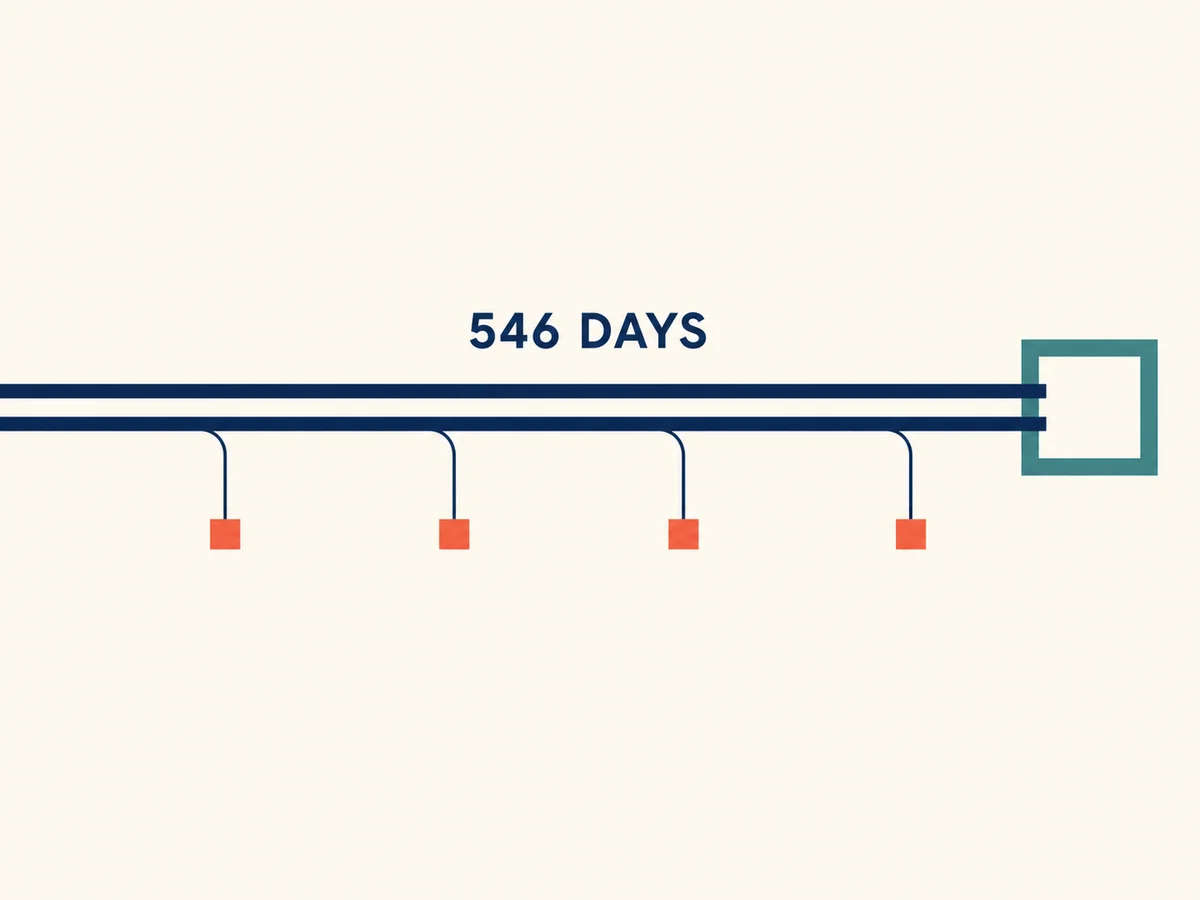
California is the only state here with a bright-line exit for people working abroad. R&TC §17014(d) treats a domiciliary as outside the state during an absence of "at least 546 consecutive days under an employment-related contract" (R&TC §17014) — roughly eighteen months. It applies to years beginning on or after 1 January 1994, and an accompanying spouse absent for the same period is treated the same way. It never asks what you intended. It asks what you did.
The same subdivision then supplies four ways to lose it.
- The contract. The absence must be under an employment-related contract. A retiree or someone living on investments falls outside the provision by its own terms.
- The 45-day cap. "Returns to this state, totaling in the aggregate not more than 45 days during a taxable year, shall be disregarded." Christmas, a summer fortnight, a funeral, and a few business trips is most of it.
- The $200,000 cap. The harbor is lost with income "from stocks, bonds, notes, or other intangible personal property in excess of two hundred thousand dollars ($200,000)" in any year the contract is in effect, tested separately for each spouse.
- The principal-purpose bar. It "shall not apply to any individual if the principal purpose of the individual's absence from this state is to avoid any tax."
California's conformity to the Internal Revenue Code moved recently and changed none of this. Senate Bill 711, approved 1 October 2025, advanced the state's IRC "specified date" from 1 January 2015 to 1 January 2025. The current edition of Publication 1031, updated February 2026, still refuses both the exclusion and the credit.
New York allows the tax motive but demands proof
New York's guidelines say motives are "immaterial, except as they indicate intention," so long as the intent to abandon the old domicile and acquire a new one is "absolute and fixed" (Guidelines, p.9). Moving to cut your New York bill is permitted outright — the exact inverse of California's principal-purpose bar. The same plan is unremarkable in one state and disqualifying in the other.
What it wants instead is evidence, weighted harder when the destination is abroad. The regulation states that a U.S. citizen "will not ordinarily be deemed to have changed such citizen's domicile by going to a foreign country unless it is clearly shown that such citizen intends to remain there permanently" (Guidelines, p.36). Matter of Newcomb, 192 NY 238: "Less evidence is required to establish a change of domicile from one state to another than from one nation to another." Immigration status follows the same logic. A renewable working visa counted against the taxpayer in Mercer, 92 AD2d 636; permission to reside permanently supported the change in McKone, 111 AD2d 1051 (Guidelines, p.37).
Corporate expats should read Matter of Eileen J. Taylor, DTA No. 822824. A New York City domiciliary sent to London on a three-year assignment, later extended in one-year increments, remained New York-domiciled for 2002 through 2004 because her presence there "remained sufficiently tenuous and contingent upon her employer's desire to keep her there" (Guidelines, p.38). The extensions cut against her. There is a floor, though: foreign citizenship is "generally of little consequence," and Bernbach, 98 AD2d 559, called it irrational to require surrendering citizenship to prove abandonment — a step with its own exit tax.
Three day counts that do not line up
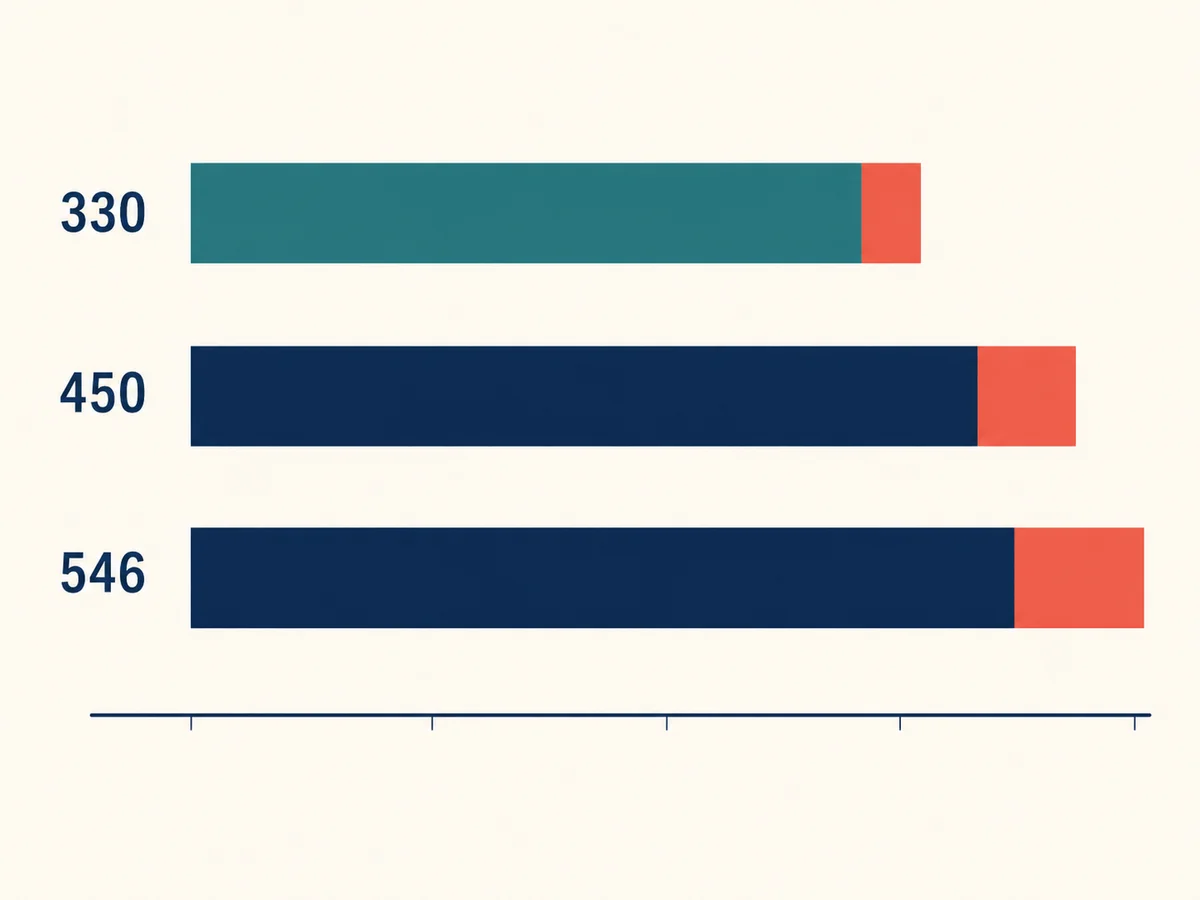
Three separate day counts govern one expat year, and no two share a period, a threshold, or a definition of a day. The federal physical presence test wants 330 full days abroad in any 12 consecutive months plus a foreign tax home (IRS). California wants 546 uninterrupted days. New York wants 450 inside a 548-day window. A calendar built for one will fail the other two.
New York's 548-day rule has three conditions, and the third is where people lose (Guidelines, p.33). At least 450 days in a foreign country within any 548 consecutive days. No more than 90 days in New York for you, your spouse, and your minor children combined. Then a pro-rata cap on the partial years at each end: days in the short period, divided by 548, times 90. The guidelines call that ratio "the one condition where an individual is often vulnerable." Two features soften it. You "may claim any period of 548 consecutive days," so overlapping windows are allowed (p.35), and both full and part days count toward the 450 (TSB-A-11(3)I) — more generous than the federal full-day count. A companion 30-day rule covers people with no New York abode, one abroad all year, and 30 days or fewer in state.
| Federal FEIE (physical presence) | California §17014(d) | New York 548-day rule | |
|---|---|---|---|
| Qualifying period | Any 12 consecutive months | 546 consecutive days | Any 548 consecutive days |
| Days abroad required | 330 full days | The whole period, uninterrupted | 450; full and part days count |
| Days permitted back | 35 in the 12-month period | 45 per taxable year | 90 per period, including spouse and minor children |
| Who can use it | Any qualifying taxpayer | Employment-related contract only | Any domiciliary |
| Income cap | None | Under $200,000 intangible income | None |
| Blocked by tax motive? | No | Yes | No — motives "immaterial" |
| What it delivers | Excludes $132,900 | Nonresident status | Nonresident status |
Virginia's six-month trap
Virginia has no day-count escape, and it punishes second thoughts. Returning to reside in Virginia within six months of moving out is "prima facie evidence that no intent to abandon Virginia domicile existed" (23VAC10-110-30). Pair that with §58.1-302, which makes a resident of "every person domiciled in Virginia at any time during the taxable year," and a failed relocation reopens a full year of residency (Va. Code §58.1-302).
Six months is a short window for an overseas move. Contracts fall through, visas get refused, a parent gets ill. Someone who tries Lisbon for five months, comes home, and files as a Virginia nonresident for the departure year is arguing against a presumption written into the code. The only route out is evidentiary: abandon Virginia domicile and affirmatively establish one elsewhere.
South Carolina wants permanent residence abroad
South Carolina does not care how long you stay away. Unlike states that use a period such as 183 days, it "does not have a minimum time that must be spent in the state to be presumed a South Carolina resident" (SCDOR Domicile Guide, p.1). Domicile is the entire test, so zero days in state is not an argument. For people abroad the guide is stricter still: "A person who moves to a foreign country for work is still considered to be domiciled in South Carolina unless he becomes a permanent resident of the foreign country." Regulation 117-620.1 requires that you have "severed all connections with this state" and intend "to reside abroad permanently with no intention of returning."
Two decisions mark the range. In Commission Decision #89-99 (28 July 1989), a taxpayer planning ten years in Saudi Arabia, long enough to vest in the Saudi retirement plan, was still held a South Carolina resident: intent "must be unqualified and not conditioned on a future event," and domicile "once established, is not lost by an absence from it for months or even years." The counterweight is Floyd v. SCDOR, 15-ALJ-17-0458-CC (2016), affirmed 2019, where a taxpayer with no new driver's license, no voter registration in either state, and no property anywhere still won her change of domicile to Wyoming on testimony of intent (pp.11–12). Checklists are evidence of intent, not intent itself. One oddity: South Carolina taxes residents on all personal service income wherever earned, but not on worldwide non-personal-service business income (Code §12-6-2220(4), (6)).

What each state actually weighs
The generic domicile-breaking checklist circulating on expat forums is wrong state by state. New York instructs auditors not to weigh the mere location of bank accounts, where a will is probated, passive partnership interests, political contributions, or where a return is filed; Tax Law §605(c) additionally bars charitable contributions and volunteered time (pp.32–33). Virginia's list expressly includes savings and checking account locations and charitable contributions (23VAC10-110-30). Moving your bank account is a wasted gesture in one state and a data point in the other.
| Factor | New York | Virginia | South Carolina | New Mexico |
|---|---|---|---|---|
| Home or principal residence | Primary #1 | Weighed | Weighed | Weighed |
| Time spent in state | Primary #3 | Weighed | Weighed | Weighed |
| Active business involvement | Primary #2 | Weighed | Weighed | Weighed |
| Items "near and dear" | Primary #4 | — | Weighed | Weighed |
| Family location | Primary #5 | Weighed | Weighed | Weighed |
| Bank account location | Non-factor | Weighed | Weighed | Weighed |
| Charitable contributions | Barred by §605(c) | Weighed | — | — |
| Volunteered time | Barred by §605(c) | — | Weighed | Weighed |
| Driver's license | Secondary | Weighed | Weighed | Discounted, easy to change |
| Voter registration | Secondary | Weighed | Weighed | Discounted, easy to change |
| Vehicle and professional licenses | Secondary | Weighed | Weighed | — |
| Where return is filed | Non-factor | — | Weighed | Weighed |
| Where will is probated | Non-factor | — | — | — |
| Political contributions | Non-factor | — | — | — |
| Foreign immigration status | Weighed (visa type) | — | Decisive | — |
New Mexico gets a mention rather than a section. Nothing in its primary law marks it as unusually aggressive toward people who move abroad, which is why it is the shakiest member of the sticky list. Its definition is standard: domicile is "a true, fixed home... a permanent establishment to which the individual intends to return after an absence" (NMAC 3.3.1.9). The useful line sits elsewhere in the same rule: no single factor is conclusive, and a driver's license and voter registration may carry less weight precisely because they are so easy to change. A revenue department is saying, in its own rules, that the first two items on every expat checklist are the two it trusts least.
The eight states with no income tax
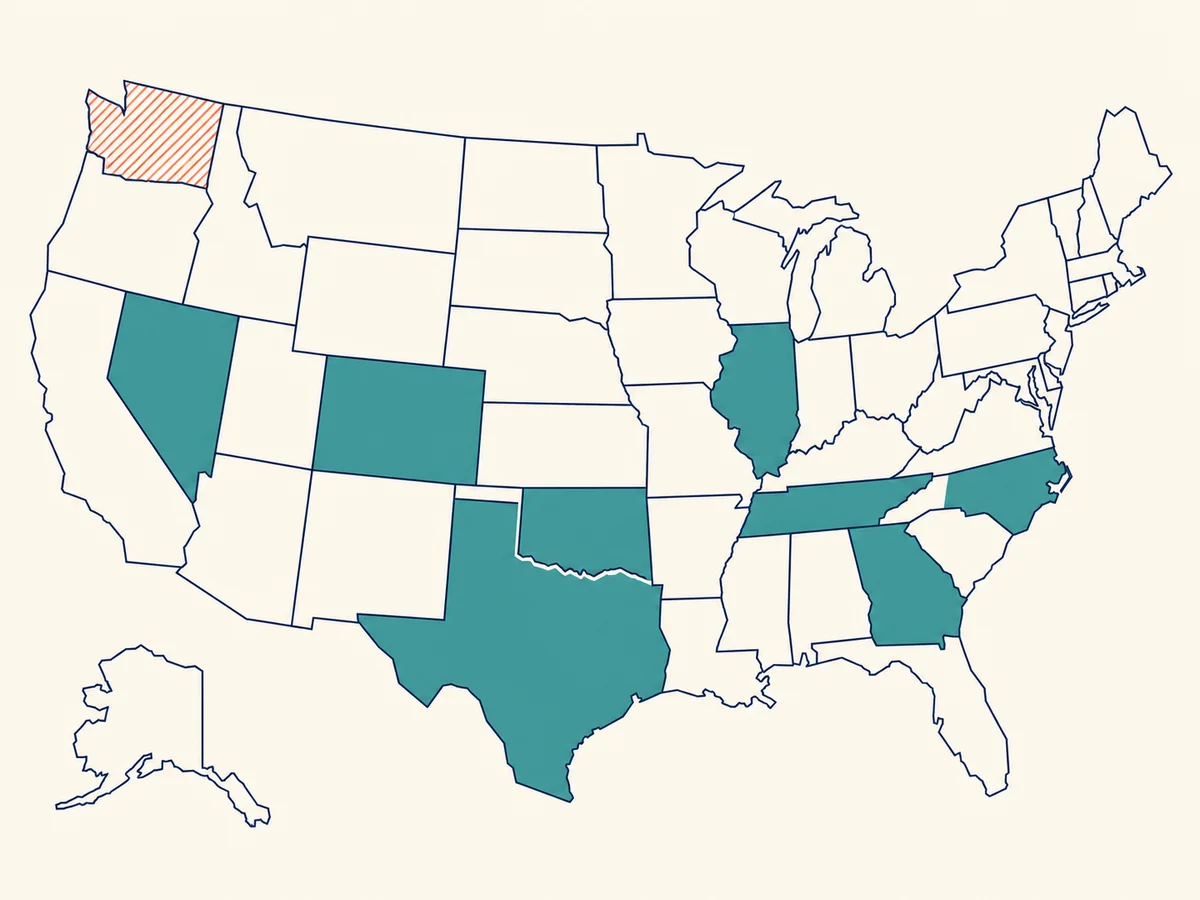
Eight states levy no individual income tax in 2026: Alaska, Florida, Nevada, New Hampshire, South Dakota, Tennessee, Texas, and Wyoming (Tax Foundation). New Hampshire is a recent addition in substance, its interest and dividends tax having been repealed as of 2025. Washington is the near-miss: no tax on wage or salary income, but capital gains taxed at 7%, rising to 9% above $1 million.
The play is to establish domicile in one of the eight before the international move rather than going straight from Sacramento to Singapore, and the reason is evidentiary. Newcomb again: less evidence is required for a change of domicile from one state to another than from one nation to another. California to Nevada is judged on the ordinary standard; California to Portugal invites the harder foreign-domicile analysis. If the domestic move is real and holds, the later move abroad starts from a state with no income tax and no reason to audit anyone's domicile. Two cautions. Floyd cuts both ways: a move to Texas that leaves the house, the family, and the working life behind in Virginia will not survive the Virginia factor list. And federal exposure does not shift, which is why the reporting rules apply whatever your state (FATCA).
Frequently Asked Questions
If I claim the Foreign Earned Income Exclusion, do I still owe California tax?
Yes, if you are still a California resident. Publication 1031 states that California allows neither a foreign earned income exclusion nor a foreign tax credit, and that treaties limited to federal income taxes do not apply. Zero federal tax alongside a five-figure California bill is a normal outcome, not a filing error.
I sold my house, moved abroad, and have not been back. Am I still a resident of my old state?
Possibly. Domicile persists until you acquire a new one. New York's regulation says a U.S. citizen "will not ordinarily be deemed to have changed such citizen's domicile by going to a foreign country unless it is clearly shown that such citizen intends to remain there permanently." South Carolina goes further and generally requires you to become a permanent resident of the foreign country.
Does a two-year expatriate assignment break my domicile?
Usually not on its own. In Matter of Eileen J. Taylor, a three-year London assignment extended in one-year increments left New York domicile intact, because the taxpayer's presence abroad depended on her employer's wish to keep her there. California's answer is mechanical instead: 546 consecutive days under an employment-related contract can qualify regardless of intent, subject to the return-day and income limits.
Will changing my driver's license and voter registration be enough?
No, and in some states they count for less than expats assume. New Mexico's regulation says both may receive less weight precisely because they are easy to change. Running the other way, the taxpayer in Floyd v. SCDOR had no new license and no voter registration anywhere, and still won her domicile change on testimony of intent.
This guide is for general information only and is not tax advice. A qualified professional should review your specific facts before you act.
Sources Used in This Guide
- California R&TC §17014
- California R&TC §17016
- FTB Publication 1031
- California Senate Bill 711 (2025)
- NY Nonresident Audit Guidelines (2021)
- NY advisory opinion TSB-A-11(3)I
- Virginia Code §58.1-302
- Virginia 23VAC10-110-30
- SCDOR Domicile Guide (2021)
- NMAC 3.3.1.9
- IRS: Foreign Earned Income Exclusion
- IRS: 2026 inflation adjustments
- Tax Foundation: 2026 state income tax rates
Related Articles
- How a U.S. citizen can legally pay zero tax — covering the federal layer of the same problem.
- Foreign Earned Income Exclusion: 2026 guide — covering the federal exclusion states may not honor.
- Renouncing U.S. citizenship and the exit tax — covering the nuclear option.
- FATCA explained for Americans abroad — covering the reporting side of moving abroad.