
In This Guide
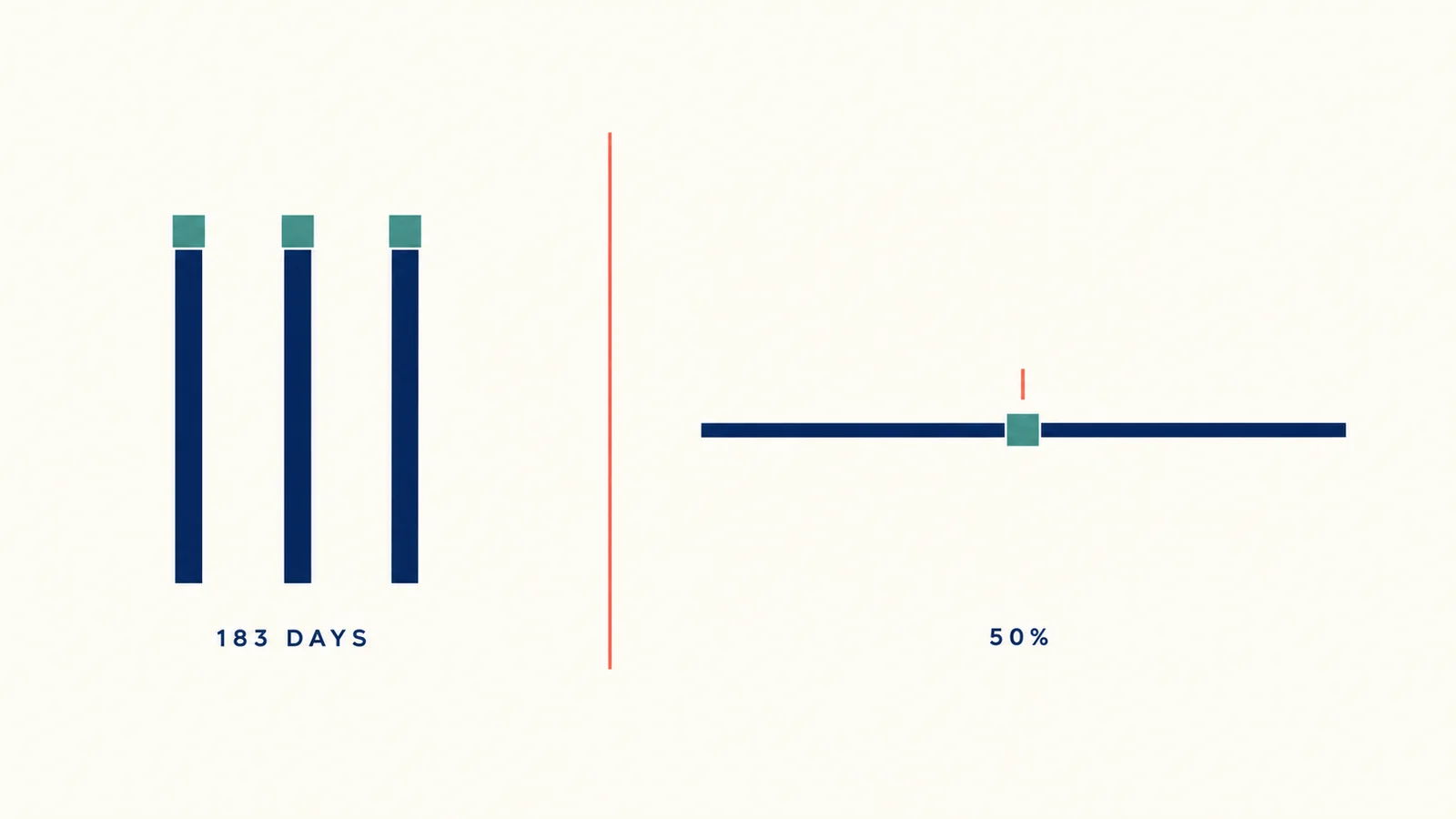
- The 183-day rule is one of three conditions
- How authorities count your days
- November 2025 rewrote the home-office PE rules
- The roles that carry the risk
- Social security runs on its own rulebook
- Nomad visas rarely make your salary tax-free
- Residence at home, and relief for foreign tax
- Eight steps before you go
- Frequently Asked Questions
- Sources Used in This Guide
- Related Articles
The 183-day rule is one of three conditions
Almost everyone planning a stint abroad fixes on one number. Stay under 183 days and the country you are working from has no claim on your salary. That is not what the treaty says. Article 15(2) of the OECD Model sets three conditions, and they are cumulative. Fail any one and the host state can tax the income you earn there, whether you stayed six months or six days (Dziurdź, IBFD, 2013).
Read from the other side, the rule gives the host country three triggers: presence beyond 183 days in a twelve-month period, remuneration paid by an employer resident there, or a permanent establishment there bearing the cost (OECD, Global Mobility of Individuals).
Accuracy and scope: Rules and figures were checked against primary sources available through August 3, 2026. This is general information, not tax, legal, or financial advice.
| # | Condition | Practical meaning | Common failure |
|---|---|---|---|
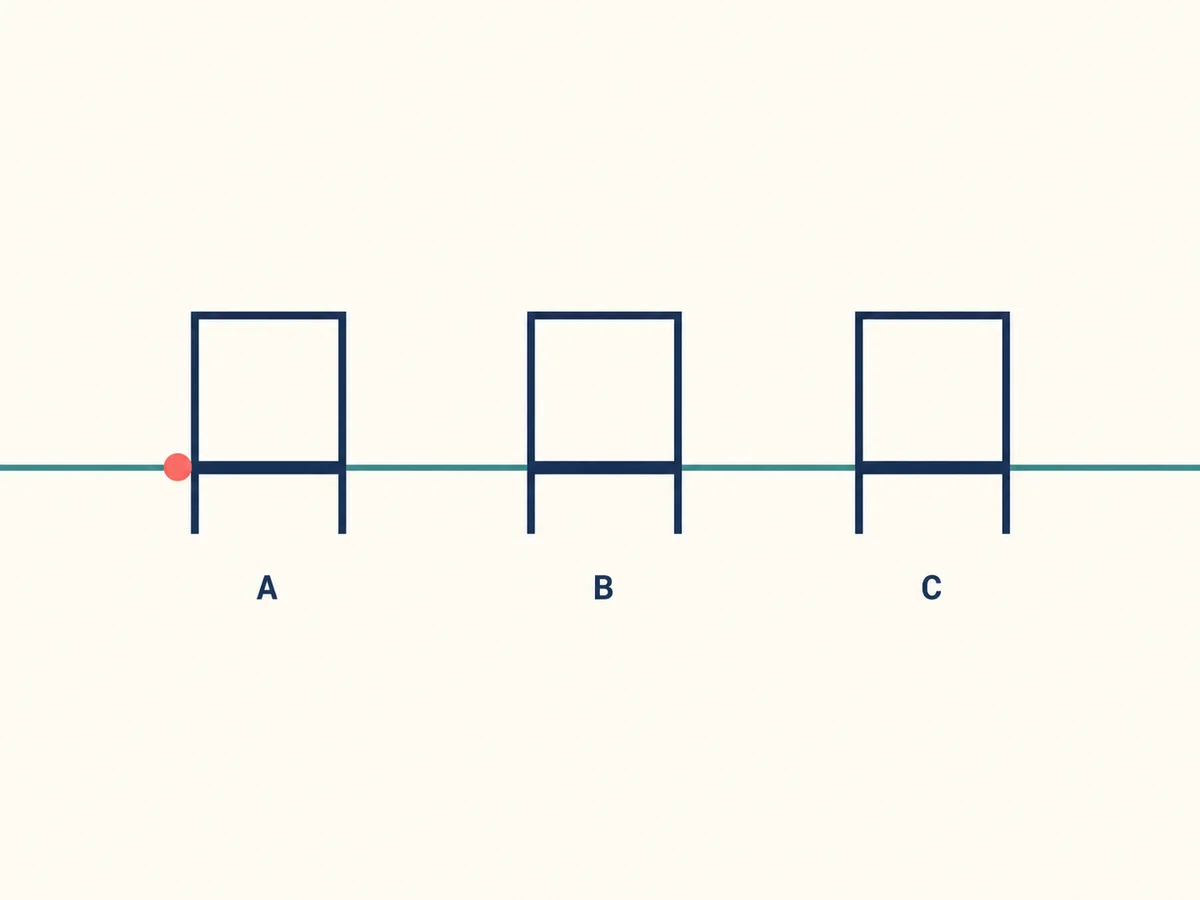
| (a) | Present 183 days or fewer in any rolling twelve months commencing or ending in the fiscal year | Any part of a day counts: arrival, departure, weekends, adjacent holidays. Transit excluded | Counting only "working days"; assuming a calendar year |
| (b) | Paid by, or on behalf of, an employer not resident in the host state | The payer must genuinely sit outside the host country | Local payroll, or a local group company treated as the economic employer |
| (c) | Not borne by a permanent establishment the employer has in the host state | Economic substance: "the company finally bearing the cost after all recharging of any nature," per HMRC | Cost recharged to a local branch; HMRC wants proof from 60 days |
The purpose of the exemption gets lost. It was never a tax break: the Commentary explains that withholding for genuinely short employments "may be considered to constitute an excessive administrative burden." It spares employers payroll registration in a country they barely touch. The window catches people too, since the modern wording counts any rolling twelve months rather than a calendar year (2025 Update to the OECD Model, p.7). Older treaties may still say "fiscal year." Yours governs.
How authorities count your days
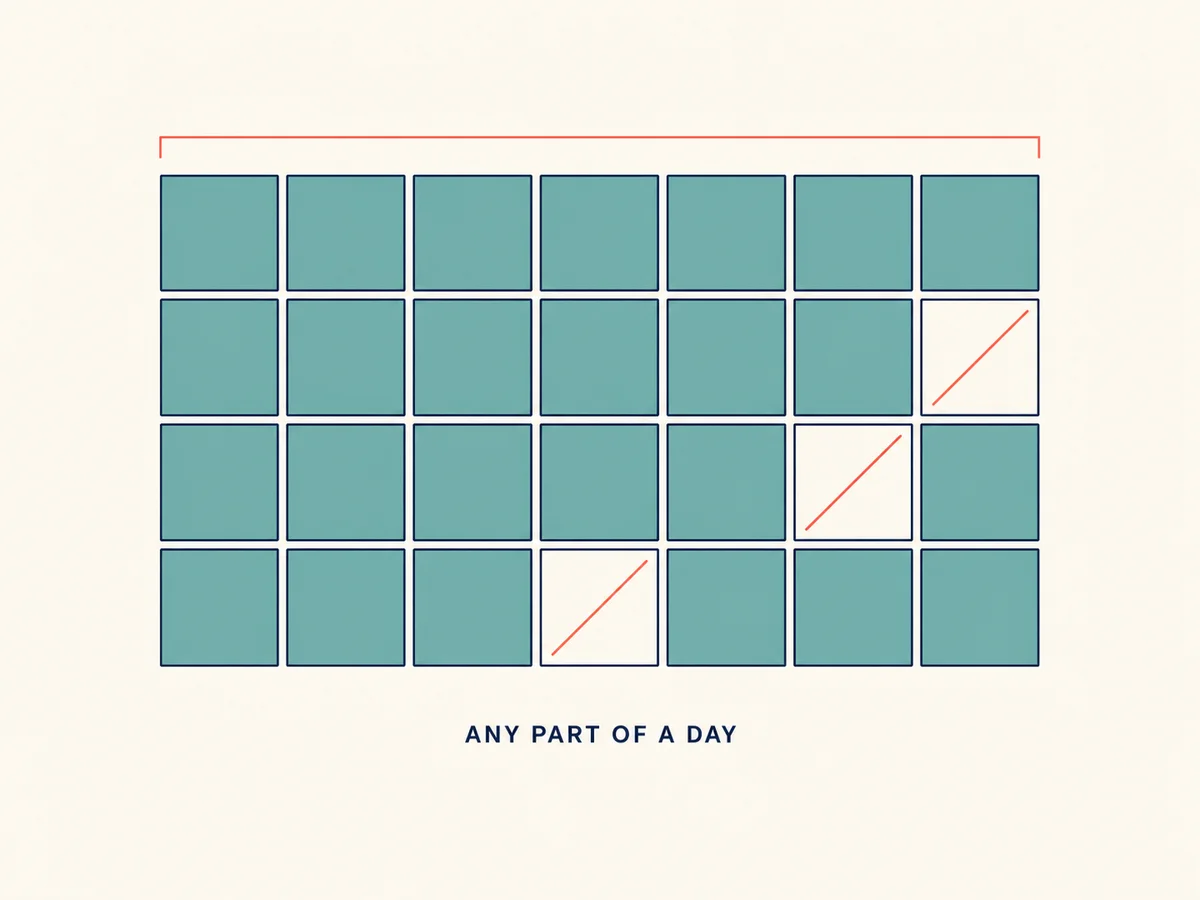
Day counting is harsher than people expect. HMRC states the principle: "any day during any part of which, however brief, the person is present in the UK counts as a day of presence." That covers arrival and departure days, weekends, national holidays, and holidays taken either side of the work period (HMRC PAYE82000). A Friday landing and a Monday departure is four days. The one real subtraction is transit between two points outside the country.
Condition (c) has its own threshold. Once an employee is present 60 days or more, HMRC expects the employer to show positively that the UK company or branch "will not in fact ultimately bear the remuneration." If a local entity picks up your salary through a management charge or transfer pricing adjustment, condition (c) fails and the day count stops mattering. The related "economic employer" idea — that whoever directs and benefits from your work may be your employer for condition (b) — is well established but applied differently country by country, so check it locally. Relief is never automatic either: a UK employer needs a formal short-term business visitor arrangement before it can stop withholding.
November 2025 rewrote the home-office PE rules
The second question is separate from the first, and conflating them is the expensive mistake. Your own tax position runs through Article 15. Whether your employer picks up a taxable presence where you are sitting runs through Article 5, and those rules were rewritten last year. The OECD Council approved the 2025 Update on 18 November 2025, adding twenty-one Commentary paragraphs, 44.1 to 44.21, headed "Cross-border working from a home or other relevant place" (2025 Update, pp.14–19). It did not touch the 183-day rule.
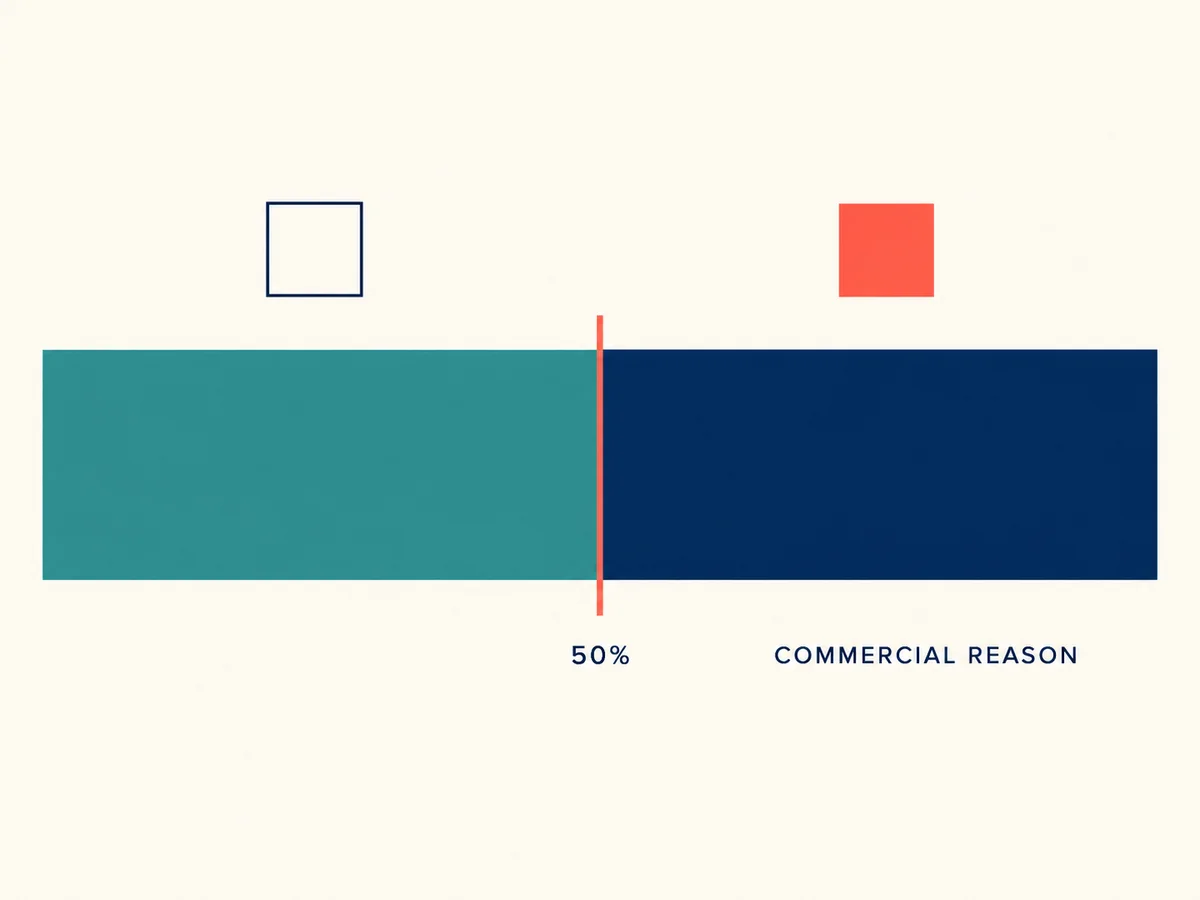
The centerpiece is a threshold. Under paragraph 44.8, a home "would generally not be considered a place of business of the enterprise if the individual worked from that home or relevant place for less than 50 per cent of their total working time for that enterprise" over any rolling twelve months. Below half your working time abroad, the analysis generally stops. Above it, paragraphs 44.10 and 44.11 turn on one question: is there a commercial reason for the individual to be in that country?
Here the Commentary is unexpectedly generous. Paragraph 44.15 says permitting remote work "solely to obtain or retain the services of that individual" is not a commercial reason. Paragraph 44.16 says the same about permitting it "solely to reduce costs (for example, reduced expenditure on office space)." Between them they cover most real workations: the employee wanted to live somewhere, and the company agreed to keep them, or because it was shedding desks.
What does count sits in paragraph 44.17: customer meetings, cultivating a customer base, managing suppliers, "real-time, or near real-time, interaction with customers or suppliers in different time zone(s)," collaboration with other businesses, and services requiring physical presence. Set that beside a sales job description and the overlap is near total; beside a back-office analyst's, almost none. Paragraph 44.18 adds that customers happening to be in the country, or a convenient time zone, is not automatically a commercial reason.
| Example | Pattern | Result | What decides it |
|---|---|---|---|
| A | Three consecutive months abroad after a holiday, or for personal reasons | No PE | Lacks permanence, so there is no fixed place of business at all |
| B | 30% of working time, one to two days a week | No PE | Falls below the 50% line in paragraph 44.8 |
| C | 80% of working time plus regular in-country client visits | PE | Above 50%, and the local client work supplies a commercial reason |
| D | 60%, client-facing but serving clients remotely across several countries, quarterly visits | No PE | Visits are "on an intermittent and incidental basis" |
| E | Almost exclusively from home, in a time zone letting the employer offer real-time round-the-clock service | PE | The location itself delivers the service model |
Examples C and D are the pair to study: both client-facing, both a majority abroad, and the difference is whether the country was chosen because business happens there. Example E surprises people — no client meetings, no local customers, but the time zone is what makes the service model work. One caveat on weight. Model Commentary is interpretive, not domestic law, and the policy work is open: the OECD's global mobility consultation document expressly does "not represent the consensus views of the Inclusive Framework."
The roles that carry the risk
Exposure tracks the job. KPMG's suitability matrix puts administrative, back-office, customer service and junior professional roles on the "more suitable" side, and sales, IP, procurement, value-creation, regulated roles and the C-suite on the "less suitable" side: "senior leaders, and employees in value creation and sales roles, are most at risk of creating profit attribution complications" (KPMG, December 2021). Take the taxonomy as sound; that document's home-office PE analysis is superseded by the new Commentary.
A fixed place of business is only one of three routes to a permanent establishment. The others are a dependent agent who habitually concludes contracts, and a services PE under treaties containing one (OECD consultation, para 24). The agency route catches salespeople and ignores the 50% threshold entirely. Above it sits company residence: senior-executive presence or virtual board meetings "could affect the residence of the enterprise" where domestic tests or treaty tie-breakers rest on place of effective management. A PE exposes the profit attributable to it; a residence shift puts worldwide profits in play. Running the other way, paragraph 44.20 provides that where an individual is the only or primary person conducting the business, the home office does constitute a place of business — so solo operators get no safe harbour.
Employer policy has tightened, though published data is aging. Deloitte's remote work survey, 822 participants across 45 countries with fieldwork on 11–31 August 2022, found roughly 80% of organizations permitting some remote or hybrid work, right-to-work verification the most common guardrail at 64%, day thresholds already standard, and 30% still deciding (Deloitte, 2022 fieldwork). Caps in days per country are the normal shape of a policy, though the numbers vary by employer and are not publicly benchmarked. Our piece on permanent establishment risk for remote teams takes the employer's side.
Social security runs on its own rulebook
Social security is a parallel system with its own connecting factors. These systems "often operate with different criteria to personal income tax regimes," and an individual "may also be liable to social security contributions in two or more jurisdictions" (OECD consultation, para 17). You can sit inside the Article 15 exemption and still owe contributions abroad.
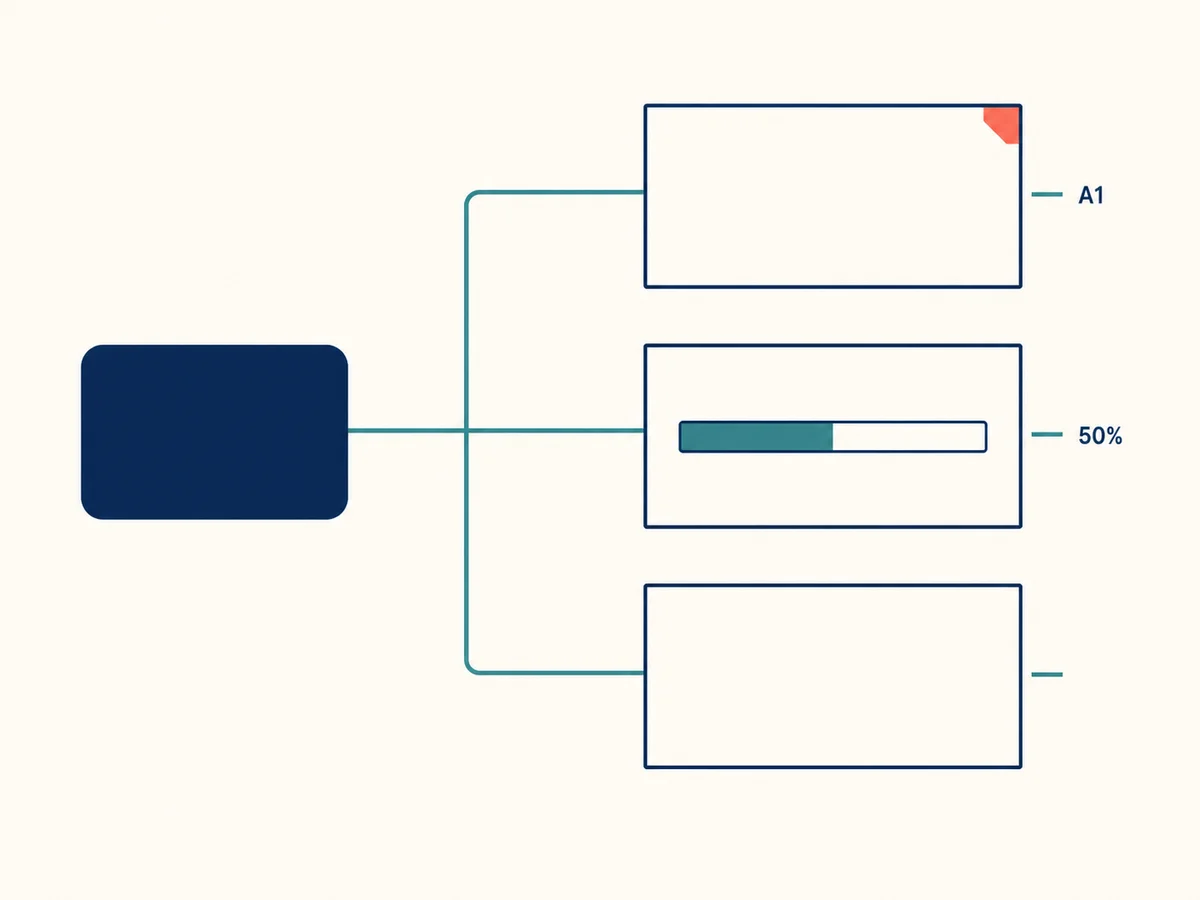
Within Europe the posting rule keeps an employee in the home system for up to 24 months on a PD A1. A separate rule covers people habitually working in several member states: at 25% or more of working time in your country of residence you are covered there, otherwise you follow the employer's registered office (Your Europe). The rule that fits remote work is newer: the cross-border telework Framework Agreement, built on Article 16(1) of Regulation 883/2004, lets an employee stay in the employer's system provided telework from the residence state stays below 50% of total working time. It is opt-in: both sides must consent and apply. In force from 1 July 2023 for most of its 27 signatories, which include Norway, Liechtenstein and Switzerland, it started later for Italy, Lithuania, Ireland and Estonia (1 February 2026) — and the UK has indicated it will not sign (Belgian federal social security service).
US employees use a certificate of coverage, an SSA form certifying "that the employee named on the form is subject to Social Security coverage in the issuing country and exempt from coverage in the other country" (SSA POMS). The detached-worker rule runs to five years, materially longer than the EU posting window (SSA POMS). Where no agreement exists there is no relief mechanism, and paying into both systems is a real outcome.
Nomad visas rarely make your salary tax-free
A digital nomad visa is an immigration product. Whether it carries a tax benefit is a separate legislative question, and usually the answer is no. Four of the most-cited destinations give four different answers.
| Jurisdiction | Route | Employment income | Duration | Key restriction |
|---|---|---|---|---|
| Spain | Telework visa plus the Article 93 "Beckham" regime | 24% flat to €600,000, 47% above; deemed Spanish-source, so taxed rather than exempted | 1-year visa, then a permit up to 3 years; regime runs 6 years | 5 prior years non-resident; Spanish-company work capped at 20%; €2,368/month floor (2025) |
| Portugal | IFICI (Article 58.º-A EBF) | 20% on qualifying-activity income only; foreign-source income generally exempt, or 35% from listed low-tax jurisdictions | 10 consecutive years | Needs an eligible qualified profession or employer; remote work alone does not qualify |
| Croatia | Digital nomad status, PITA Article 9(1)(26) | Exempt: employment and self-employment income from an employer not registered in Croatia | Permit-linked | Third-country nationals only; excludes rent, dividends, interest and capital gains |
| UAE (Dubai) | Virtual work residence permit | No personal income tax | 1 year, renewable | Salary certificate of $3,500/month equivalent; proof of remote work for an employer outside the UAE |
Spain shows the gap between marketing and statute. The visa runs one year, then a permit up to three, on an income floor of 200% of the monthly minimum wage — €2,368 on the 2025 figure — and three months of prior professional relationship with non-Spanish companies (Ministerio de Asuntos Exteriores). Tax runs through the Article 93 regime, which explicitly covers telework-visa holders and applies for the year of the move plus five (Agencia Tributaria). Note the mechanism: worldwide employment income is deemed Spanish-source and taxed at 24%. Not exempted. Attractive against progressive rates, but not zero.
Portugal is where competing content goes furthest wrong. IFICI is not a nomad regime. It grants 20% for ten consecutive years after five years of non-residence, but eligibility is tied to qualifying activities: higher-education teaching and research, innovation and technology centre roles, professions listed in Ordinance 352/2024/1, SIFIDE II research roles, and startup employment (Autoridade Tributária). Being remote does not qualify you.
Croatia's exemption is genuine but narrow twice over. Article 9(1)(26) of the Personal Income Tax Act takes foreign-employer employment income outside the tax base for those holding nomad status, but leaves rent, dividends, interest and gains alone — and only third-country nationals qualify, so EU, EEA and Swiss citizens cannot use it (Kluwer). The UAE is the one accurate headline: "the UAE does not levy income tax on individuals" (UAE Government portal), and its virtual work permit runs a renewable year on a $3,500 monthly salary certificate (GDRFA Dubai).
Residence at home, and relief for foreign tax
Working abroad does not automatically change where you are tax resident. You can stay resident at home, keep filing there on worldwide income, and separately owe tax where you are working. The OECD treats dual filing as the normal outcome: an individual "may have a tax liability in each jurisdiction and therefore may have to file tax returns in both jurisdictions."
The UK statutory residence test shows how hard leaving is. You are automatically resident at 183 days or more, and typically non-resident below 16 days — or 46 if you were not resident in the previous three years. Split-year treatment "doesn't apply if you remain abroad for less than a complete tax year before returning" (GOV.UK). A ten-month stint ending back home is usually a fully resident year. US taxpayers file wherever they live. The foreign earned income exclusion for 2026 is $132,900, up from $130,000 (IRS), and qualifying needs 330 full days abroad in twelve months or bona fide residence (IRS). The rule most often broken: you cannot credit or deduct foreign taxes on income you excluded (IRS). They are alternatives on the same dollars, and in a high-tax country the credit often wins.
One structural warning. The OECD admits the enforcement gap candidly: people work remotely "without the jurisdiction being aware," and "an individual might not be considered a resident anywhere." Neither is a plan. Low detection probability is not a filing position, and residence nowhere collapses the moment any authority looks.
Eight steps before you go
- Read the actual treaty. Day windows differ; some use a rolling twelve months, some a tax year.
- Count days the way the authority counts them. Any part of a day, arrivals and departures in, weekends and adjacent holidays in, transit out.
- Confirm who pays you and who ultimately bears the cost. Conditions (b) and (c) fail on recharges far more often than the day count fails, and the burden of proof starts at 60 days (HMRC).
- Get the A1 or certificate of coverage before you travel. Under the Framework Agreement the application is joint and voluntary.
- Run the PE screen with your employer. Under 50% of working time is generally safe; above it the commercial-reason test governs, and employee preference and cost saving are expressly not commercial reasons (2025 Update, paras 44.8, 44.15, 44.16).
- Check host-country payroll registration. Treaty exemption is applied for, not granted by default.
- Plan the year of the move. Split-year relief has conditions of its own.
- Model credit against exclusion, and do not stack them.
If your employer has no policy, that is not permission. It usually means nobody has run steps 3 and 5, and both create obligations for the company rather than for you. Employer of record, contractor and subsidiary structures are the usual answers when the screen comes back badly.
Frequently Asked Questions
If I stay under 183 days, is my income tax-free in the country I am working from?
Usually not. The 183-day test is only one of three conditions, and all three must hold together. If a local entity pays you, or your salary cost is recharged to a local branch, the host country can tax from day one.
Does working abroad change where I am tax resident?
Not automatically. Residence and source taxation are separate questions, and you can stay resident at home while owing tax abroad. The UK makes you automatically resident at 183 days but generally non-resident only below 16 days, or 46 if you were not resident in the previous three years (GOV.UK).
Can working from my laptop abroad create a problem for my employer?
Yes, and the rules changed in November 2025. Below 50% of your working time in the foreign country, a home office generally is not a place of business; above that, the commercial-reason test decides. Wanting to keep you, and saving office costs, are expressly not commercial reasons.
Which country do I pay social security to?
A separate rulebook decides. In Europe it runs through PD A1 certificates, the 24-month posting rule and the telework Framework Agreement's sub-50% derogation. US employees use SSA certificates of coverage under a five-year detached-worker limit. With no agreement, double contributions can arise.
This guide is for general information only and is not tax advice. A qualified professional should review your specific facts before you act.
Sources Used in This Guide
- The 2025 Update to the OECD Model Tax Convention
- OECD: Global Mobility of Individuals consultation
- HMRC PAYE Manual, PAYE82000
- Article 15 of the OECD Model: the 183-day rule
- Cross-border telework Framework Agreement
- SSA POMS GN 01701.115: detached worker rule
- GOV.UK: UK residence and tax on foreign income
- IRS: tax inflation adjustments for 2026
- Autoridade Tributária: IFICI FAQ
Related Articles
- Permanent establishment risk for remote teams — covering the employer-side PE analysis.
- Employer of record vs contractor vs subsidiary — covering how employers structure around this.
- Digital nomad visas 2026 and their tax implications — covering the visa catalogue.
- Social security totalization agreements for nomads — covering the social security layer in depth.