
In This Guide
- Residency at signing controls, until it doesn't
- What Article 13(5) gives, and what 13(4) takes back
- The UK charge lands on the way back
- Exit taxes are priced on departure day
- Two recommended destinations broke in 2026
- Holdco insertion stopped working in November 2025
- US citizens are solving a different problem
- A timeline, and the four ways it fails
- Frequently Asked Questions
- Sources Used in This Guide
- Related Articles
Residency at signing controls, until it doesn't
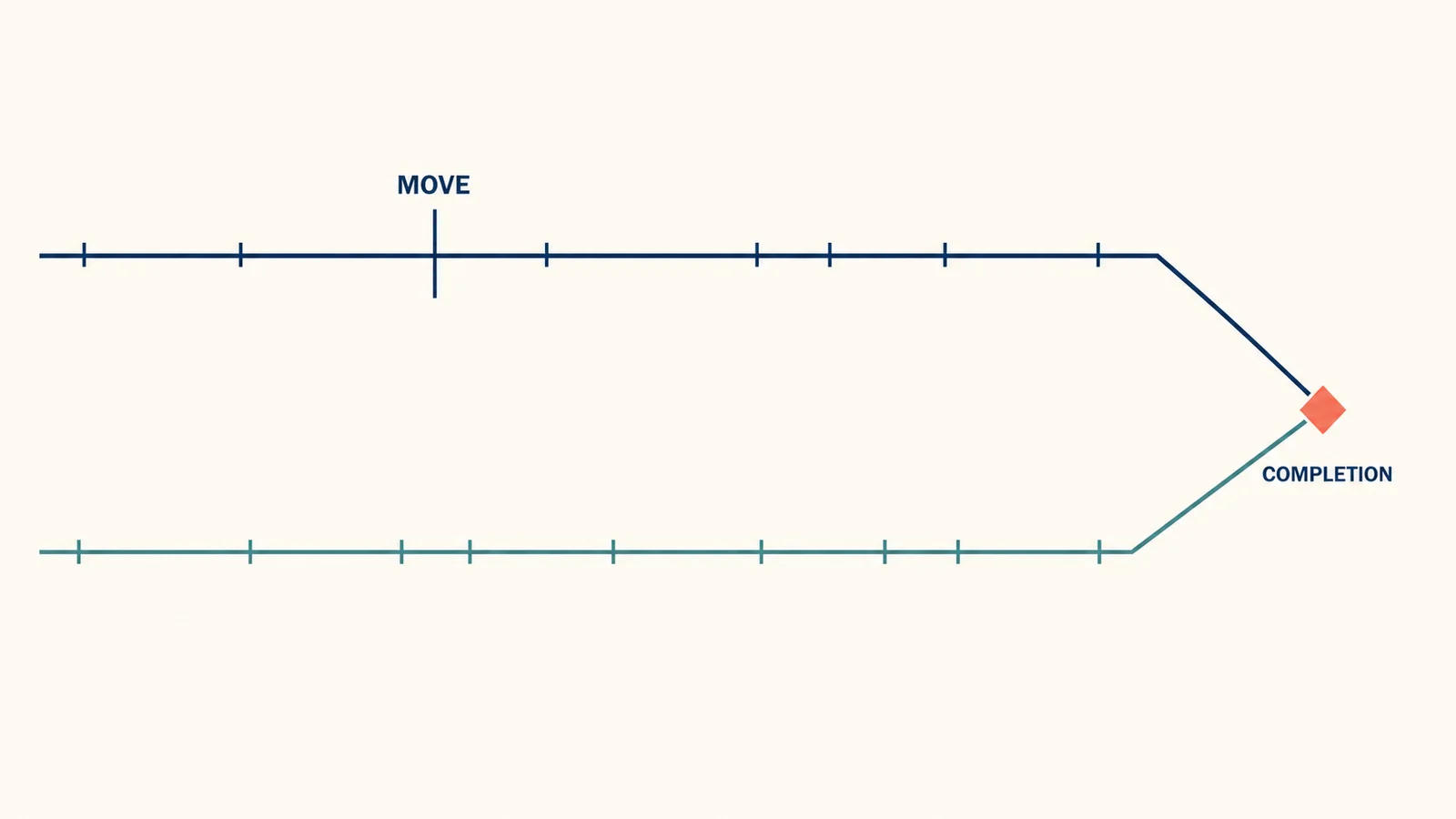
Where you are tax resident when the deal completes usually decides which country taxes the gain. Article 13(5) of the OECD Model Tax Convention provides that gains on most property "shall be taxable only in the Contracting State of which the alienator is a resident." Most treaties copy that wording, so relocating before a sale can legally change the number.
The timeline is the catch. Every country founders actually leave has a rule aimed at the person who moves, sells, then comes home. The UK reclaims gains from anyone back within five years. Five others tax the latent gain on the way out, and Norway's falls due whether or not the shares are ever sold.
| Country | On leaving | Threshold | How it unwinds |
|---|---|---|---|
| UK | No exit tax, trailing charge on return | Sole UK residence in 4 of the prior 7 tax years | Stay non-resident more than 5 years |
| Canada | Deemed disposition at market value | None for private shares | Payable on departure; security can defer it |
| Germany | Deemed disposal, §6 AStG | 1% stake, plus 7 of the last 12 years resident | Lapses if you return within 7 years |
| Australia | CGT event I1 on non-Australian assets | None | Elect to defer, losing the 50% discount later |
| France | Art. 167 bis CGI | €800,000 of securities, or 50% of profits | Cancelled at 2 years, or 5 above €2,570,000 |
| Norway | Deemed realization | Gains above NOK 3,000,000 | Only by returning within 12 years |
Accuracy and scope: Rules and figures were checked against primary sources available through August 3, 2026. This is general information, not tax, legal, or financial advice.
What Article 13(5) gives, and what 13(4) takes back
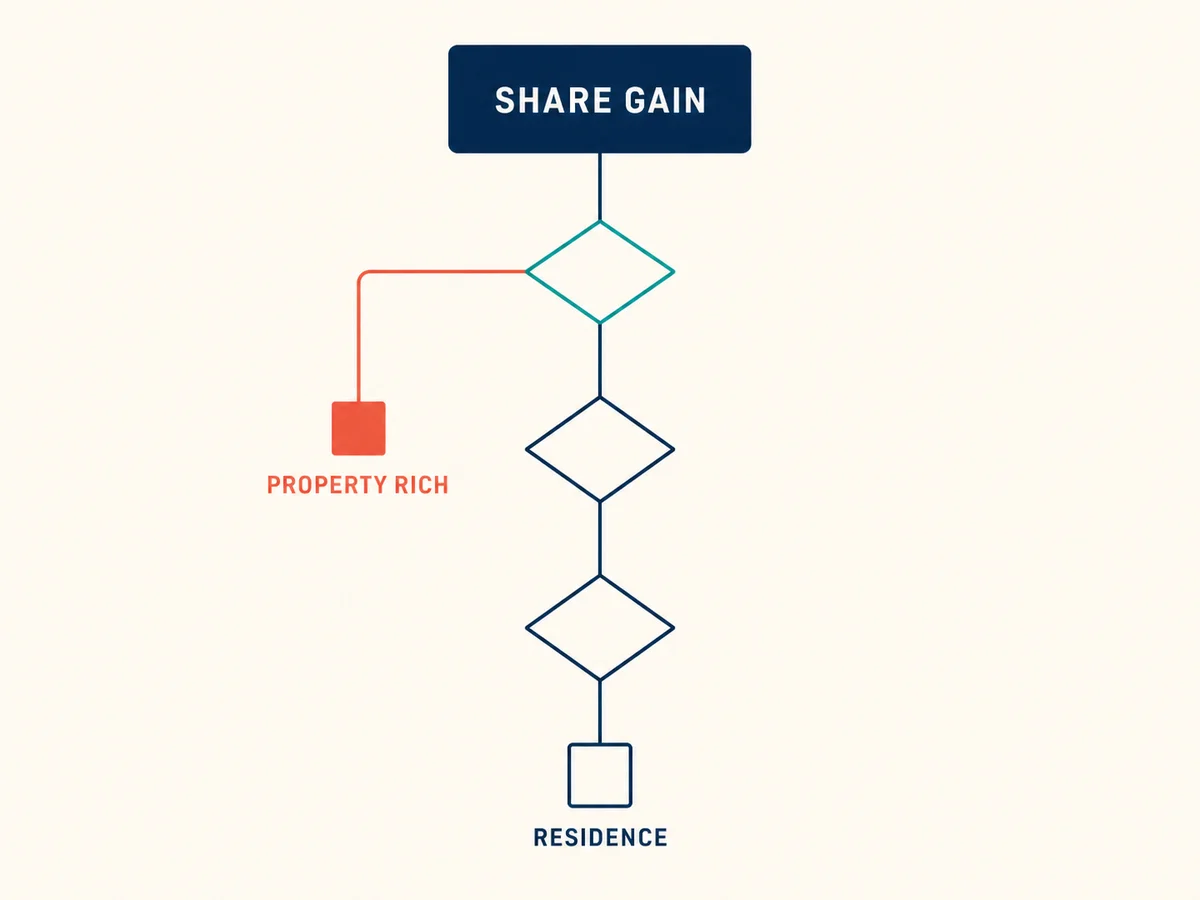
The residence rule is residual, and one carve-out ahead of it matters enormously. Article 13(4) of the same OECD Model lets the other state tax gains on shares deriving more than 50% of their value, directly or indirectly, from immovable property situated there.
Read that twice if your company owns its premises, a hotel portfolio, or development land. A property-rich company keeps its gain taxable where the property sits, whatever the shareholder's residence at completion. Relocation planning does not reach it, and the point usually surfaces late, in buyer diligence.
Where two states both claim you, Article 4(2) runs a tie-breaker in strict sequence: permanent home available to you, then center of vital interests, then habitual abode, then nationality, then agreement between the authorities. Analysis stops at the first test that resolves. A house kept available back home can end it at step one.
The UK charge lands on the way back
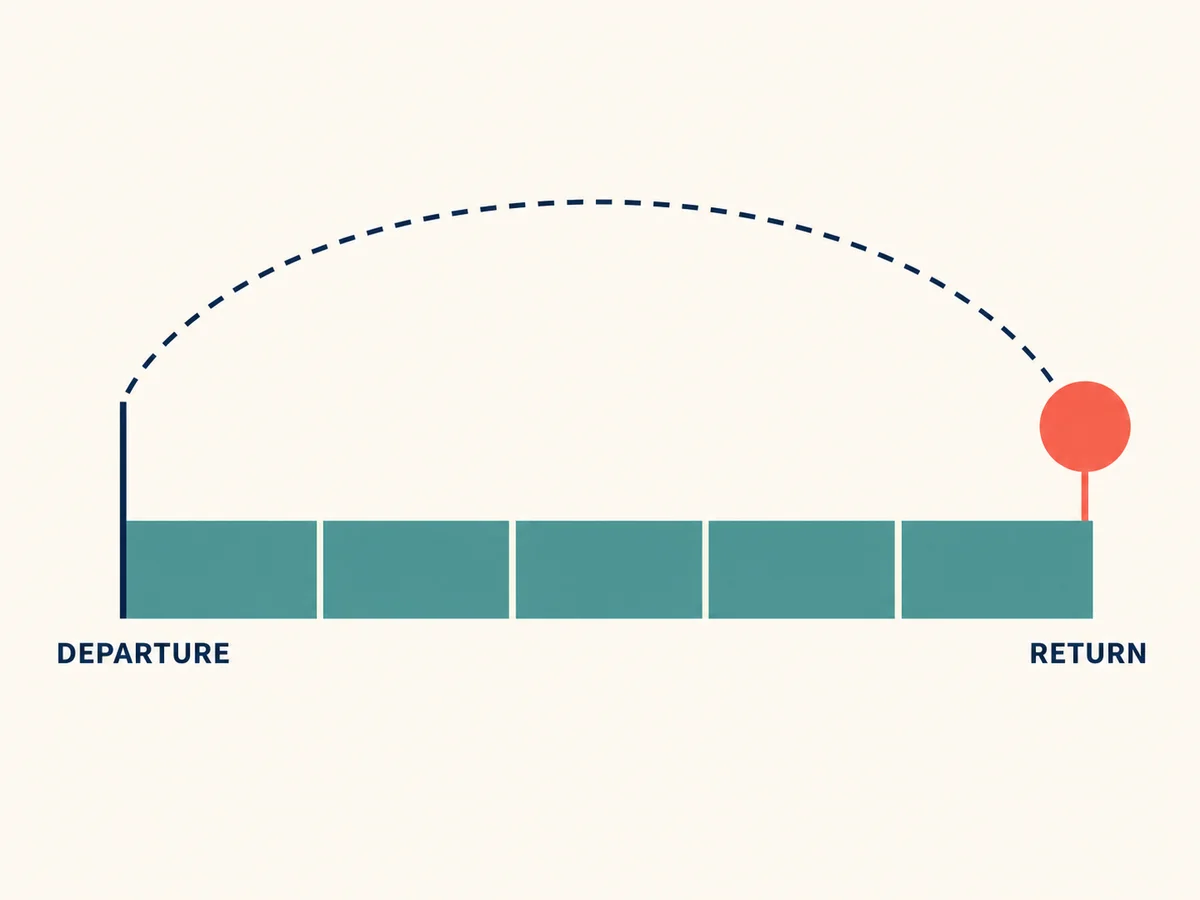
Britain has no exit tax. It has something more targeted. Under the statutory residence test guidance, temporary non-residence bites if you had sole UK residence in four or more of the seven tax years before departure and your period of non-residence is five years or less. Exceed five years by a day and the rule does not apply.
The mechanism is what makes it hard to plan around. TCGA 1992 s.10A treats gains accruing during temporary non-residence as accruing in the tax year of return, not the year of disposal. The charge sits dormant and lands when you resume UK residence. Assets acquired after leaving are generally outside it, with three exceptions: no gain/no loss acquisitions, base costs reduced by rollover relief, and gains deferred from a pre-departure asset. Founder shares built up while UK resident are never in the safe category.
Selling as a UK resident costs more than it did. Capital gains tax for 2026-27 is 18% within the basic rate band and 24% above it, the annual exempt amount is £3,000, and Business Asset Disposal Relief carries an 18% rate after rising from 10% to 14% for 2025-26 and to 18% from April 2026. Anti-forestalling catches deal teams out: contracts signed on or after 30 October 2024 and before 6 April 2025 that complete on or after 6 April 2025 are taxed at the completion-date rate, and the same applies to 2025/26 contracts completing on or after 6 April 2026. Escape needs a claim that the contract is excluded, meaning genuinely commercial, or excluded-contract gains of £100,000 or less. Signing early to lock an old rate does not work.
Exit taxes are priced on departure day
Elsewhere the charge is front-loaded. Canada's Income Tax Act s.128.1(4) deems a departing resident to dispose of each property at fair market value immediately before leaving. The exclusions are instructive: Canadian real property, resource and timber properties, assets used through a Canadian permanent establishment, registered plans, and employee stock option rights. Private company shares are not excluded. A deferral election backed by security exists, but its form-level mechanics could not be verified against a CRA page, so confirm them locally.
Germany is narrower and more forgiving. §6 AStG triggers a deemed disposal at market value when you give up residence or habitual abode, or otherwise cost Germany its taxing right. It reaches only people with at least seven years of unlimited tax liability in the preceding twelve, holding at least the §17 EStG threshold of 1% at any point in the previous five years. Tax is payable in seven equal annual installments, expressly interest-free, and the charge lapses entirely if you resume unlimited tax liability within seven years while still holding the shares.
France runs a crystallization window. Article 167 bis CGI catches people fiscally domiciled in France for six of the ten years before departure who hold securities worth at least €800,000 or representing at least 50% of a company's profits. The charge is cancelled or refunded automatically if the securities are still held after two years for holdings under €2,570,000, or five years above that. Sell inside the window and it crystallizes. The stay-of-payment request must be filed at least 90 days before the transfer.
Australia lets you elect out of the deemed disposal, at a price: electing to defer CGT event I1 costs the 50% discount on gains accrued after 8 May 2012, and from 1 July 2027 that discount is replaced by cost base indexation for most taxpayers. This rests on PwC rather than the ATO or the statute, which both blocked access during research.
Norway is the outlier. Under the tightened rules for exits from 20 March 2024, the threshold rose to NOK 3,000,000 from NOK 500,000, and the tax must be paid within twelve years of emigration whether or not the shares are sold. You pay immediately, in interest-free installments across twelve years, or at the twelve-year mark with interest. The only waiver is returning to Norwegian residence within twelve years while still holding the shares.

Two recommended destinations broke in 2026
Italy is the clearest example of a good regime that is useless here. The flat tax rose from €200,000 to €300,000 a year for people transferring residence from 1 January 2026, with family members going from €25,000 to €50,000, under Law 199/2025 amending Article 24-bis TUIR. It requires non-residence in nine of the previous ten tax periods and lasts fifteen years. Then the part that kills the plan: the regime does not apply to capital gains from disposals of qualified shareholdings within the first five fiscal years of the option. Those gains fall under ordinary Italian taxation. Move to Italy, sell in year two, and you have paid €300,000 to be taxed normally.
Belgium's shift was abrupt. From 1 January 2026 it taxes capital gains on financial assets at 10%, with a €10,000 annual exemption and loss carry-forward capped at €5,000. Holders of 20% or more face a scale from 1.25% on €1–2.5 million up to 10% above €10 million, with the first €1 million exempt across five years, and base cost is the higher of historical cost or 31 December 2025 market value. Note the last provision: transfers of shares to a company the seller controls are taxed at a flat 33% with no exemption.
| Jurisdiction | Share sale treatment | The catch |
|---|---|---|
| Switzerland | Private gains on shares exempt | Professional securities dealer status destroys it |
| UAE | No personal income tax | 9% corporate tax above AED 1,000,000 turnover |
| Singapore | No CGT on individuals | Gains trading in nature are ordinary income |
| Belgium | 10%; 1.25–10% scale for 20%+ holders | 33% flat on transfers to a controlled entity |
| Italy | €300,000 a year on foreign income | Qualified shareholding gains excluded for 5 years |
Switzerland stays the quiet answer for many European founders: private gains on movable assets such as shares are exempt throughout the country unless you are a professional securities dealer, which is the whole risk. The UAE has no personal income tax, and its 9% corporate tax reaches individuals only above AED 1,000,000 of business turnover, with personal investment income excluded from that test. Singapore does not tax individual capital gains, but the source confirms it by omission, and we could not verify how Section 10L on foreign-sourced disposal gains treats a founder holding through a Singapore entity.
Holdco insertion stopped working in November 2025
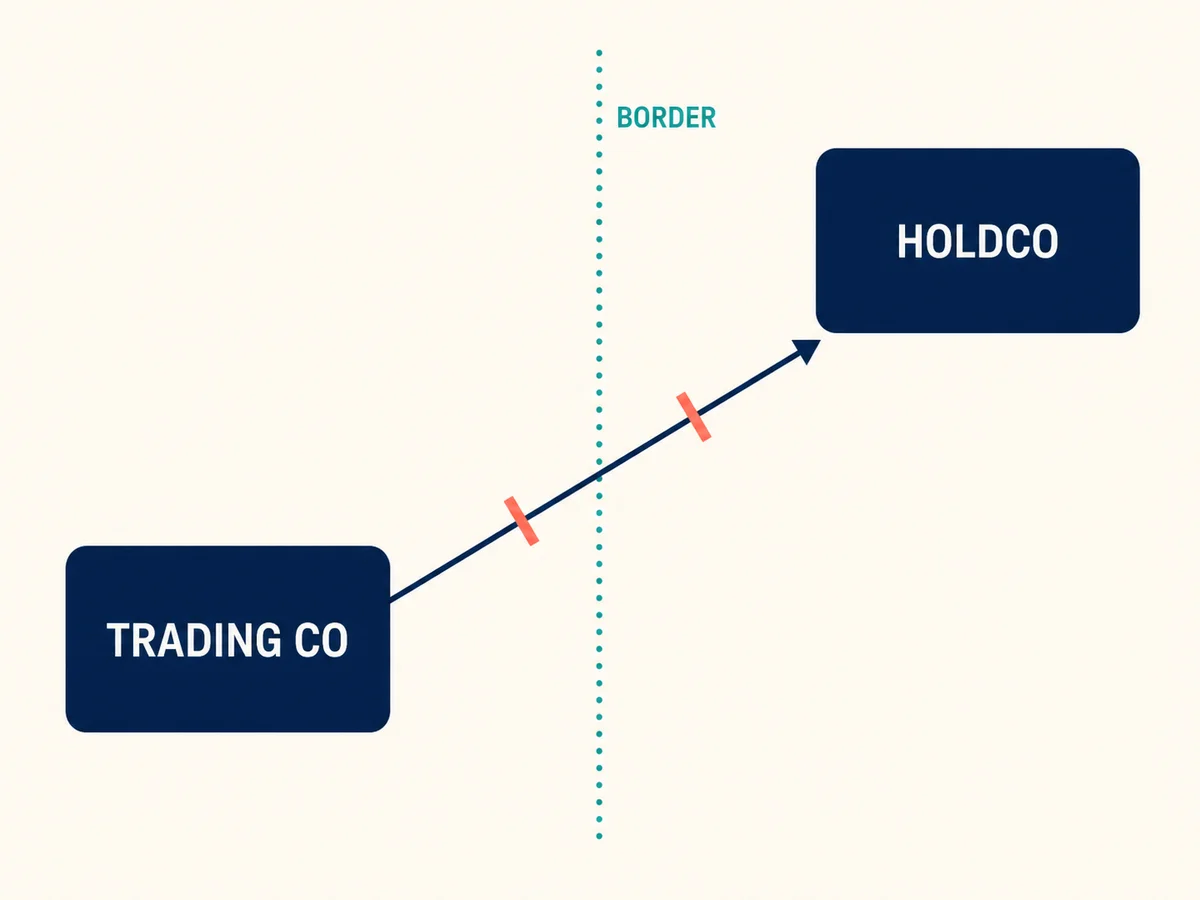
The classic maneuver swaps shares in the trading company for shares in a new offshore holding company, then sells from a jurisdiction that does not tax the gain. The UK has blocked this from both ends.
The first block dates from 2022. TCGA s.138ZB deems the new shares to be situated in the UK where an individual with a material interest, meaning more than 5% of ordinary share capital or of distributable assets, exchanges shares in a UK-incorporated close company for shares in a non-UK-incorporated close company. It applies to issues on or after 17 November 2022, so moving the holding company offshore no longer moves the asset offshore.
The second is recent enough that most published guidance predates it. From 26 November 2025, Finance Act 2026 rewrote TCGA s.137. The old test asked whether the exchange was for bona fide commercial reasons; that limb is gone. The rule now applies where a main purpose of the arrangements is to reduce or avoid a capital gains liability, judged on the arrangements as a whole. HMRC does confirm that deferral alone is not a tax advantage here. The policy paper costs the measure at £20 million a year from 2026-27 through 2030-31, with a transitional carve-out for clearance applications received before that date.
Clearance under s.138 is still worth having, but it confirms only the capital gains position, not income tax. Proximity to a sale is evidence of purpose. Belgium's flat 33% charge on transfers to a controlled entity expresses the same policy as a rate rather than a purpose test.
US citizens are solving a different problem
For a US citizen none of the above helps by itself. Citizenship-based taxation follows you, and the exclusions that make expatriate life comfortable do nothing here. The 2026 foreign earned income exclusion is $132,900 and applies to earned income. A gain on founder shares is not earned income.
The lever that matters is qualified small business stock. Under IRC §1202 as amended by the OBBBA, stock acquired after 4 July 2025 gets a tiered exclusion: 50% at three years, 75% at four, 100% at five. Stock acquired on or before that date keeps the old single five-year test with no partial credit. The per-issuer cap is $10,000,000 for stock acquired on or before 4 July 2025 and $15,000,000 after, indexed from 2026, and the aggregate gross assets test rises from $50,000,000 to $75,000,000 for stock issued after 4 July 2025.
Installment sales spread gain rather than removing it. IRS Publication 537 requires the installment method unless the seller elects out, but stock or securities traded on an established securities market cannot use it, and obligations above $5,000,000 attract a §453A interest charge on the deferred tax.
Puerto Rico is the one real domestic carve-out, and its terms just changed. Act 60's resident investor program was extended from 2035 to 2055. Decrees obtained by 31 December 2026 keep 0% Puerto Rico tax on interest, dividends and capital gains realized before 1 January 2036. Decrees from 1 January 2027 face 4% on post-relocation gains, and applicants must show six years of prior non-residency and buy Puerto Rico real estate as a primary residence within two years. The limitation matters more than the rate: pre-relocation appreciation is subject to special rules including a 5% rate only after a ten-year holding period. Move the year before you sell and nearly all the gain is pre-relocation.
Renouncing is the last resort, and priced accordingly. For 2026 you are a covered expatriate under §877A if average annual net income tax over the prior five years exceeds $211,000, or net worth is $2,000,000 or more, or you fail to certify five years of compliance on Form 8854. Covered expatriates face a mark-to-market deemed sale with a 2026 exclusion of $910,000, and failing to file Form 8854 carries a $10,000 penalty. Anyone with gains large enough to justify relocating will almost certainly be covered.
A timeline, and the four ways it fails
Most of this has to be finished before a buyer is in the room, not in the six months after a term sheet.
| Time before signing | Action | Why |
|---|---|---|
| 5+ years | Complete the move if you are leaving the UK | Non-residence must exceed five years |
| 5+ years | If Italy is the destination, let the clock run out | Art. 24-bis excludes those gains for five tax periods |
| 3–5 years | Build treaty residence: home, family, vital interests | Art. 4(2) turns on facts accumulated over time |
| 2–5 years | If leaving France, hold and do not sell | Cancellation at 2 years, or 5 above €2,570,000 |
| 3–5 years | US founders: confirm the QSBS tier for each tranche | 50% at 3 years, 75% at 4, 100% at 5 |
| 1–2 years | Any holdco or share exchange restructuring | Proximity to a sale is evidence of purpose |
| 6–12 months | Seek statutory clearance where available | UK s.138 covers CGT only, not income tax |
| 90 days | File the French stay-of-payment request | Statutory deadline before the transfer |
| 0 | Signing and completion | UK BADR anti-forestalling uses the completion date |
Four failure modes account for most plans that come apart. First, the property-rich company: Article 13(4) hands the taxing right back to the country where the buildings are. Second, a buyer who wants an asset deal, because an asset sale realizes gain inside the company, in the company's jurisdiction, untouched by where the shareholder lives. Only a share sale responds to residency planning.
Third, the half-hearted move. A home kept available, a family left behind, or a business still run from the old office invites the Article 4(2) tie-breaker to resolve against you at the first or second test. Fourth, restructuring too late: a holdco inserted while a data room is open reads as tax-motivated, which is now precisely the question the UK rule asks.
Frequently Asked Questions
If I move abroad before selling, do I actually avoid capital gains tax?
Sometimes. Article 13(5) of the OECD Model gives taxing rights over most share gains to the seller's state of residence. Two things override it: Article 13(4) lets the other state tax gains on shares deriving more than half their value from immovable property there, and your departure country may impose an exit tax or trailing charge anyway.
How many years do I need to be gone before it is safe to sell?
Five years is the honest floor for the UK, since the rule applies where the period of non-residence is five years or less. France cancels its charge at two years, or five if the holding exceeds €2,570,000. Norway breaks the pattern: the tax falls due within twelve years whether you sell or not.
Can I move my shares into an offshore holding company first?
Not usefully if you are UK-connected. TCGA s.138ZB deems shares in a non-UK close company received in exchange by someone with a material interest to be UK-situated, for issues from 17 November 2022. Since 26 November 2025 the s.137 rule applies where a main purpose of the arrangements is reducing capital gains tax, with no bona fide commercial reasons defense.
I am a US citizen. Does moving abroad help at all?
Not for capital gains. The gain is reportable wherever you live, and the 2026 foreign earned income exclusion of $132,900 covers earned income only. The realistic levers are QSBS holding periods under §1202, installment sales on private deals, and Puerto Rico Act 60, which does not reach appreciation accrued before you moved.
This guide is for general information only and is not tax advice. A qualified professional should review your specific facts before you act.
Sources Used in This Guide
- OECD Model Tax Convention 2017
- HMRC: RDR3 residence test, CG26500, CGT rates, CG64174, CG-APP20, FA 2023 s.36
- Statutes: Canada ITA s.128.1, §6 AStG, §17 EStG, Art. 167 bis CGI
- BDO: Norway exit tax, Fisco Oggi: flat-tax amounts, WFW: Italian 2026 regime, EY: Belgian CGT
- US: §1202, Rev. Proc. 2025-32, IRS expatriation, Pub 537, Procopio: Act 60
- PwC: Australia, Switzerland
Related Articles
- Exit Tax by Country — covering exit taxes country by country.
- Countries With No Capital Gains Tax — covering zero-CGT destinations and their conditions.
- Where to Incorporate Before Venture Capital — covering entity choice while restructuring is still cheap.
- Switzerland Tax Guide — covering the Swiss option and lump-sum taxation.