

In This Guide
- A wrapper assigns the work, not the law
- Compare LLC, DUNA, foundation, and no entity
- Tax follows classification and facts
- Connect governance to legal authority
- Treat payments and transparency as operations
- Recheck the regulatory perimeter
- Work the transactions, then plan the exit
- Frequently Asked Questions
- Sources Used in This Guide
A wrapper assigns the work, not the law
A DAO legal wrapper is useful when it answers ordinary questions that a smart contract cannot: Who signs a lease or grant agreement? Who owns a trademark? Which taxpayer records revenue and expenses? Who hires contributors, opens an account, receives legal process, and winds down the treasury?
It is a poor choice when the pitch is simply "limited liability" or "no tax." A legal form can separate some obligations, document authority, and give counterparties a recognizable contracting party. It cannot make personal misconduct disappear, turn a taxable payment into a gift, or change the economic substance of a token offering. It also does not erase laws that apply because of what the DAO does or where its people, users, and assets are located.
Start with functions and exposure. Choose the entity only after mapping treasury ownership, decision rights, contributor locations, token economics, regulated activities, and the planned exit.
The enforcement record gives this warning some weight. A federal court held Ooki DAO could be treated as a person under the Commodity Exchange Act and ordered a civil penalty, trading and registration bans, and website shutdown relief, according to the CFTC's account of the judgment. Operating without a conventional entity did not make the activity unreachable. Nor would forming an entity have made an allegedly unlawful trading platform lawful.
This guide is a design framework, not a jurisdiction-specific opinion. "Foundation" covers materially different forms across countries. DUNA conclusions are Wyoming-specific. LLC tax statements below are U.S. federal statements. A DAO with contributors, token holders, signers, or customers in several countries needs a coordinated memo covering each material jurisdiction.
Compare LLC, DUNA, foundation, and no entity
Compare forms by whether they can carry the DAO's actual work without contradicting its governance or creating an unexplained tax result.
| Option | Operational fit | Main design benefit | Main question to resolve | Tax starting point |
|---|---|---|---|---|
| LLC (U.S.; state-specific) | Contributor contracts, service operations, grants, IP, and accounts | Familiar legal person with an operating agreement | Are members token holders, named founders, another entity, or a limited operating group? | U.S. federal classification depends on member count and elections |
| Wyoming DUNA | A DAO prepared to use a Wyoming-specific nonprofit-association framework | Can be designed around association-style governance | Confirm current eligibility, member rules, distribution limits, conversion terms, and liability treatment under current Wyoming law | Do not infer federal exemption or a tax classification from "nonprofit" or DUNA status |
| Foundation-style wrapper (jurisdiction-specific) | Purpose-led stewardship, grants, IP, and protocol support under a board or council | Can separate a mission and controlled assets from fluid token participation | Which country's foundation, foundation company, or similar form is meant, and who supervises it? | Classification, residence, exemption, reporting, and distributions require country-by-country analysis |
| No entity | Very early coordination with minimal offchain activity | No formation layer | Who owns assets, signs, bears claims, reports income, and can close the project? | Participants may still create an association, partnership, agency, or taxable arrangement under applicable law |
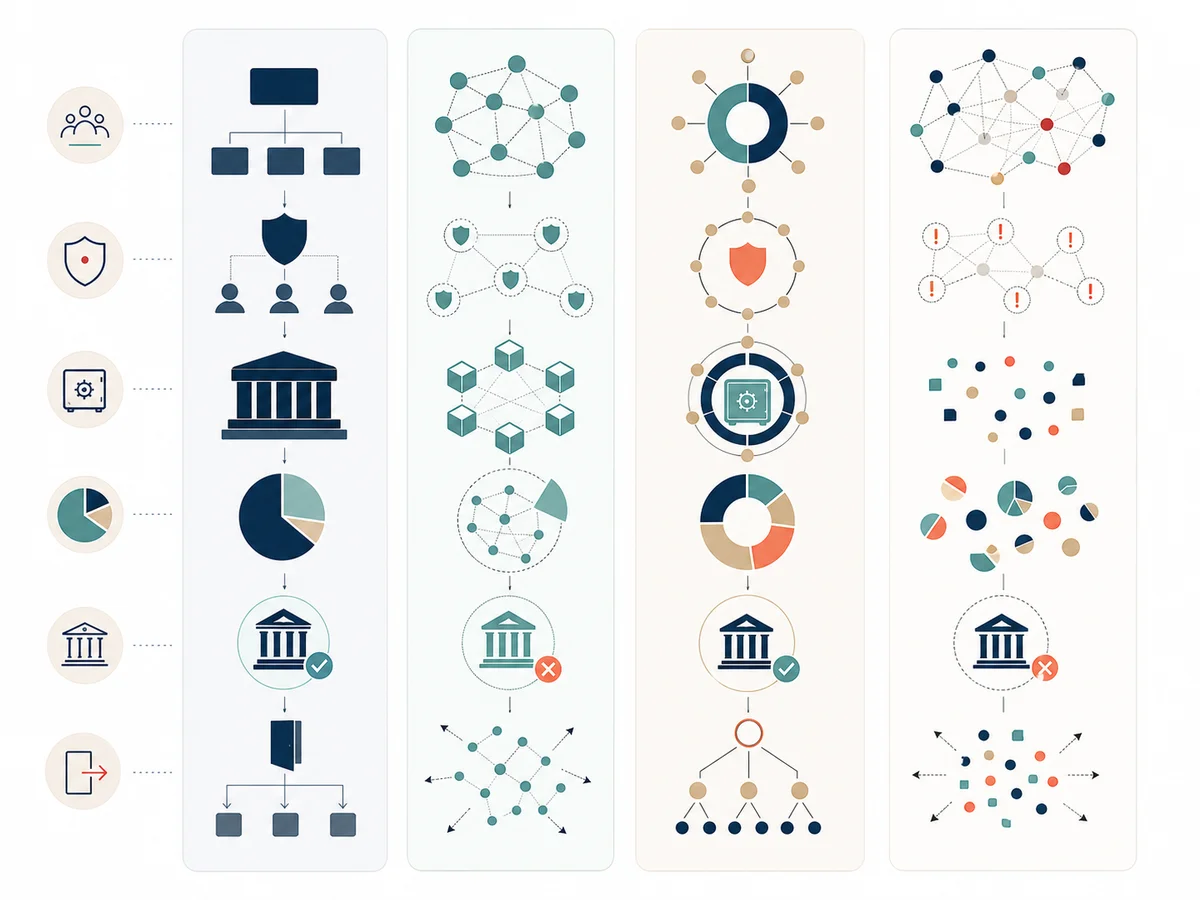
An LLC is often the shortest path to a contracting party. In the United States, though, "LLC" is a state-law label rather than a complete tax answer. Wyoming also has a separate DAO-LLC supplement. Under the captured Wyoming DAO-LLC provisions, the articles, smart contracts, and operating agreement can allocate governance matters; the statute also supplies specific formation, voting, withdrawal, and dissolution rules. That is a Wyoming DAO-LLC conclusion, not a rule for every LLC or for a DUNA.
A foundation-style wrapper is a category, not a single product. Ask whether it has members, shareholders, beneficiaries, a guardian, a council, or a regulator; whether it may make grants or distributions; and how directors are appointed and removed. A Cayman foundation company, a Swiss foundation, and a purpose trust should not be treated as interchangeable. If counsel cannot explain the form without using the word "foundation" as its own explanation, the analysis is not finished.
The DUNA row needs the same discipline. "Decentralized unincorporated nonprofit association" does not itself answer federal tax status, tax exemption, securities treatment, banking, or the treatment of member distributions. Get current Wyoming advice and a separate federal tax classification analysis. Do not borrow conclusions from the Wyoming DAO-LLC statute.
Tax follows classification and facts
For U.S. federal tax, classification comes before rate shopping. The IRS LLC classification guidance says a domestic LLC with two or more members defaults to partnership treatment unless it elects corporate treatment. A single-member LLC is generally disregarded for income tax unless it elects otherwise, although it remains separate for employment and certain excise taxes. An eligible entity may use Form 8832 to elect corporation, partnership, or disregarded treatment when available.
Those choices affect who files, who receives information statements, how profits are allocated, and whether cross-border withholding becomes an issue. Under IRS Publication 541, a partnership generally passes profits and losses to partners rather than paying federal income tax on the income itself. The same publication describes withholding exposures where a partnership has foreign partners. A globally distributed governance-token population can make a broad membership theory operationally brutal even before anyone calculates tax.
Changing classification later is not a clerical reset. The IRS describes deemed asset contributions or liquidations when an LLC moves among partnership, corporation, and disregarded status in its LLC repercussions guidance. Model the opening transaction and the likely exit before filing an election.
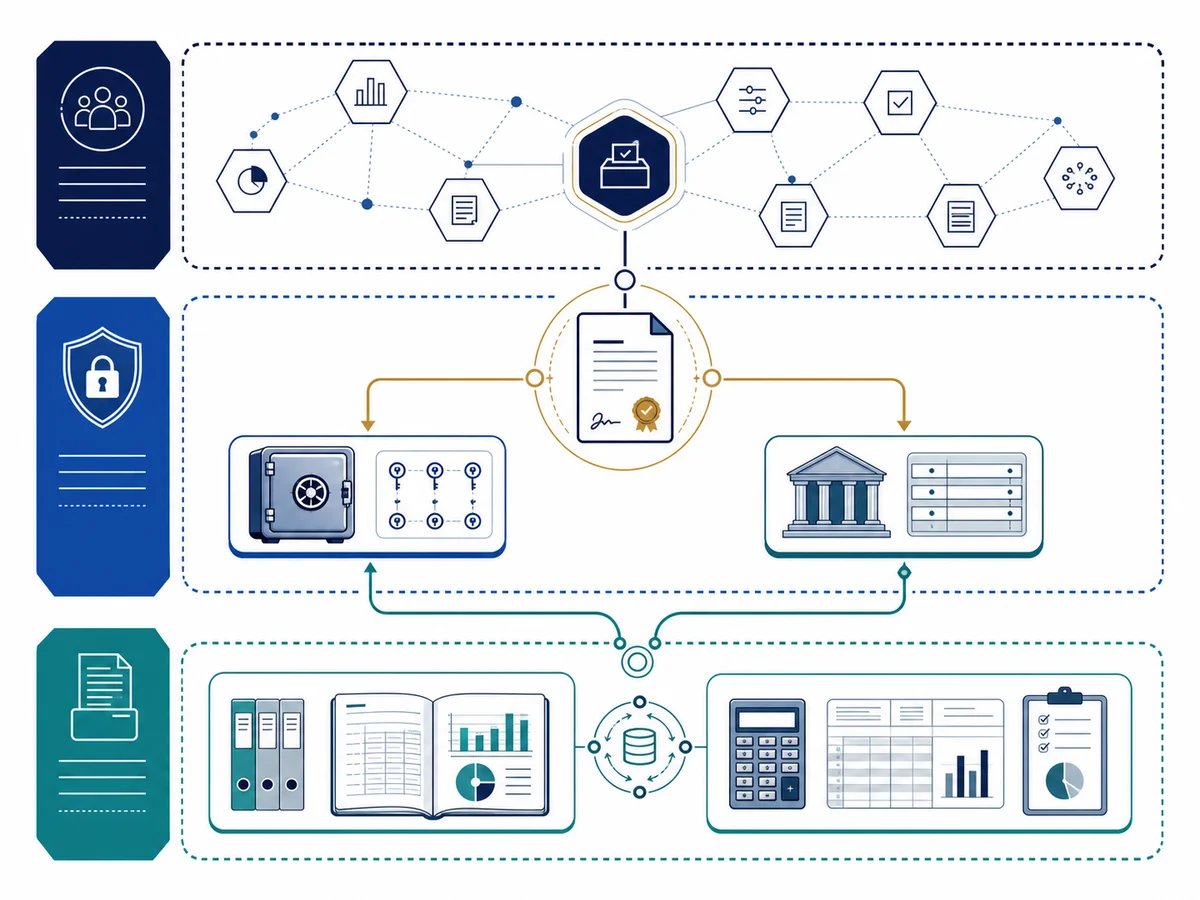
Apply a three-layer treasury test:
- Identify the legal or beneficial owner of each wallet, bank account, domain, trademark, and contract right.
- Identify the people who can move the asset: multisig signers, delegates, directors, officers, administrators, and emergency councils.
- Identify the taxpayer that records receipts, basis, expenses, payroll or contractor payments, gains, losses, and distributions.
These layers can differ, but the difference should be deliberate and documented. A signer is not automatically the owner. An entity described as a "service company" should not silently book a community treasury as its own asset. A token vote approving a payment does not identify the payer for accounting or tax purposes.
Connect governance to legal authority
Most wrapper failures start at the seam between an onchain vote and offchain authority. The governance system says a proposal passed. The bank mandate says two directors must sign. The services agreement gives an executive unilateral authority. The multisig has three signers who are not directors. All four can be internally valid and still point in different directions.
| Layer | Document or system | Question it must answer | Evidence to retain |
|---|---|---|---|
| Community intent | Proposal and voting rules | Who may propose, vote, delegate, veto, or pause? | Proposal text, snapshot, quorum, result, conflicts |
| Entity authority | Operating agreement, charter, bylaws, or governing principles | Does the vote bind the entity or advise its board? | Board or member resolution and written rationale |
| Asset control | Multisig policy and bank mandate | Who can execute, and what happens if a signer disappears? | Signer list, threshold, transaction hash, recovery procedure |
| Accounting | Ledger and wallet subledgers | Which taxpayer owns and records the transaction? | Invoice, valuation source, basis lot, payee data, approval link |
Wyoming's DAO-LLC supplement is unusually explicit about this seam. It allows articles and smart contracts to govern member relations, voting, transfers, withdrawals, distributions, and smart-contract amendments, and it contains a precedence rule for conflicts. That flexibility makes drafting more important, not less. A contract address pasted into formation papers is not a complete governance policy.
Limited liability also needs a narrower description. An entity may contain contractual debts and some organizational claims, but it does not promise immunity for a personal guarantee, fraud, sanctions violations, unpaid withholding, one's own misconduct, or conduct outside authorized duties. Indemnification and insurance are separate tools. For example, Delaware's corporate provisions authorize indemnification and insurance subject to stated conditions; neither is a universal release from liability.
Banking and exchange access should be tested before assets are transferred. Prepare a plain-language ownership chart, governing documents, tax identification, controller and signer information, source-of-funds records, wallet inventory, transaction policy, and a resolution authorizing the account. Then ask the institution whether it will onboard that exact structure and activity. Formation does not guarantee approval.
Treat payments and transparency as operations
Contributor payments are where legal diagrams meet payroll calendars. For U.S. tax purposes, the IRS treats digital assets as property and says digital-asset income is taxable in its current digital-assets guidance. Its reporting guidance for payments says employees paid in digital assets report the value as wages, while independent contractors report digital-asset compensation as business income. Calling a transfer a grant, bounty, retroactive reward, or community allocation does not settle worker status or tax treatment.
Before paying, record the payer, recipient, service period, classification, contractual amount, token and quantity, valuation time and source, wallet, transaction fee, approval, and reporting obligation. Also retain the asset basis information the payer needs. The wrapper decision should make this workflow easier. If no one can say which books contain the payment, the design is incomplete.
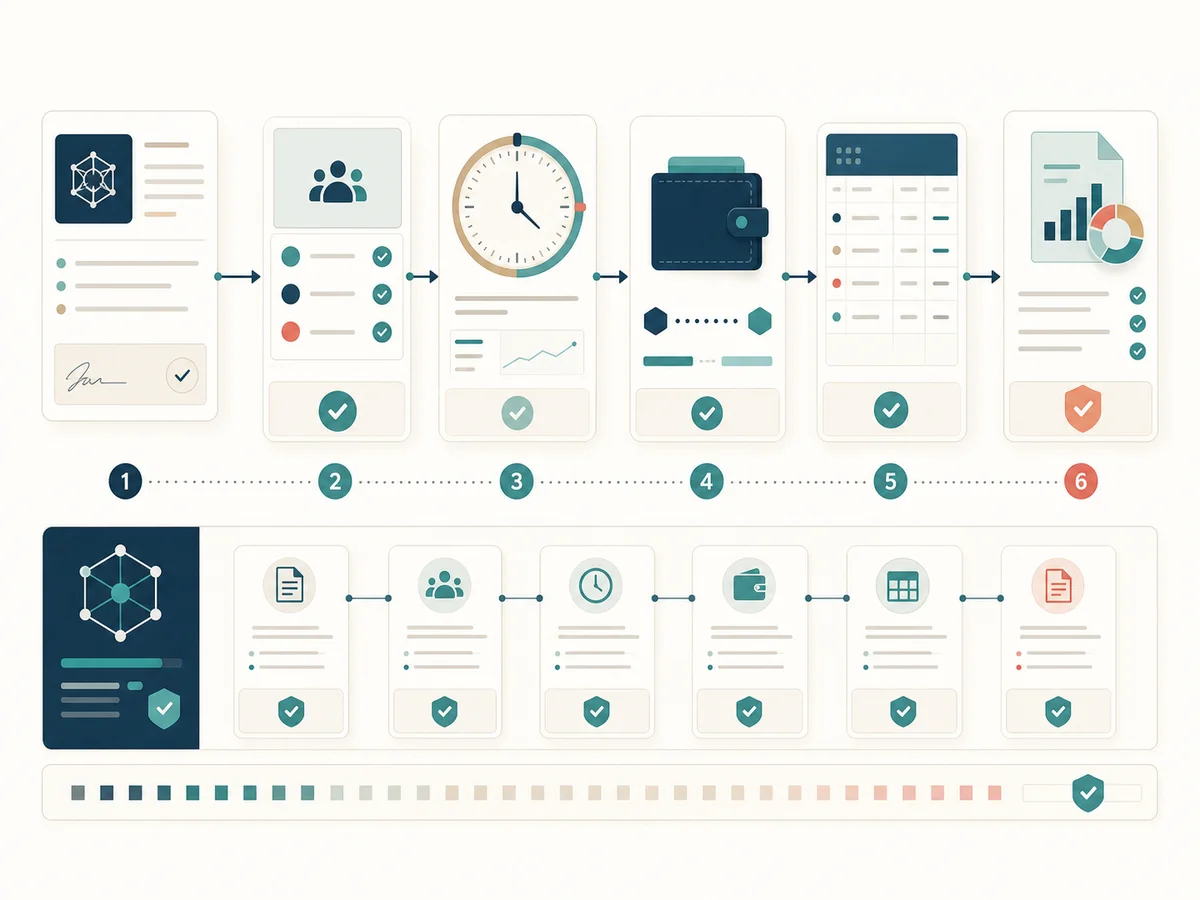
Transparency rules must be stated with dates and jurisdiction labels. Under FinCEN's current U.S. Corporate Transparency Act rule, entities created in the United States and their beneficial owners are exempt from federal BOI reporting. FinCEN's interim-rule Q&A says certain foreign-law entities registered to do business in a U.S. state or Tribal jurisdiction remain within the revised reporting-company definition unless exempt. That federal filing position does not cancel state filings, bank KYC, tax disclosure, foreign registers, sanctions screening, or contractual diligence.
Cross-border tax transparency is also moving closer to crypto operations. The OECD says its Crypto-Asset Reporting Framework supports exchanges between tax authorities and that jurisdictions may use the schema for domestic reporting. Its announcement also says non-custodial and decentralized service providers can, as a general matter, meet the reporting-provider definition. Whether a DAO, foundation, developer company, or interface operator falls within an implementing law requires local analysis; "non-custodial" is not a universal reporting exemption.
Run this file before launch:
- A jurisdiction map for founders, directors, signers, employees, contractors, users, and permanent operations.
- An ownership and control register that can reconcile legal names, wallet addresses, delegated votes, and entity roles.
- A payment policy covering worker classification, valuation, invoicing, withholding, information reporting, and basis records.
- A banking and custody pack with source-of-funds evidence, approved signers, limits, incident response, and succession.
Recheck the regulatory perimeter
The SEC's interpretation effective March 23, 2026 is relevant, but it is not a wrapper safe harbor. The Commission interpretation classifies several types of crypto assets, says digital commodities may carry governance rights such as votes on software upgrades and treasury spending, and states that a non-security crypto asset can still be offered and sold subject to an investment contract. It also says the interpretation does not replace the Howey test.
The practical unit of analysis is the asset plus the transaction and promises around it. Rights to future income, passive yield, treasury assets, or distributions can change the analysis. So can promises that a central party will perform essential managerial work. A wrapper may make those promises easier to identify; it does not neutralize them. The SEC expressly noted that its interpretation does not interfere with federal tax law, the Bank Secrecy Act, or anti-money-laundering law.
The 2026 interpretation also draws a narrow line for covered airdrops of non-security crypto assets where recipients provide no money, goods, services, or other consideration in exchange. Do not extend that conclusion to contributor rewards or promotional tasks without analysis. The same release excludes from its covered-airdrop discussion transfers made in exchange for services.
The older DAO lesson remains useful. In 2017, the SEC concluded that tokens offered by The DAO were securities based on the facts and economic realities, and said federal securities laws can apply regardless of whether the issuer is a traditional company or a DAO. Read that alongside the SEC's summary of the 2026 interpretation, without treating either document as a statement that every governance token is a security.
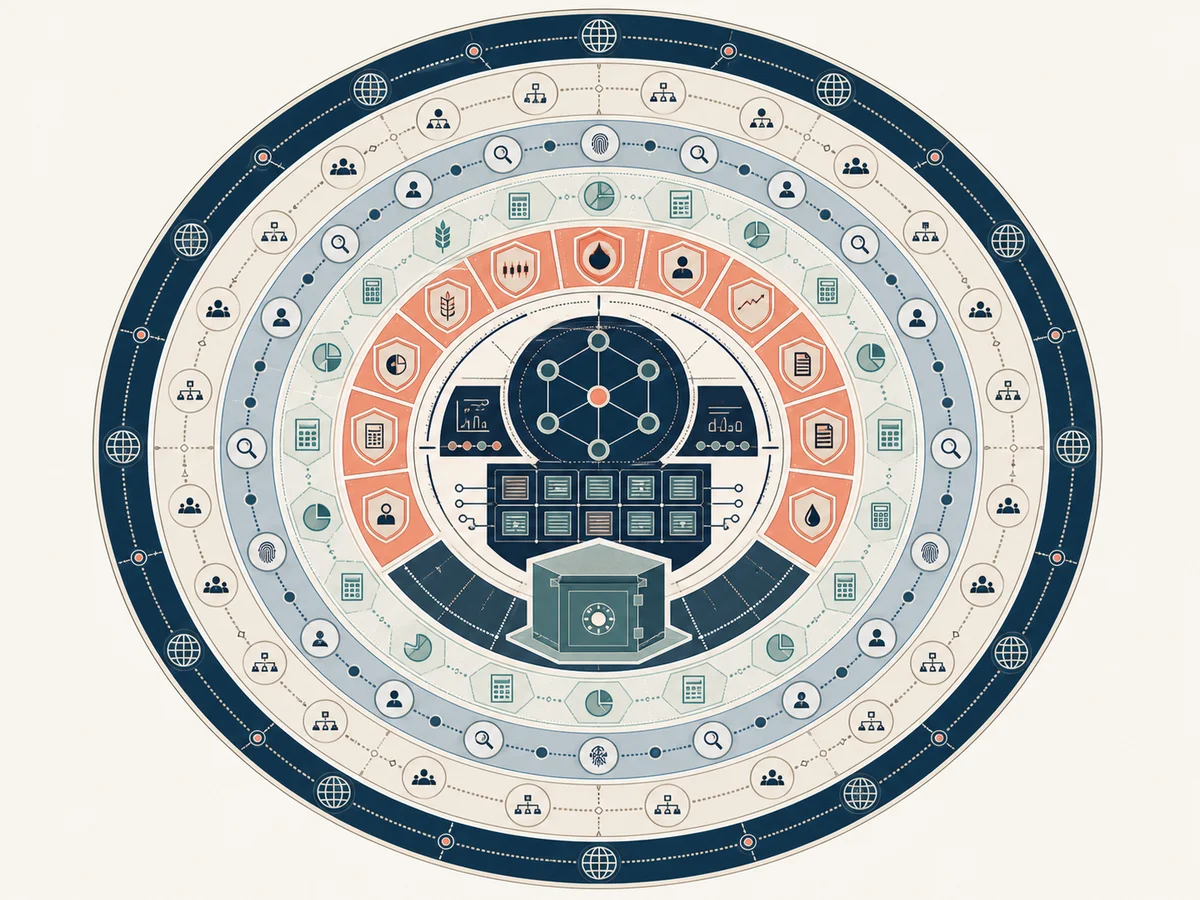
Before choosing a wrapper, screen the DAO's actual activities: fundraising, pooled investment, lending, leveraged trading, exchange or matching functions, custody, stablecoin issuance, paid airdrops, investment advice, and services to restricted persons. Assign each activity to an operator and jurisdiction. If the answer is "the protocol does it," identify who deploys, controls, updates, markets, or profits from that function.
Work the transactions, then plan the exit
Consider Atlas, a hypothetical protocol with a $12 million token treasury, three U.S. multisig signers, contributors in six countries, and token voting on grants. Atlas does not sell a wrapper to every token holder. It first separates protocol governance from an operating function.
Assume Atlas forms a U.S. multi-member LLC owned by two named project companies to contract with contributors, license a trademark, and administer an approved operating budget. Token votes remain a condition in the LLC agreement for specified community decisions, but directors record the corresponding entity action. The main treasury is not silently transferred to the LLC. Counsel and accountants separately analyze whether the governance arrangement creates other relationships and whether the LLC's federal default partnership classification should be changed.
| Event | Governance record | Legal actor | Tax and accounting record |
|---|---|---|---|
| DAO approves a 500,000-token operating budget | Proposal, quorum, vote, conflicts | Treasury owner authorizes a defined transfer | Document ownership consequence, valuation, and basis lots |
| LLC pays a contributor 8,000 tokens | Budget category and payment approval | LLC under a signed services agreement | Service expense, worker status, value, payee reporting, asset disposition records |
| Foundation-style steward receives the trademark | Approved IP policy | Named steward under its local law | Transfer agreement, valuation, tax analysis, license terms |
| Project shuts down | Final proposal under preset thresholds | Each entity follows its own dissolution process | Reserves, creditor payments, final returns, distributions, retained records |
This example is not a recommendation for Atlas or for a split-wrapper structure. It shows why the transaction map matters more than the label. A DUNA might fit a different governance and purpose profile. A foundation-style steward might fit long-term IP and grant administration. A small research collective may remain without an entity until it hires, raises funds, or takes custody. Each choice changes the questions, not the need to answer them.
Dissolution deserves the same precision as formation. The Wyoming DAO-LLC provisions specify events that can trigger dissolution, including member votes and events in governing smart contracts. Delaware corporate law separately requires authorization, filings, and winding-up steps; its dissolution provisions also address asset disposition and creditor-facing procedures. Those are jurisdiction-specific examples, not a universal DAO exit rule.
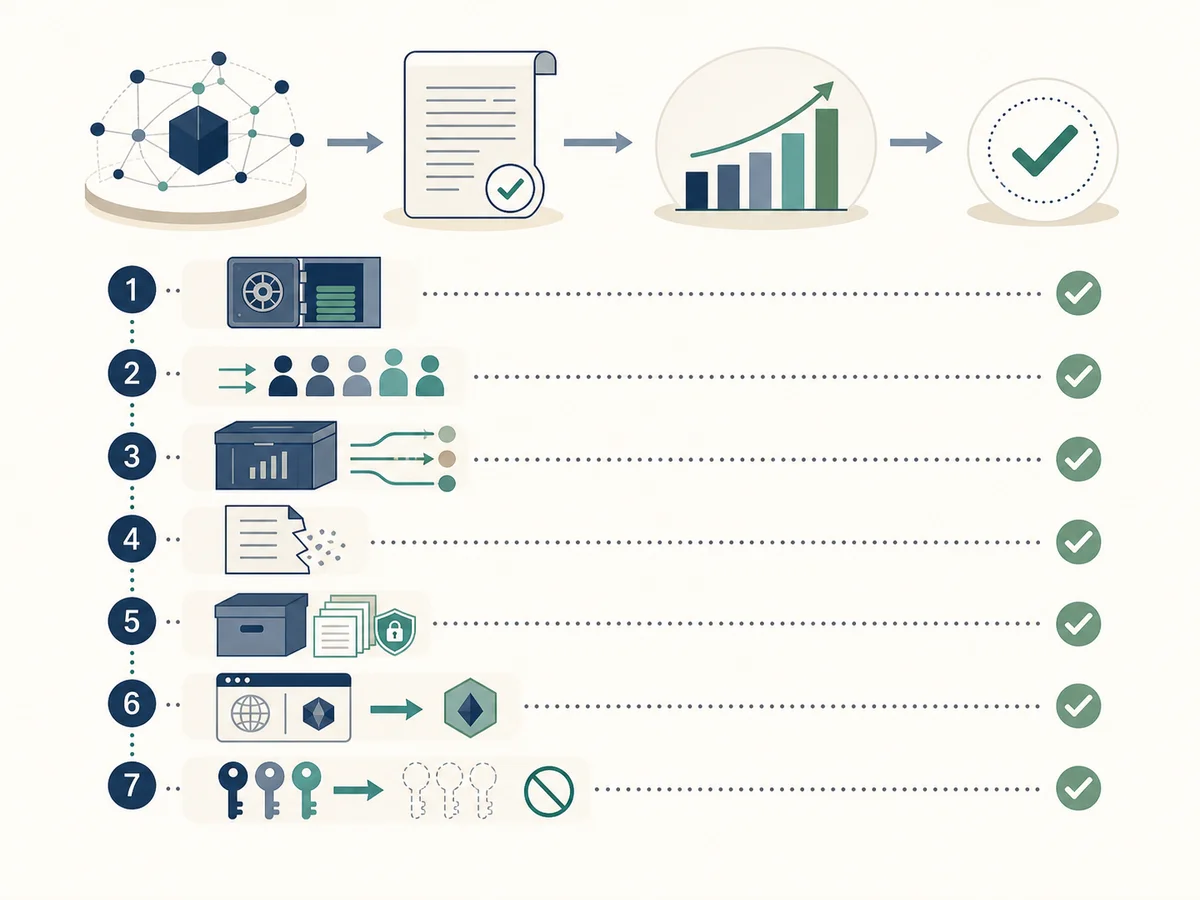
Write the exit before launch. Set the vote and veto rules, creditor reserve, treatment of restricted or unclaimed assets, token-holder eligibility, tax withholding, grants in progress, IP destination, data and record retention, pending claims, final filings, signer retirement, domain transfer, and contract termination. Include a fallback for quorum failure and lost keys. A rage-quit mechanism or treasury vote is not a complete winding-up plan.
Frequently Asked Questions
Does a DAO wrapper eliminate tax?
No. A wrapper identifies a legal form, while tax depends on classification, residence, activities, owners or members, elections, payments, and applicable jurisdictions. In the United States, even an LLC can be disregarded, a partnership, or a corporation. "Nonprofit" in an entity name does not by itself create federal tax exemption.
Is a Wyoming DUNA automatically tax-exempt?
Do not assume that. DUNA is a Wyoming-specific legal form, and federal tax classification is a separate question. Obtain a current Wyoming-law opinion on the proposed governance and distributions, plus a federal and cross-border tax memo for the actual participants and activities.
Does every governance-token holder become an LLC member?
Only if the governing documents and applicable law produce that result. A project can distinguish protocol voting, contractual rights, entity membership, and economic rights, but those distinctions must match the documents and conduct. Broad membership can also create difficult tax, notice, and information-reporting consequences.
Will forming an entity guarantee a bank account?
No. It gives the institution an applicant and documents to review. Acceptance still depends on the institution, ownership and control information, jurisdictions, products, transaction profile, source of funds, custody model, and compliance assessment.
Is no entity the lowest-compliance option?
It removes a formation and maintenance layer, but it may leave ownership, agency, partnership, liability, tax filing, and wind-down questions with individual participants. It is most defensible when the activity is genuinely limited and the team has documented who owns assets, signs contracts, reports income, and handles claims.
Sources Used in This Guide
- IRS: LLC filing as a corporation or partnership
- IRS: About Form 8832
- IRS Publication 541: Partnerships
- IRS: LLC classification changes and possible repercussions
- IRS: Digital assets
- IRS: Digital asset reporting and tax requirements
- FinCEN: Beneficial Ownership Information Reporting
- FinCEN: Interim Final Rule Q&A
- OECD: Crypto-Asset Reporting Framework implementation materials
- Wyoming Legislature: DAO-LLC supplement
- CFTC: Ooki DAO litigation judgment statement
- SEC interpretation: Application of federal securities laws to crypto assets
- SEC: Summary of the 2026 crypto-asset interpretation
- SEC: The DAO investigative report announcement
- Delaware Code: Directors, officers, indemnification, and insurance
- Delaware Code: Dissolution and winding up