
In This Guide
- Three systems decide the estate, and each ignores the other two
- Habitual residence picks the law, nationality is the only lever
- Forced heirship reserves a share whatever the will says
- Situs is decided by the asset, not by the broker
- Estate-level and heir-level systems tax the same death twice
- Multiple wills fail on the revocation clause
- The UAE runs a registered-will track for non-Muslims
- Trusts and marital regimes break on contact with civil law
- Frequently Asked Questions
- Sources Used in This Guide
- Related Articles
Three systems decide the estate, and each ignores the other two
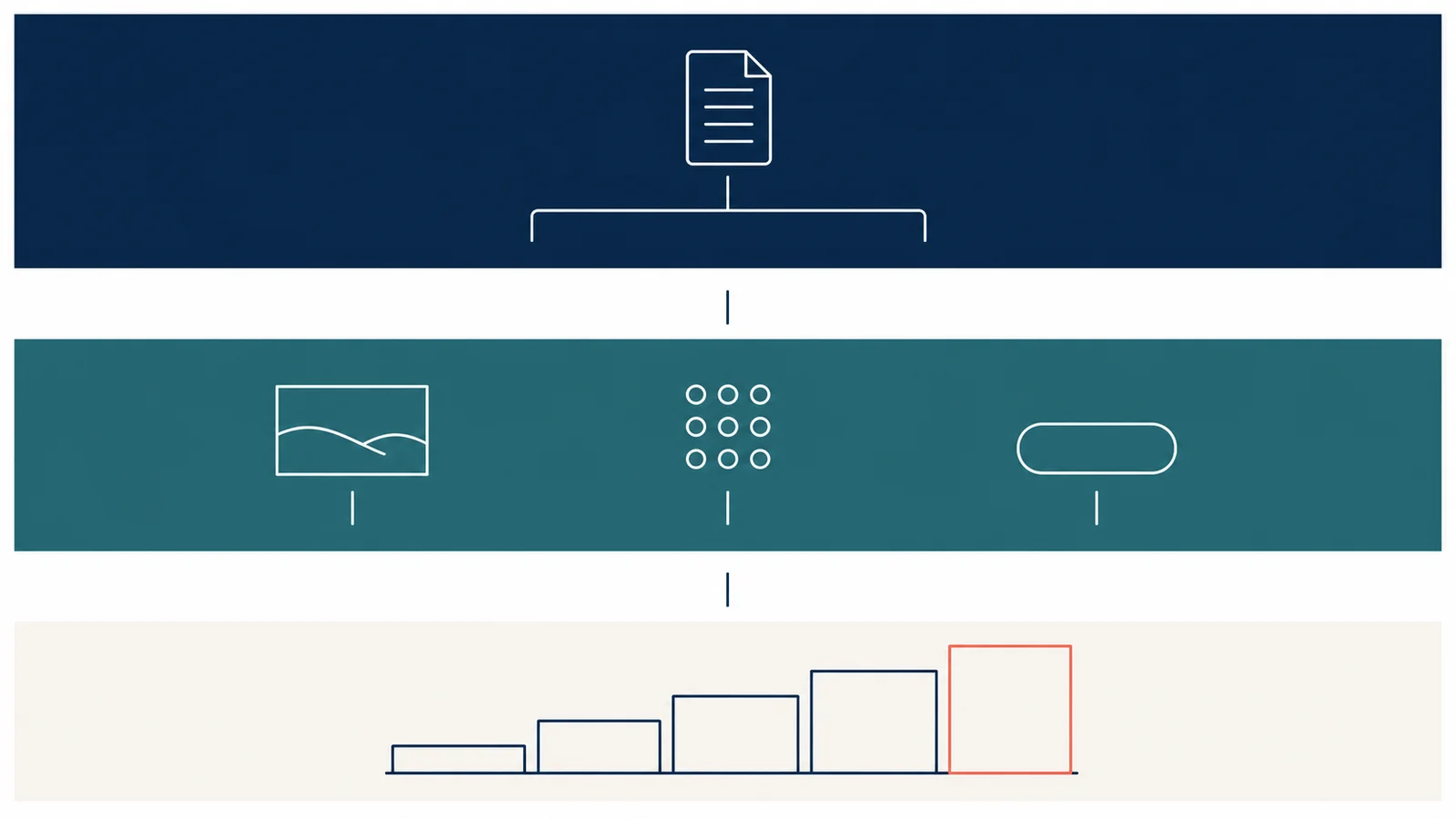
Three separate systems decide what happens to a cross-border estate, and they do not speak to each other. Succession law decides who inherits. Situs decides which country claims each asset. Death tax decides who writes the check. Solving one is not partial progress toward the other two.
Brussels IV shows this plainly. Regulation 650/2012 lets a testator elect the law of their nationality to govern the whole succession, which can displace forced heirship. It does nothing to the tax bill, because matters of inheritance tax law are excluded from the scope of the Regulation. A British national in Frankfurt can elect English law, leave an adult child nothing, and still watch German inheritance tax fall on every heir.
| Layer | What determines it | What the tool leaves untouched |
|---|---|---|
| Succession law: who inherits | Habitual residence at death, unless nationality is elected | Every tax question; French assets stay exposed to a levy |
| Situs: which country claims an asset | Location for land; legal characterization for shares and debts | Who inherits, and whether a reserved share applies |
| Death tax: who pays and how much | Residence or domicile of the deceased, plus asset situs | Most country pairs, because treaty networks are thin |
Accuracy and scope: Rules and figures were checked against primary sources available through August 3, 2026. This is general information, not tax, legal, or financial advice.
A common shape: a farmhouse in the Dordogne, a London account holding US technology shares, a Dubai apartment. French law reaches the farmhouse. English law governs the account if England is where the owner was habitually resident. The IRS claims the US shares whichever broker holds them. The Dubai apartment turns on whether a will was ever registered. One death, four systems, no single document that covers them.
Habitual residence picks the law, nationality is the only lever
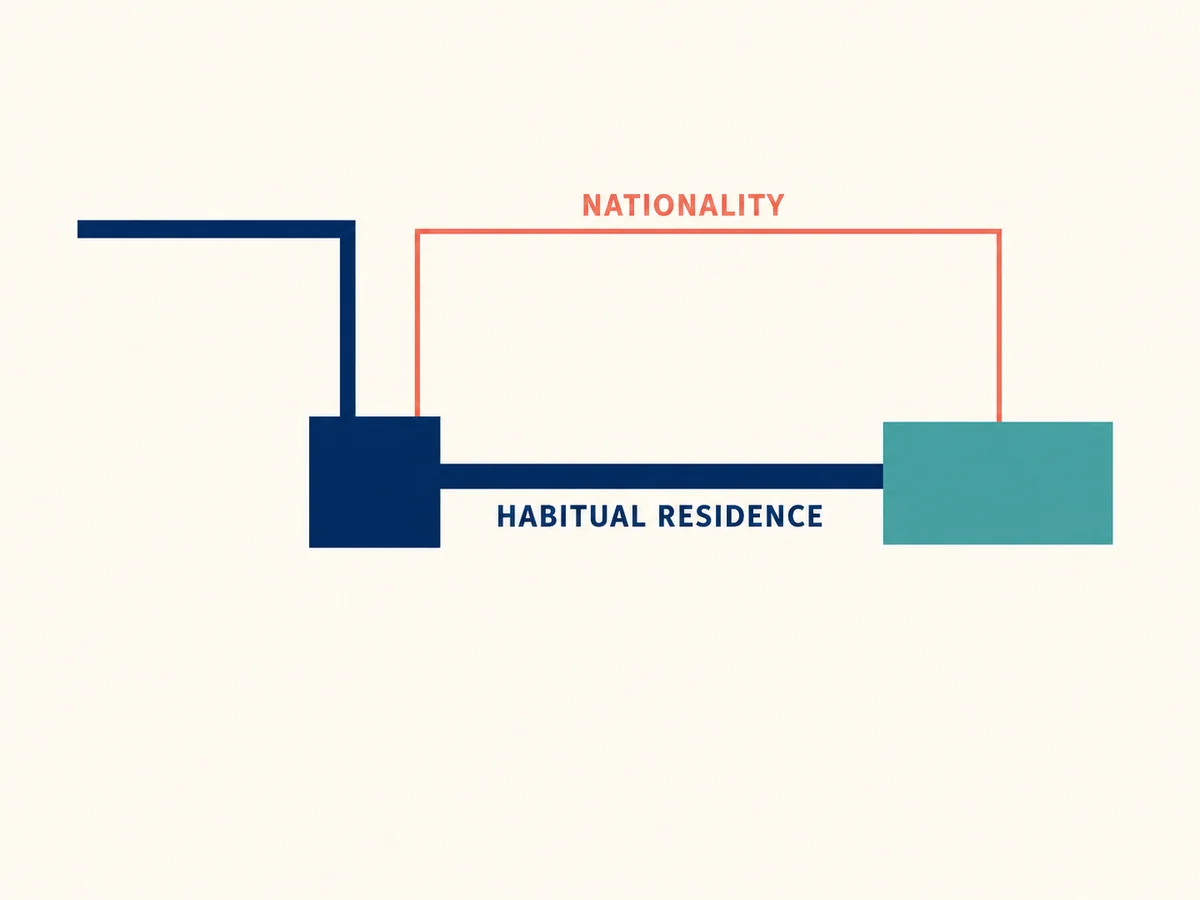
The default across most of the EU is habitual residence, not nationality and not asset location. Under Regulation 650/2012, the courts of the Member State of the deceased's last habitual residence have jurisdiction and that State's law applies to the whole succession, movable and immovable alike, wherever situated. It governs anyone who died on or after 17 August 2015. Before that, one estate could fracture into pieces governed by different laws.
The escape hatch is narrow. A testator can choose the law of their country of nationality. That is the entire lever: no third country's law, no election by conduct, and in practice it must be stated in the will. The Regulation applies in every EU Member State except Denmark and Ireland. The UK opted out at adoption and has since left the EU, so it is now a third state. A UK national resident in Spain can still elect UK law, but an English court handling the same estate applies its own conflict rules.
Administration got one genuine improvement. The European Certificate of Succession lets heirs and executors prove their status in other Member States, recognized without any special procedure. An Italian Certificate is accepted by a Spanish bank without a fresh court process. Nothing equivalent exists between the EU and third states.
Forced heirship reserves a share whatever the will says
Forced heirship is why a will drafted in a common-law country routinely fails in a civil-law one. In France, gifts and bequests may not exceed half the estate with one child, one third with two, and one quarter with three or more. The children's reserved share is the remainder. That is not a default the will can override. It is a floor.
| Jurisdiction | Reserved share | Nature of the claim | Can it be displaced? |
|---|---|---|---|
| France | 1/2 (one child), 2/3 (two), 3/4 (three or more); spouse 1/4 if no descendants | Share of the estate in kind | Only partly — Article 913 al. 3 levy since 1 Nov 2021 |
| Spain (common civil code) | 2/3, one third of it the mejora; spouse takes a usufruct | Share of the estate | Foral regions differ; Navarre approaches full freedom |
| Germany | Half the value of the intestate share | Money claim against the heir | No, but lifetime gifts taper out over ten years |
| UAE (non-Muslim, no registered will) | Half to spouse, remainder equally among children | Statutory default | Yes, by registered will or home-country election |
| England and Wales | None | Family provision claims only | Not applicable |
France reinforced its reserved share in 2021
One added paragraph changed the calculus for anyone holding French assets. Since 1 November 2021, Article 913 paragraph 3 creates a compensatory levy: where the deceased or at least one child is an EU national or habitually resident in the EU, and the foreign law governing the succession gives children no reserved-share protection, each child may levy against assets located in France at death.
France did not challenge the Brussels IV election. It attacked the outcome. An American habitually resident in Paris can still elect US state law and disinherit an adult child; the child then reaches into the French assets and takes back what the réserve would have delivered. The election works cleanly only where there are no French assets.
Spain fragments by region, Germany converts the claim into cash
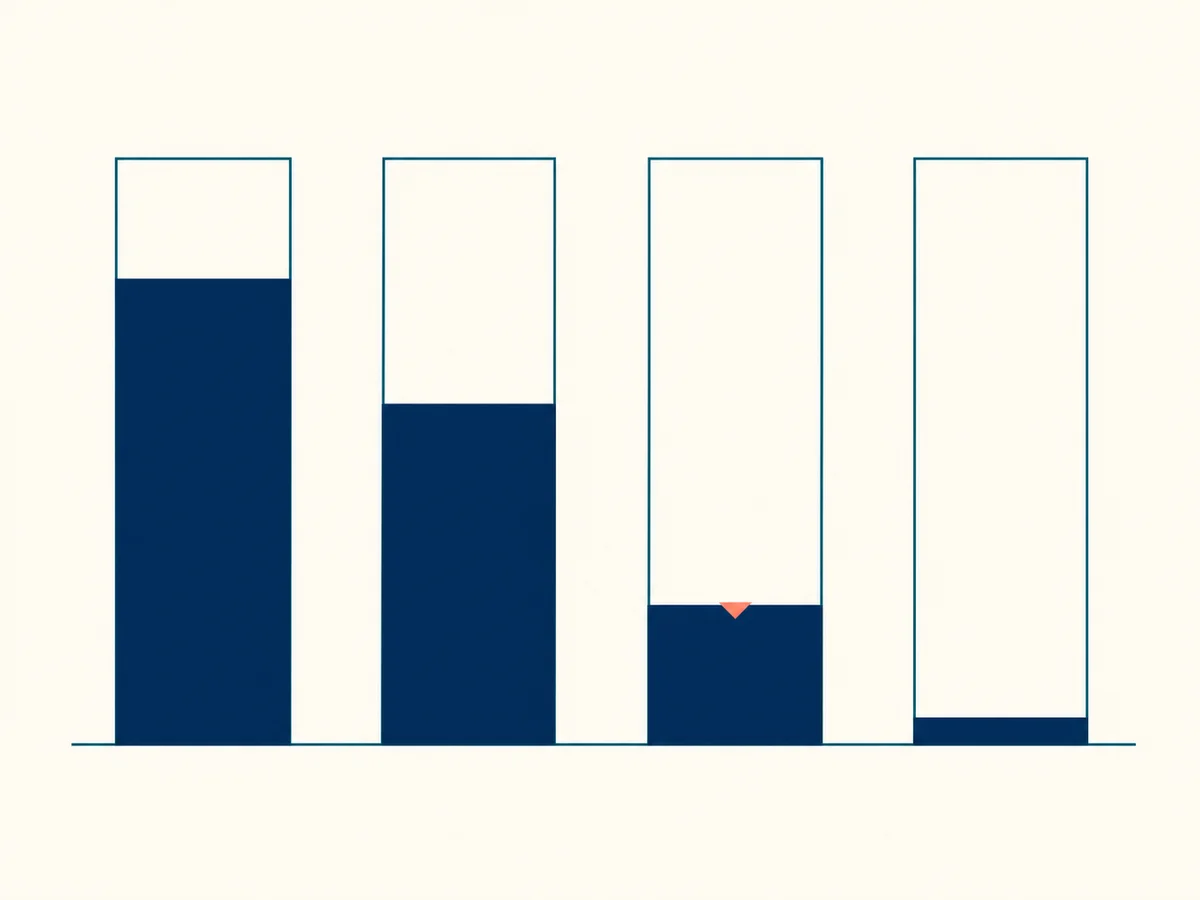
Spanish law sets the legítima of children at two thirds of the estate, one third of it the mejora the testator may distribute unequally among descendants, leaving one third freely disposable; the spouse takes a usufruct rather than ownership. Then the map fractures. Six autonomous communities — Aragón, Catalonia, the Balearic Islands, Navarre, the Basque Country and Galicia — run their own foral systems, and Navarre sits close to full testamentary freedom.
Germany reaches a similar place by another route. Under § 2303 BGB an excluded descendant can demand the Pflichtteil, half the value of the intestate share, as can the parents and spouse. It is a money claim against the heir, not a share of the assets, so a German business passes intact to one child while that child owes cash to the excluded sibling. Giving assets away early does not defeat it quickly: a gift counts in full within one year of death, falls by one tenth for each further year, and is disregarded after ten.
Situs is decided by the asset, not by the broker
Situs decides where an asset sits for legal purposes, and it is where most cross-border estates go wrong. Land is simple: HMRC's position is that immovable property is situated where it is actually located, and disputes over whether an interest in land is movable are settled where the land sits.
Financial assets are where intuition fails. The IRS treats stock of a US corporation as US-situs property even if the nonresident held the certificates abroad or registered them in the name of a nominee. A Singapore resident holding Apple shares at a Swiss private bank owns US-situs assets. The custodian is irrelevant; the place of incorporation decides. An executor must file where US-situated assets exceed $60,000 at death, on Form 706-NA, within nine months.
| Asset | US situs? | Notes |
|---|---|---|
| US real estate | Yes | Directly chargeable |
| Tangible personal property in the US | Yes | Some art excluded |
| Shares in a US corporation | Yes | Even if held abroad or via a nominee |
| US bank deposits | No | Certain deposits and debt excluded |
| Deposit with a foreign branch of a US bank | No | Explicitly outside the net |
| Life insurance on the nonresident's own life | No | Proceeds excluded |
| Exemption | $60,000 | Not indexed for inflation |
| Top rate | 40% | Form 706-NA due nine months after death |
| Treaty relief | 15 countries | Situs-type or domicile-type |
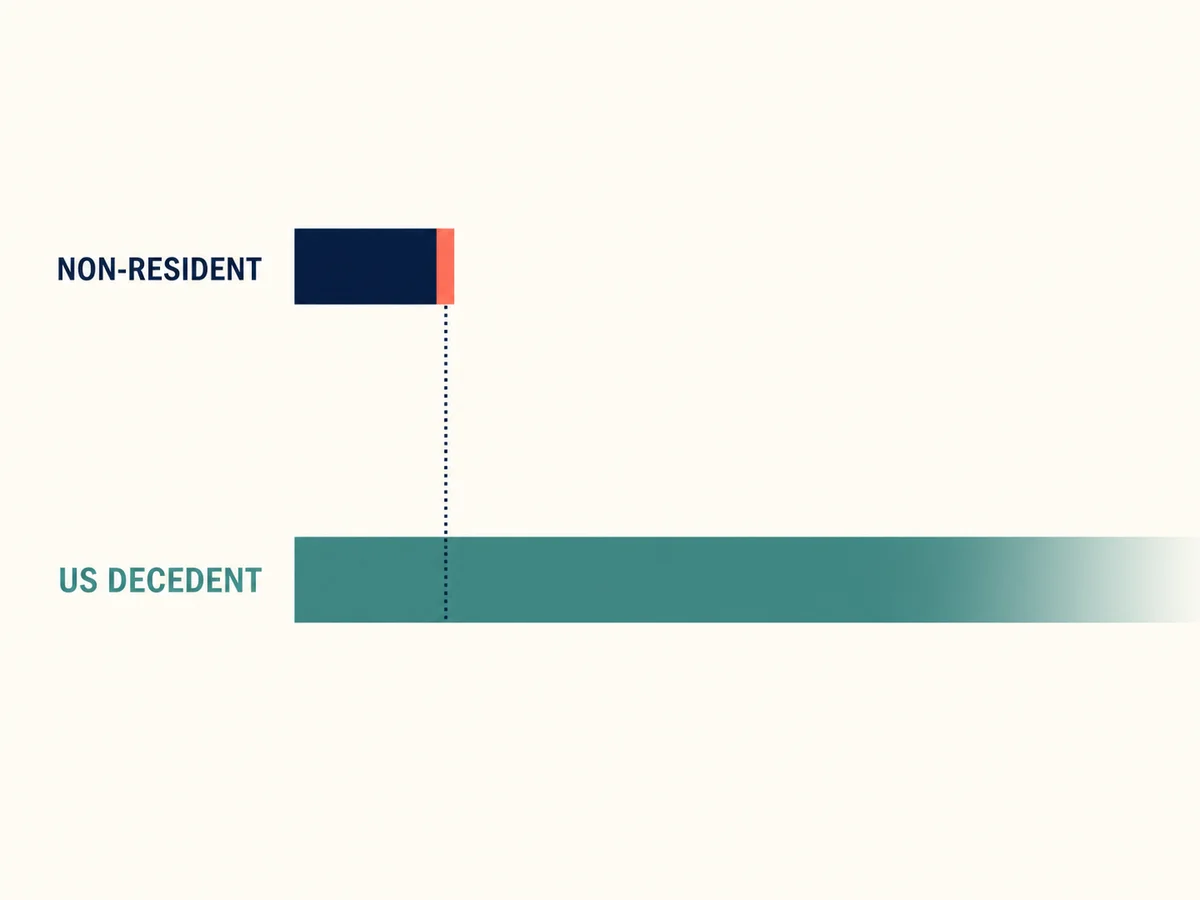
Set that $60,000 against the domestic figure. A US decedent's estate does not file until it exceeds $13,990,000 in 2025, rising to $15,000,000 in 2026. The nonresident exemption is $60,000 and is not adjusted for inflation. The top rate is 40% on either side of that line.
Which side you land on is not a day count. Transfer-tax domicile is a subjective test of intent: a person is treated as US-domiciled if they live there, even briefly, with no intention of leaving. Someone who fails the substantial-presence test for income tax can still be a US domiciliary for estate tax purposes.
The fix belongs at acquisition, since restructuring later can itself trigger gift tax or a taxable disposal. That makes the choice between personal, corporate, and trust ownership at purchase unusually consequential for anything US-situs.
Estate-level and heir-level systems tax the same death twice
Death taxes come in two designs, and mixing them produces double taxation no credit fully relieves. Estate-level systems tax the estate before anything reaches beneficiaries. Heir-level systems tax each beneficiary on what they receive, at a rate set by how closely they were related.
| Country | Who is taxed | Headline rate | Key allowance |
|---|---|---|---|
| United States | The estate | Up to 40% | $15,000,000 in 2026 for a US decedent; $60,000 for a non-domiciliary |
| United Kingdom | The estate | 40%, or 36% where 10%+ goes to charity | £325,000 nil-rate band plus £175,000 residence band, tapered from £2m |
| France | Each heir on their share | 5%–45% direct line; 60% unrelated | €100,000 per child; spouse exempt |
| Germany | Each heir on their share | 7%–30% Class I up to 30%–50% Class III | €400,000 per child, €500,000 spouse, then taxed |
| Spain | Each heir on their share | State scale, heavily modified by region | Regional |
The heir-level design punishes distance in the family tree. French duty is charged on each heir's share: a €100,000 abatement for children then 5% to 45%, siblings at 35% or 45% after €15,932, nephews and nieces at 55%, unrelated beneficiaries at 60%. A spouse or PACS partner is exempt. Leaving a French apartment to a godchild costs 60% of it.
German allowances under § 16 ErbStG reach €500,000 for a spouse and €400,000 per child, with rates from 7% to 50% by class and no unlimited spousal exemption. Spain is left vague in the table on purpose: regional modification is heavy enough that the national scale tells you little, and some regions relieve close-family inheritances almost entirely.
The UK moved its connecting factor in 2025. Inheritance tax moved from domicile to long-term UK residence from 6 April 2025, meaning residence in at least 10 of the previous 20 tax years. Leaving does not end exposure quickly: the tail runs three years for those resident 13 years or fewer, stretches to ten for someone resident 20 years or more, and lifts only after 10 consecutive years of non-residence. The rate is 40%, or 36% where 10% of the net estate goes to charity, with bands held through the 2029 to 2030 tax year.
Relief is thinner than people assume. The UK has inheritance tax conventions with exactly ten countries: Ireland, the Netherlands, South Africa, Sweden, the USA, Switzerland, France, India, Italy and Pakistan. The US has estate or gift tax treaties with fifteen. Against hundreds of income tax treaties worldwide, that is close to nothing. Otherwise, unilateral relief credits foreign tax on the same event and property, capped at the UK tax on it. For rates by country, see our inheritance and estate tax tables.
Multiple wills fail on the revocation clause
Separate wills for separate countries are usually right, for administrative reasons rather than legal ones. Each jurisdiction's assets get administered in parallel instead of in sequence: a UK executor does not wait for a French notaire.
The trap is the revocation clause. A standard "I hereby revoke all former wills" in the second will destroys the first, leaving the estate governed by a document never designed for the other country's assets, or by intestacy. Three defenses have to hold together: each will revokes only prior wills covering that jurisdiction's assets, named explicitly; the wills are executed in a deliberate, clearly dated order; and each drafter knows the others exist. The third fails most often.

Recognition of the grant is the next problem, since probate runs only where it was issued. For England and Wales the mechanism is Victorian: the Colonial Probates Act 1892 lets a grant made in a listed jurisdiction be resealed with like force and effect, and the 1965 Order lists roughly 70 jurisdictions, including Australia, Hong Kong, New Zealand, Singapore and the Cayman Islands. An Australian grant is resealed. A French or German one is not, so the estate needs a fresh English grant.
The UAE runs a registered-will track for non-Muslims
Gulf planning turns on one question: is there a registered will? Absent one, UAE courts have historically applied Sharia principles of inheritance to estates within their jurisdiction, producing a fixed distribution pattern rather than the deceased's wishes. Non-Muslims have a documented opt-out, and it works through registration rather than drafting alone.
The DIFC Courts Wills Service gives non-Muslims living and investing in the UAE the option to pass on their assets and appoint guardians for their children according to the instructions in their will, under Dubai Law No. 15 of 2017, with six will types: Full, Property, Financial Assets, Business Owners, Digital Assets and Guardianship.
Abu Dhabi is where the common description goes wrong. ADGM does not run its own wills registry. Its Notary Public, in partnership with the Abu Dhabi Judicial Department, offers notarisation and non-Muslim wills services, and ADGM states that it does not provide a probate service: applications must be registered with the ADJD's Wills and Probate Office. The registry is ADJD's; ADGM is the notarial route into it. Anyone told they hold "an ADGM will" should check where it sits.
Federal law also moved. Commentary on Federal Decree-Law No. 41 of 2022 reports that Article 11 lets individuals designate beneficiaries for their UAE estate, with a default absent a will of half to the surviving spouse and the remainder equally among children, no differentiation between sons and daughters. That account is law-firm commentary rather than a published government text, so treat it as indicative and confirm with UAE counsel before relying on the default.
Trusts and marital regimes break on contact with civil law
Two structures fail quietly across borders because each was designed inside one legal tradition. The first is the trust. The 1985 Hague Trusts Convention, which obliges signatory states to recognize trusts governed by a foreign law, has only 14 Contracting Parties: Australia, Canada, Cyprus, Italy, Liechtenstein, Luxembourg, Malta, Monaco, the Netherlands, Panama, San Marino, Switzerland, the UK, and China for Hong Kong and Macau. France and the United States signed and never ratified.
Look at who is absent: Germany, Spain, Austria, Belgium, Portugal. A civil-law court in a non-Contracting State has no obligation to recognize the split between legal and beneficial ownership a trust depends on. It may look through the structure and treat the settlor as still owning the assets for forced-heirship and tax purposes. That argues against using a trust where recognition is absent, not against trusts generally, and it is why the choice between an offshore trust and a foundation often turns on one point: civil-law courts understand entities.
The second structure catches more estates and gets less attention. In community-property jurisdictions the matrimonial regime is unwound before the succession opens, so half of what everyone treated as the estate may never have belonged to the deceased. Regulation (EU) 2016/1103 sets a cascade where the spouses made no choice: first common habitual residence after marriage, failing that common nationality at marriage, failing that closest connection. British and German nationals who married in London and moved to Munich three years later have their first common habitual residence in England. Reverse the moves and the answer changes.
Frequently Asked Questions
Can a will escape forced heirship if I own property in France?
Only partly, and less than before November 2021. A foreign national habitually resident in France can elect the law of their nationality and displace the réserve héréditaire. But Article 913 al. 3 lets each child levy against French-situated assets where the elected law gives children no reserved-share protection. The election works cleanly only where there are no French assets.
Do I need a separate will for each country where I own assets?
Frequently yes, mainly for administrative speed, since separate wills let each jurisdiction's assets be administered in parallel. The trap is the revocation clause. Each will must revoke only prior wills dealing with that jurisdiction's assets, be executed in a deliberate order, and be drafted by lawyers who know the other wills exist.
I hold US shares through an offshore broker. Am I exposed to US estate tax?
Yes, if you are not a US person. US corporation stock is US-situs property even if held abroad or registered in the name of a nominee. More than $60,000 of US-situs assets triggers Form 706-NA within nine months, with rates reaching 40%. Bank deposits sit outside the net; equities do not.
I left the UK three years ago. Is my worldwide estate still exposed to UK inheritance tax?
Almost certainly, if you were UK resident in 10 of the previous 20 tax years. Long-term residents keep worldwide exposure for a tail of three to ten years scaled to how long they were resident, lifting only after 10 consecutive years of non-residence. UK-situs assets stay chargeable regardless.
This guide is for general information only and is not tax advice. A qualified professional should review your specific facts before you act.
Sources Used in This Guide
- European e-Justice Portal — Succession (Regulation 650/2012)
- Légifrance — Code civil, Article 913
- Service-Public.fr — Droits de succession
- Gesetze im Internet — § 2303 BGB (Pflichtteil)
- HMRC IHTM47001 — Long-term UK residence
- IRS — Estate tax for nonresidents not citizens of the US
- IRS — Estate and gift tax treaties
- DIFC Courts — Wills Service
- ADGM Courts — Notary Public
- HCCH — Status table, 1985 Hague Trusts Convention
- Regulation (EU) 2016/1103, Article 26
Related Articles
- Inheritance and estate tax by country 2026 — covering the rate tables by country.
- Offshore trust vs foundation: which and where — covering the vehicles for lifetime structuring.
- Cook Islands trust asset protection guide — covering the strongest trust jurisdiction.
- Buying property abroad: personal, company, or trust — covering ownership structure at acquisition.