

In This Guide
- A reclaim starts with two rates and one entitlement test
- Choose the relief route before the dividend is paid
- Build an evidence chain the tax authority can follow
- Run the reclaim from entitlement to cash
- Work the numbers before doing the paperwork
- Triage difficult claims, denials and retention
- FASTER is a directive, not a live EU refund portal
- Frequently Asked Questions
- Sources Used in This Guide
A reclaim starts with two rates and one entitlement test
A dividend withholding tax reclaim asks the source country to return tax collected above the rate that applies to a particular investor. The starting deduction may be the source country's general domestic rate. A lower rate may follow from that country's domestic law, the exact tax treaty between the source country and the investor's residence country, or, in some cases, EU law. The difference is potentially reclaimable excess, not an automatic receivable.
The legal order matters. First identify the issuer's country and its domestic charging rule. Then read the applicable dividend article, definitions, protocol and anti-abuse provisions in the treaty that was in force on the payment date. The OECD Model Tax Convention is a drafting model and interpretive reference; it is not a substitute for the signed treaty. Finally, check the source tax authority's current instructions, forms and administrative practice. A custodian guide is useful for operations but cannot change the law.
A mathematical rate difference is only the claim ceiling. Residence, beneficial ownership, investor type, holding facts, deadlines and evidence decide whether any refund is due.
That distinction prevents a common accounting error: booking the full difference between the domestic and treaty rates before eligibility has been tested. The EU FASTER Directive defines excess withholding tax in similar terms, as the difference between tax levied at the general domestic rate and the lower amount applicable under a treaty or specific national rules. It also leaves the underlying entitlement with domestic law and the relevant treaty.
Choose the relief route before the dividend is paid
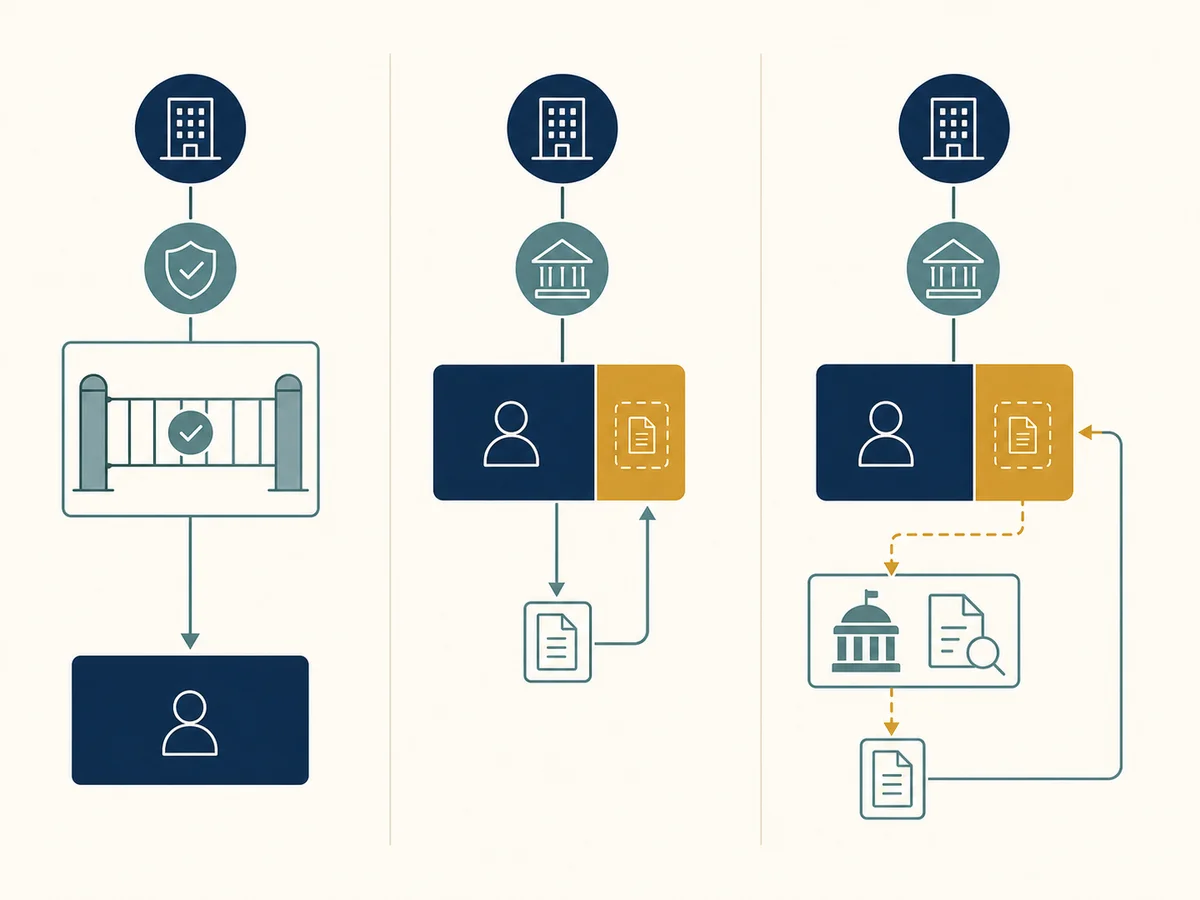
There are three operational routes. Their names sound interchangeable; their cash consequences are not. The best route is usually the earliest one for which the investor and intermediary can produce reliable documentation.
| Method | What happens at payment | Who normally acts | Main advantage | Main failure point |
|---|---|---|---|---|
| Relief at source | The paying chain applies the eligible reduced rate immediately. | Withholding agent, custodian or certified intermediary, using investor documentation. | No excess cash leaves the account. | Forms, residence proof or account classification are missing before the operational cutoff. |
| Quick refund | The domestic rate is withheld, then excess tax follows an accelerated refund channel. | An eligible intermediary submits a structured request soon after payment. | Shorter cash gap than a standard reclaim. | The payment or chain falls outside the fast-track conditions, or required data arrive late. |
| Standard refund | The domestic rate is withheld and the claimant files under the source country's ordinary procedure. | Investor, adviser, custodian or authorised representative. | Can cover cases excluded from faster routes. | Long processing, original-document demands, chain breaks or an expired limitation period. |
These are functional descriptions, not promises that every country offers all three. The FASTER definitions apply within that directive's scope; national systems remain different. The European Commission's FASTER page describes relief at source and quick refund as fast-track procedures that complement standard refunds. Outside that future framework, a tax authority may use different labels or no quick-refund route at all.
The issuer declares and funds the dividend. A withholding agent calculates and remits source tax. Central securities depositories and custodians pass cash and data through the holding chain. The investor supplies status and entitlement evidence. Advisers can prepare or review a claim, but they cannot repair an unsupported holding record by opinion alone. Ask the global custodian which entity in the chain will file, whether it accepts client-filed claims, its document cutoff, fees, minimum claim size and responsibility if a sub-custodian rejects the package.
Build an evidence chain the tax authority can follow
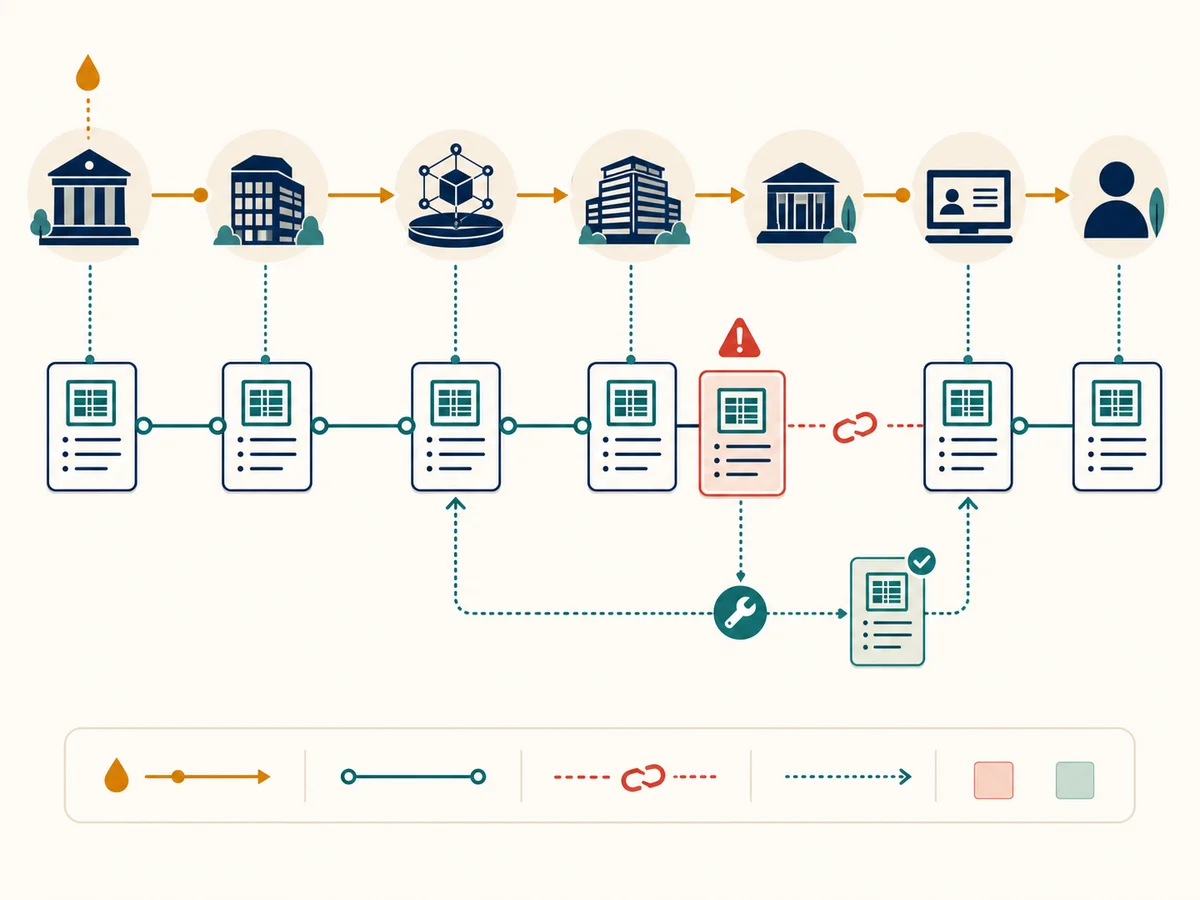
A good file lets a reviewer trace one dividend from issuer to registered position, through each intermediary, to the person claiming treaty or domestic relief. The FASTER Directive calls this the securities payment chain and requires information that can reconstruct it. The IRS description of withholding agents and foreign intermediaries shows the same practical problem in a different system: custody, payment and documentation may sit with several parties, although tax should be withheld once.
The registered owner is the person or entity recorded as entitled to the payment under the relevant system. The beneficial owner is the person treated as owning the income for the rule being claimed. They may be the same, but an omnibus nominee, custodian or agent often appears in the registered chain. Under the IRS Form W-8BEN instructions, a nominee, agent, custodian or disregarded conduit is generally not the beneficial owner. The exact test still comes from the source country's law and treaty. Do not transplant the US definition into another jurisdiction without checking.
| Evidence item | What it should prove | Control check |
|---|---|---|
| Dividend statement or tax voucher | Issuer, security, payment date, gross dividend, tax withheld and net cash. | Reconcile it to the cash ledger and position record. |
| Official withholding certificate | Tax was remitted or reported for the claimant or eligible pool. | Confirm the source authority accepts the issuer or custodian format. |
| Residence certificate | The claimant was treaty-resident for the relevant period. | Use the required year, language, seal, verification code or authority certification. |
| Beneficial-owner declaration | The claimant owned the income and was not acting as nominee or conduit. | Match the declaration to the treaty and domestic test. |
| Custody statements | Settled quantity on record date and the path through account numbers. | Explain omnibus allocations and any pending trades. |
| Gross-to-net schedule | Gross income, domestic rate, tax withheld, treaty or exemption basis, refund requested and final net. | Never reconstruct gross income by guessing from a net credit. |
| Entity or fund documents | Legal form, tax transparency, regulation, exemption or pension/fund status. | Confirm whether relief belongs to the vehicle or underlying investors. |
| Authority and bank details | The filer may act and the authority can pay the correct account. | Check signatures, powers of attorney, IBAN rules and currency. |
Forms are jurisdiction-specific. The Irish Revenue refund page, for example, requires a certified exemption declaration with a nonresident DWT refund claim and points claimants to separate forms for REIT and IREF payments. The Swiss Federal Tax Administration publishes treaty-country forms and a separate form for certain investment-fund unitholders. The Dutch authority's relief-at-source instructions illustrate how a pension claim can require a particular exemption form plus a residence certificate.
Certification, notarisation, consular legalisation, apostille and translation are not synonyms. Use only the treatment named by the current form instructions. If the instructions are silent, ask the authority or custodian in writing rather than adding expensive formalities that may still be wrong.
Run the reclaim from entitlement to cash
- Capture the event on a gross basis. Record issuer, ISIN or local identifier, ex-date, record date, payment date, settled quantity, gross dividend, withholding, net cash, currency and each account in the chain.
- Freeze the legal basis. Save the domestic rule, treaty text and protocol effective on the payment date. Record the article, claimant category, beneficial-owner requirement and proposed rate. Keep authority instructions separately because procedure can change without changing the treaty.
- Classify the claimant. Individual, company, transparent entity, pension, charity, government body and regulated fund can face different forms and eligibility tests. The IRS entity guidance is a useful warning: different organisation types may need different certificates even inside one source-country regime.
- Select the route and owner. Decide whether relief at source is still possible, whether the intermediary offers a quick refund, or whether a standard claim is required. Name the filer and every party that must supply evidence.
- Build the deadline register. Calculate the statutory limitation date from the source country's rule. It may run from payment, calendar year-end, tax year-end or another event. Add the custodian's earlier operational cutoff and time for residence certification. Do not use a deadline learned from another market.
- Assemble and reconcile. Complete current forms, obtain signatures and certifications, link the voucher to custody and cash records, and make the requested refund equal the eligible excess. Resolve rounding and foreign-exchange treatment before submission.
- File with proof. Retain the portal receipt, courier evidence or registered-mail record, the exact package sent and its version date. If originals are required, scan them first and log where they went.
- Track, answer and close. Log the authority reference, follow-up dates, information requests, decision, payment value date, bank charges and FX difference. Reconcile cash to the claim by dividend lot, not just by total remittance.
A limitation period is a legal cutoff. A custodian cutoff is an operational one. Missing the second may force the investor into a direct claim; missing the first can extinguish the right. Processing time is separate again. The Swiss authority warns that foreign-resident claims can take several months and that speed depends on claim quality and volume. That is a planning input, not a guaranteed timetable.

Work the numbers before doing the paperwork
Use a gross ledger even if the broker reports only net cash. It exposes duplicate claims, partial reclaims and credit errors. The FASTER reporting fields include gross amount, net amount, rate applied and amount withheld, which is a sensible minimum data set even outside the EU framework.
| Hypothetical line item | Calculation | Amount |
|---|---|---|
| Gross dividend | Assumed cash entitlement | EUR 10,000 |
| Domestic withholding | Hypothetical 25% rate | EUR 2,500 |
| Net cash on payment date | Gross less tax withheld | EUR 7,500 |
| Treaty ceiling | Hypothetical 15% rate, assuming full eligibility | EUR 1,500 |
| Potential reclaim | Domestic withholding less treaty ceiling | EUR 1,000 |
| Cash after full refund | Initial net plus refund, before fees and FX | EUR 8,500 |
This example does not describe any country or treaty. If only part of the position has complete ownership evidence, file only the supported amount unless the authority's procedure allows later supplementation. A partial reclaim can also arise when different investors in a pooled account qualify for different treatment. The allocation schedule must show why the claimed fraction is lower than the headline rate difference.
Residence-country tax is a separate calculation. A foreign tax credit commonly has both a domestic-tax cap and a treaty cap. HMRC's dividend withholding guidance, for instance, limits credit to the lower of the domestic withholding rate and the treaty dividend rate, while the UK double-tax relief overview says relief cannot be claimed where the treaty requires recovery from the source country. Other residence countries have their own rules.
In the hypothetical, the EUR 1,000 collected above the treaty ceiling may be non-creditable excess. Treating it as a credit instead of reclaiming it can overstate the tax asset and understate the cost of a missed claim. If a refund arrives after a foreign tax credit was claimed, check whether the residence return must be amended.
Materiality belongs in the workflow. Compare expected refund with custodian fees, adviser time, certification, postage, bank charges, FX spread, probability of success and the cost of cash tied up. Batch small claims where permitted, but never batch past a limitation date. For a fund or family office, also measure the control value of filing: a small test claim can reveal whether the evidence chain will support larger future dividends.

Triage difficult claims, denials and retention
| Position | Likely route | Immediate action |
|---|---|---|
| Complete evidence, material refund, ample time | Fastest available eligible route | File after a second-person rate and reconciliation check. |
| Complete evidence, low value | Batch or standard claim | Compare recoverable cash with all-in cost and deadline risk. |
| Missing or stale residence certificate | Hold, or use an accepted alternative | Request the correct-period certificate and confirm certification rules. |
| Omnibus account with no investor allocation | Usually standard or intermediary-led | Escalate to the custodian; do not infer ownership from aggregate cash. |
| Fund, pension, hybrid or transparent entity | Special form or look-through analysis | Determine whether the vehicle or investors hold the entitlement. |
| Stock loan, repo or manufactured payment | Pause for specialist review | Identify whether cash is an issuer dividend or a substitute payment and who held the share on the relevant dates. |
| Deadline close, package imperfect | Authority-specific | Ask whether a protective filing is valid; never assume missing evidence can follow. |
| Denied claim | Cure, standard refund or appeal | Calendar the response deadline and map each denial reason to evidence or law. |
Securities lending deserves a hard stop. HMRC's manufactured-payment guidance explains that a stock borrower may compensate the lender when a loan crosses a dividend date. That manual page flags that its detailed treatment covers older payments, so use it for the distinction, not as current advice for a specific transaction. Under FASTER, a source state may exclude fast relief where a linked financial arrangement remains unsettled at the ex-dividend date or shares were acquired within five days before that date. Cum-cum, cum-ex and duplicate-claim controls make vague ownership evidence especially risky.
A denial is not the end of the file, but it changes the clock. Record the date received, reasons, missing items, tax authority contact and review or appeal deadline. Decide whether the error is factual, procedural or legal. Cure a mismatched account number differently from a beneficial-owner dispute. Under FASTER's future quick-refund rule, rejection for incomplete conditions or chain data does not prevent a standard refund request. National law will govern present-day objections and appeals.
Keep the submission, underlying records, correspondence and final reconciliation for the longest applicable tax, appeal, audit and regulatory period. Avoid inventing a global seven-year rule. FASTER will require certified financial intermediaries to retain supporting reporting documentation for 10 years, while its personal-data rules also require deletion or anonymisation when the permitted period ends. Investors still need to check source-country, residence-country and regulatory retention duties.
FASTER is a directive, not a live EU refund portal
As of 23 July 2026, Council Directive (EU) 2025/50 is in force, but it is not a universal live refund system. Member States must transpose it by 31 December 2028 and apply their national provisions from 1 January 2030. Until then, current national law, treaty procedures, authority forms and intermediary services continue to control each claim.
The directive provides a common digital tax residence certificate, national registers of certified financial intermediaries, reporting duties and access to relief at source or quick refund within its scope. An eTRC is generally to be issued within 14 calendar days unless residence needs more verification. For quick refunds, information is due within the second month after the payment month, and a compliant request is generally processed within 60 calendar days after that request period ends. Risk checks can move a case out of the fast route.
Scope and exceptions matter. The framework focuses on excess withholding on dividends from publicly traded shares; Member States may extend related procedures to interest on publicly traded bonds. Some states with a comprehensive relief-at-source system and a low market-capitalisation ratio can be outside parts of the common intermediary framework. Exemptions, large payments, recent acquisitions, unsettled arrangements and non-certified links can be diverted to standard review. Pension schemes and regulated EU funds receive specific treatment in parts of the directive, not a blanket entitlement to every treaty benefit.
Implementation work is therefore a data project as much as a tax project. Finance teams should map legal owner, registered owner, beneficial owner, account, intermediary, gross payment and documentation validity now. That same clean chain improves today's standard reclaims and prepares for national FASTER systems without pretending those systems already exist.

Frequently Asked Questions
Can my broker or custodian reclaim dividend withholding tax for me?
Sometimes. Ask whether it offers relief at source, quick refund or standard reclaim for that market and investor type. Confirm fees, document cutoffs, sub-custodian requirements and whether you may file directly if it declines. Account access alone does not prove that the intermediary has authority or complete chain data.
Is a tax residence certificate enough to obtain a treaty refund?
No. It proves one element: residence for the certified period. The claimant may also need beneficial-owner status, a qualifying legal form, settled ownership on the relevant dates, a treaty entitlement declaration, vouchers and an unbroken custody allocation. Requirements come from the treaty, domestic law and current authority instructions.
Can I claim a foreign tax credit and a withholding tax refund?
They can interact, but the same tax should not produce double relief. Calculate the source-country refund first and the residence-country credit on the tax that remains legally due, subject to local caps. If a later refund changes tax previously credited, check amendment and notification rules in the residence country.
How long does a standard dividend tax reclaim take?
There is no reliable global answer. A complete claim may still take months, while audits, missing certificates or payment-chain questions can extend it. Track the legal filing deadline separately from expected processing time and from your custodian's earlier submission cutoff.
Does EU FASTER guarantee a refund after 2030?
No. It standardises parts of access, documentation and intermediary reporting after national implementation. Eligibility still depends on domestic law, the relevant treaty or EU rule, investor facts and anti-abuse checks. A quick-refund rejection can also send a case to the standard route.
Sources Used in This Guide
- European Commission: FASTER Directive
- EUR-Lex: Council Directive (EU) 2025/50
- OECD: Model Tax Convention on Income and on Capital 2017
- Netherlands Tax Administration: portfolio-dividend exemption
- Swiss Federal Tax Administration: foreign tax-at-source refund forms
- Swiss Federal Tax Administration: nonresident refund forms
- Irish Revenue: refunds for nonresidents
- GOV.UK: relief when foreign income is taxed twice
- HMRC: Relief for Foreign Tax Paid 2026
- HMRC International Manual: dividend withholding tax credits
- HMRC Corporate Finance Manual: manufactured payments
- IRS: Instructions for Form W-8BEN
- IRS Publication 515: withholding on foreign persons
- IRS: NRA withholding overview
- IRS: foreign governments and other foreign organisations