

In This Guide
- What offshore banking actually means
- Top jurisdictions for offshore bank accounts
- What banks expect from you: deposits, documents, and due diligence
- How the account opening process works
- FBAR, FATCA, and CRS: the reporting rules that matter
- Common myths vs. reality
- Frequently asked questions
What offshore banking actually means
An offshore bank account is any account held at a financial institution outside your country of tax residence. Despite decades of spy-movie mystique, the mechanics are ordinary: you deposit money in a bank located in another jurisdiction.
People open offshore accounts for legitimate reasons. Entrepreneurs running businesses across borders need multi-currency accounts. Expats need banking where they live. Some jurisdictions offer deposit protection ratios that dwarf what you'd find at home: banks in Belize are legally required to maintain a 24% liquidity ratio, compared to the 3-4% typical of U.S. banks.
What offshore banking is not: a way to hide money from tax authorities. The era of banking secrecy ended years ago. Over 120 jurisdictions now participate in the OECD's Common Reporting Standard (CRS), automatically sharing financial account data across borders. By 2022, that system had reported 123 million accounts holding approximately EUR 12 trillion. If you have a foreign account, your home country's tax authority almost certainly knows about it.
Top jurisdictions for offshore bank accounts
The right jurisdiction depends on what you need: privacy, low fees, remote account opening, multi-currency support, or proximity to your business operations. The table below breaks down the major hubs.
| Jurisdiction | Minimum deposit | Remote opening | Strengths |
|---|---|---|---|
| Switzerland | Varies (often CHF 100,000+) | Limited | Asset protection, stability, CHF 9.28 trillion in AUM |
| Singapore | USD 25,000-100,000 | Yes | Digital banking, regional trade hub, 150+ banks |
| Hong Kong | USD 10,000-50,000 | Limited | Asia-Pacific gateway, 75 of world's top 100 banks |
| Cayman Islands | Varies | Yes | Zero direct taxation, strong regulation |
| Belize | USD 500-5,000 | Yes | Low barrier to entry, 24% liquidity ratio |
| UAE (Dubai) | USD 10,000+ | Limited | Tax-free income, modern banking infrastructure |
| Mauritius | Low | Yes | Few restrictions, stable political environment |
Switzerland remains the heavyweight. According to the Swiss Bankers Association's 2025 Banking Barometer, Swiss banks held CHF 9,284 billion in assets under management at the end of 2024 — a record high. About 45.5% of those assets belong to foreign-domiciled customers. The country's strict privacy laws still prohibit bankers from disclosing customer account information without consent, though Switzerland now participates fully in CRS exchanges. You can explore Switzerland's full tax and regulatory profile on the Tax Haven Directory's Switzerland page.
Singapore hosts over 150 banks, including DBS, OCBC, and UOB. DBS has built a strong online banking system with integrated trade financing and FX hedging. OCBC won the Best Digital Payment Service in Asia Pacific 2025 award. Multi-currency corporate accounts are standard across all three. Check Singapore's complete jurisdiction profile for corporate tax rates and residency programs.
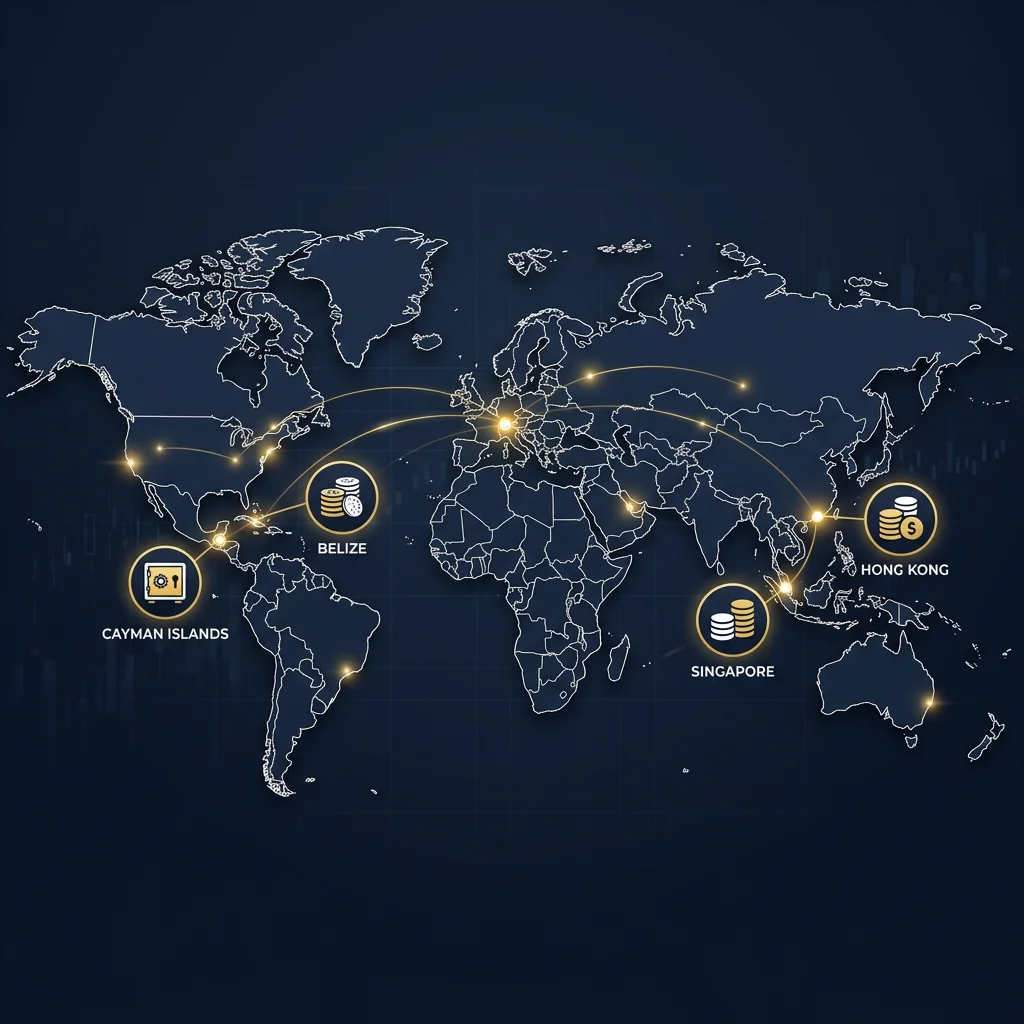
Hong Kong ranked fourth in the Global Financial Centres Index and hosts 75 of the world's 100 largest banks. HSBC, Standard Chartered, and Hang Seng Bank all cater to non-resident corporate clients. The trade-off: many Hong Kong banks require an in-person visit and higher minimum deposits. See Hong Kong's jurisdiction details for the full picture.
Belize is the entry point for cost-conscious account holders. You can open an account remotely with as little as USD 500, and banks like Caye International Bank offer full multi-currency corporate accounts. The mandatory 24% liquidity ratio provides a safety margin that most developed-world banks can't match. Browse Belize's profile for details on its tax regime.
For those weighing multiple jurisdictions at once, the Tax Haven Directory's comparison tool lets you stack jurisdictions side by side on tax rates, privacy scores, and setup requirements.
What banks expect from you: deposits, documents, and due diligence
Opening an offshore account isn't as simple as filling out a web form. Banks operate under anti-money laundering (AML) and know-your-customer (KYC) regulations that require them to verify exactly who you are and where your money comes from.
Standard documentation requirements include:
- Government-issued photo ID (passport preferred)
- Proof of residential address (utility bill or bank statement, typically less than 3 months old)
- Source of funds documentation (employment contract, business financials, investment statements)
- Bank reference letter from your current bank
- For corporate accounts: certificate of incorporation, articles of association, register of directors and shareholders
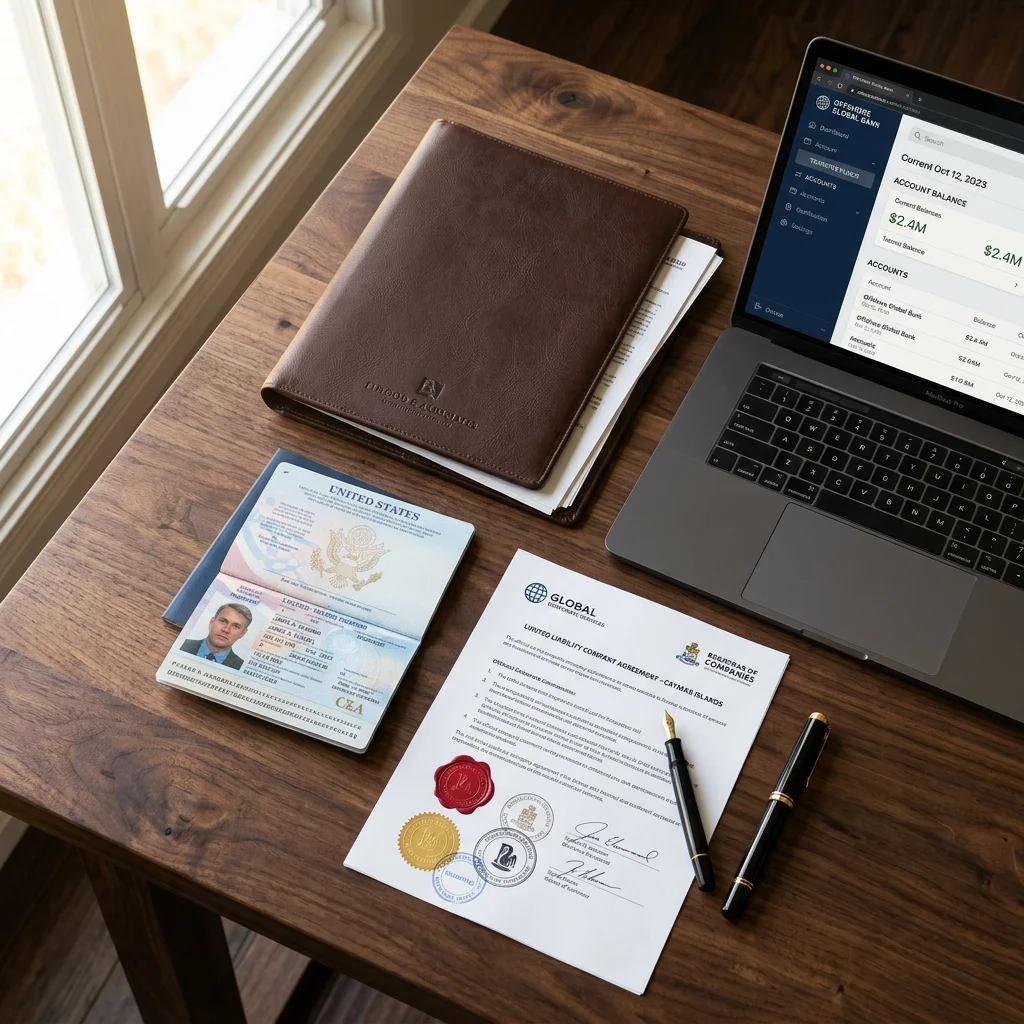
Initial deposit requirements vary wildly. Swiss private banks may want CHF 100,000 or more just to open the door. Singapore's DBS and OCBC typically expect USD 25,000-100,000. At the other end, Belize-based banks accept as little as USD 500, and some banks in Mauritius and Georgia set similarly low thresholds.
Minimum deposits don't tell the whole story. Monthly maintenance fees, wire transfer charges, and currency conversion spreads can add up. A bank with a USD 500 minimum deposit but steep transaction fees may cost more annually than one requiring USD 10,000 up front with lower ongoing costs.
Processing time ranges from same-day (Georgia is known for this) to several weeks, depending on the jurisdiction and how clean your documentation is. Incomplete paperwork is the most common cause of delays.
How the account opening process works
The process follows a pattern regardless of jurisdiction:
First, pick your jurisdiction. Your choice should match your actual banking needs, not just the lowest tax rate. If your business operates across Southeast Asia, Singapore or Hong Kong makes more sense than the Cayman Islands. If you need cheap, fast, remote setup, Belize or Georgia fits better. The Tax Haven Directory's calculator can help you model the tax implications of different jurisdictions based on your income profile.
Second, choose the bank within that jurisdiction. Compare fee structures, digital banking capabilities, and whether the bank serves your industry. Some banks refuse certain business categories (online gambling, cryptocurrency, and arms dealing are commonly excluded).
Third, prepare your documents. Gather everything listed above, get documents notarized or apostilled where required, and have them translated if the bank operates in a different language.
Fourth, submit your application. Many jurisdictions now allow remote applications, though some (notably Hong Kong and Switzerland for private banking) still require in-person visits. If you're going remote, expect a video call for identity verification.
Fifth, wait for compliance review. The bank's compliance team will verify your identity, check your source of funds, and screen you against sanctions lists. This is where most of the timeline sits.
Once approved, you'll receive your account details, online banking credentials, and (if applicable) a debit card. The entire process takes anywhere from one day to six weeks.
FBAR, FATCA, and CRS: the reporting rules that matter
Holding money offshore is legal. Failing to report it is not. Three overlapping frameworks govern international financial account reporting, and ignoring any of them can lead to severe penalties.
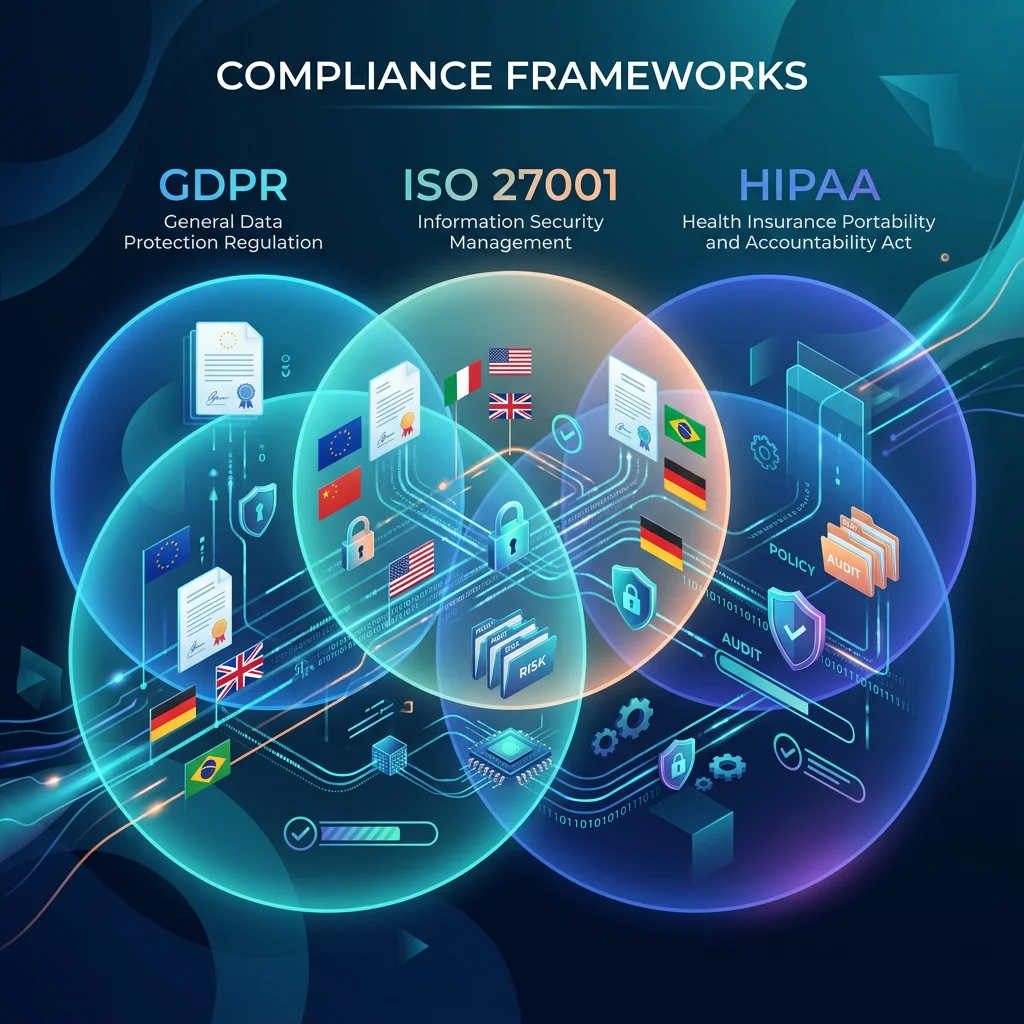
FBAR (Report of Foreign Bank and Financial Accounts): If you're a U.S. person and the aggregate value of your foreign financial accounts exceeds USD 10,000 at any point during the calendar year, you must file FinCEN Form 114 by April 15, with an automatic extension to October 15. This applies regardless of whether the accounts generate taxable income. The filing is electronic, through FinCEN's BSA E-Filing System — not with your regular tax return.
FATCA (Foreign Account Tax Compliance Act): FATCA requires foreign financial institutions to report U.S. account holders to the IRS. On the individual side, U.S. taxpayers with foreign assets above certain thresholds must file Form 8938. Failure to file carries an initial penalty of USD 10,000, escalating to USD 50,000 for continued non-compliance. Willful violations can trigger criminal charges and a 40% penalty on underreported taxes.
CRS (Common Reporting Standard): The OECD's global equivalent of FATCA. Over 120 jurisdictions participate, with 2026 updates expanding coverage to digital assets including cryptocurrencies and stablecoins. The Cayman Islands, for instance, now imposes immediate penalties of USD 5,000 to USD 10,000 for missed filing deadlines — without issuing a warning first.
| Framework | Who it applies to | Threshold | Penalty for non-compliance |
|---|---|---|---|
| FBAR | U.S. persons | USD 10,000 aggregate | Up to USD 12,909 per violation (non-willful) |
| FATCA (Form 8938) | U.S. taxpayers | USD 50,000-200,000+ | USD 10,000-50,000 + criminal charges |
| CRS | Tax residents of 120+ countries | No minimum | Varies by jurisdiction (EUR 10,000-100,000 in EU) |
Non-compliance is increasingly hard to get away with. Tax authorities now use AI and data analytics to detect reporting anomalies, and audit cycles for large financial institutions have tightened from every 3-5 years to every 18-24 months.
Common myths vs. reality
| Myth | Reality |
|---|---|
| Offshore accounts are illegal | Completely legal in most countries. What's illegal is failing to report them. |
| Only millionaires need offshore accounts | Banks in Belize and Georgia accept initial deposits under USD 1,000. Freelancers working internationally often benefit most. |
| Your money is hidden from authorities | CRS and FATCA mean automatic data sharing between 120+ countries. Banking secrecy, in the old sense, no longer exists. |
| Offshore banks are unregulated | Major offshore jurisdictions like Singapore, the Cayman Islands, and Switzerland are heavily regulated, often exceeding onshore standards. |
| You need to visit in person | Many banks in Singapore, Belize, BVI, Mauritius, and the Cayman Islands offer full remote account opening. |
The Tax Haven Directory's interactive map is a good starting point for visually comparing which jurisdictions offer the features you care about. You can filter by region, tax structure, and banking infrastructure to narrow your options before reaching out to banks directly.
Frequently asked questions
Is it legal for U.S. citizens to have offshore bank accounts?
Yes. U.S. citizens and residents can legally hold accounts at foreign banks. The obligation is to report those accounts — through FBAR (FinCEN Form 114) if the aggregate value exceeds USD 10,000, and through FATCA (Form 8938) above higher thresholds. Failure to report carries penalties starting at USD 10,000 per violation.
How much money do I need to open an offshore bank account?
It depends entirely on the jurisdiction and bank. Swiss private banks often require CHF 100,000 or more. Singapore banks typically start at USD 25,000. Belize and Georgia allow accounts with deposits as low as USD 500. The Tax Haven Directory's jurisdiction browser lists minimum requirements for each country.
Which offshore jurisdiction is best for privacy?
Switzerland and the British Virgin Islands have the strongest privacy protections for account holder information. However, both now participate in CRS automatic data exchange, so privacy applies to third parties and commercial disclosure — not to tax authorities. See detailed privacy scores in the BVI and Switzerland profiles.
Can I open an offshore account without visiting the country?
Yes, in many jurisdictions. Belize, Singapore, Mauritius, the British Virgin Islands, and the Cayman Islands all support remote account opening for qualifying applicants. Expect a video verification call and notarized documents. Some banks in Hong Kong and Switzerland still require an in-person visit, particularly for private banking.
What are the ongoing costs of maintaining an offshore account?
Monthly maintenance fees range from zero to USD 50-100 depending on the bank. International wire transfers typically cost USD 15-40 per transaction. Currency conversion spreads vary but usually fall between 0.5% and 2%. Some banks waive fees if you maintain a minimum balance.
Sources
- IRS — Report of Foreign Bank and Financial Accounts (FBAR)
- Swiss Bankers Association — Banking Barometer 2025: Assets Under Management
- Global Wealth Protection — FATCA and CRS Reporting: Trends and Updates for 2025
- Carey Olsen via JD Supra — Upcoming Changes to CRS Regulations (2026)
- Global Wealth Protection — CRS Participating Jurisdictions List 2025
- Z/Yen Group & China Development Institute — Global Financial Centres Index 33
- BBCIncorp — Best Countries to Open Offshore Bank Accounts (2026)
Related articles
- Switzerland jurisdiction profile — Full breakdown of Swiss tax rates, banking infrastructure, privacy protections, and residency programs.
- Singapore jurisdiction profile — Corporate tax structure, business formation requirements, and banking options in one of Asia's top financial hubs.
- Cayman Islands jurisdiction profile — Zero-tax regime details, regulatory framework, and financial services landscape.
- Compare jurisdictions — Stack any jurisdictions side by side on tax rates, privacy scores, banking access, and setup requirements.
- Tax calculator — Model your potential tax burden across different offshore jurisdictions based on your income profile.